Ali once said, “I should be a postage stamp, because that’s the only way I’ll ever get licked.”
(Of course, today’s stamps are self-adhesive, so Ali gets his stamp, but still won’t get licked.)
Ali’s wife Lonnie and broadcaster Bob Costas will host a “first-day-of-issue event” on January 15, 2026, ahead of the tenth anniversary of Ali’s death. I don’t usually get excited about postage stamps, but I’ve preordered these (and the associated Field Notes notebook).
Acquiring the Curran expands our commitment to San Francisco and reinforces our core belief that sports, arts and culture are essential to San Francisco’s identity, economy and resurgence.
The Giants also are 50% owners of the Mission Rock neighborhood across from their ballpark; buying the Curran reinforces that they’re as much a real estate business as they are a baseball team.
This shouldn’t have shocked me; back in March, after the Giants sold a 10% stake in the team to a private equity firm, Baer was quoted in The New York Times:
“This is not about a stockpile for the next Aaron Judge,” he said, referring to the New York Yankees star. “This is about improvements to the ballpark, making big bets on San Francisco and the community around us, and having the firepower to take us into the next generation.”
Buying an historic, 103—year old theatre is an undeniably “big bet,” and certainly a commitment to the City, yet despite my love of both baseball and broadway, I’d much rather the Giants spend their windfall improving on-field performance.
Though perhaps they could commission a new play: Damn Dodgers.
Steve Hayman, “freshly retired” after 32 years at Apple (and a former colleague), on Saturday:
On this day in 1996, I was summoned to a phone call - which I took at a pay phone at the Steamtown Railroad Museum for complicated reasons involving new baby - in which we learned that Apple had agreed to buy NeXT.
My immediate reaction was: "wait, WHO is buying us? Apple? They're the only company going out of business faster than WE are."
It worked out pretty well.
Longtime Apple watchers like to joke that NeXT bought Apple for negative $400 million. It’s hard to argue against that. The NeXT merger remains the most consequential in Apple’s history. It is singular in its downstream effects; entirebusinesses and industries would not exist without it. The NeXTSTEP operating system became the foundation of Mac OS X, and thus, over time, of iPhone, iPad, Apple TV, Apple Watch, and HomePod. And, of course, the return of Steve Jobs set the stage that transformed a moribund business into a $4 trillion behemoth.
Steve wrote an expanded version of his post that offers more detail of that day, including this charming anecdote:
Two weeks earlier, I’d got a call from a former NeXT colleague Barb, who’d gone to work for Apple. She wanted to know if I wanted to come along.
“No thank you”, I replied politely, when what I was really thinking was “What, that bunch of losers? Why would I go there? They’re the only company going out of business faster than WE are.”
But the merger happened anyway, and Barb called me about a minute after it was announced to say “Well, we really wanted to hire you, so this is the only plan we could think of.”
The LADbible Stories YouTube channel released this fascinating video a couple of weeks ago:
In this episode of Honesty Box, Former CIA Spy and Whistleblower, John Kiriakou spills all about working for America’s primary intelligence agency.
I watched this with my mouth agape as Kiriakou unflinchingly answered questions like “What skills make a good agent?” (“people who have sociopathic tendencies”); “Are hitmen real?” (yes; a committee meets every morning at 9 am to review a “kill list”); “How does the CIA recruit spies?” (they spend lots of money and time “becoming best friends” with future “assets”); and “Does the CIA listen through our phones and laptop cameras?” (yes—and they can “remotely take control of your car… to make you kill yourself and make it look like an accident”).
What surprised me was hearing him give unequivocal “yes, and…” answers, with details, context, and examples behind them—no prevarication, no hedging—he just outright said it. His forthrightness made me wonder just how much of what he was saying was true and how much was simply believable. It certainly lends an air of both invincibility and inevitability to the CIA—something I’m sure they’re happy to cultivate.
For context (which I didn’t have before this video), Kiriakou was a CIA officer who in 2007 exposed the CIA’s waterboarding of al-Qaeda prisoners, and was convicted and sentenced in 2012 to 30 months in prison for “passing classified information to the media” (he served 23 months). I remember the waterboarding disclosures and outcry, but not the person, nor the arrest and trial that followed.
He was also a script advisor on The Bourne Ultimatum, Burn Notice, and a couple of other spy shows. (One note of advice he offered for watching shows: “If somebody calls the CIA ‘The Company,’ turn it off.”)
After watching Kiriakou, I wished I was able to ask him my own questions, like “How do you recognize a foreign agent?” and “Do you believe there are foreign spies working at high levels of the U.S. government?” and “What would a spy be doing differently compared to what some members of Congress are doing today?”
The Trump administration plans to ramp up efforts to strip some naturalized Americans of their citizenship, according to internal guidance obtained by The New York Times, marking an aggressive new phase in President Trump’s immigration crackdown.
The guidance, issued on Tuesday to U.S. Citizenship and Immigration Services field offices, asks that they “supply Office of Immigration Litigation with 100–200 denaturalization cases per month” in the 2026 fiscal year.
There were 90 criminal and civil denaturalization cases filed in 2018—the most since the 1990s—but they plan on processing up to twice that every month? That’s not a legal process, it’s an assault on citizenship.
I continue to bang on about this because it’s more than an intimidation tactic to silence 26 million naturalized Americans—it’s a precursor to the Trump regime deciding, without any legal recourse, who it counts as “citizens” and who are therefore worthy of the government’s protection.
It’s not hard to grasp the Trump regime’s twisted logic here: naturalized citizens represent ten percent of eligible voters; 55% of them live in four states (California, Florida, New York and Texas); they are overwhelmingly non-white (Hispanic or Asian); and they lean Democratic across most ethnic groups.
Voter suppression by any other name smells as foul.
In a surprising move, Trump Media and Technology Group (DJT) said on Thursday that it is fusing itself to a fusion company.
The company will merge with TAE Technologies—a privately held fusion energy firm that’s backed by Alphabet, Chevron Technology Ventures, and others—in a deal that’s worth more than $6 billion.
It’s an all-stock deal, which is expected to close sometime next year, and is a huge and eyebrow-raising move for Trump Media, which is best known as the owner of President Trump’s social media platform, Truth Social.
Of course. It makes perfect sense for a social media company owned by the president of the United States to merge with a fusion energy firm that’s funded by Google, Chevron, and—checks notes—the government of Russia.
This has so far been great news for investors in DJT, which is up 40% today on the news (but still down 63% from its 2025 high).
Upon closing, shareholders of each company will own approximately 50% of the combined company on a fully diluted equity basis.
Donald Trump owns 41% of Trump Media—which he controls via a revocable trust of which he is the sole beneficiary and his son, Donald Trump Jr., is the sole trustee—garnering him about 20.5% ownership of the merged company, worth over $1.2 billion. I’m sure there won’t be any conflicts of interest.
The companies have posted supplemental slides to their respective websites, all of which can be accessed at tmtgcorp.com and tae.com.
Deal to combine TMTG’s access to significant capital […]
TMTG is controlled by the president of the United States, who has the power to regulate the energy industry, and he knows people. That capital can come from anywhere—sovereign wealth funds, billionaires, American taxpayers. We don’t know. We don't care.
The transaction will combine the strength of TMTG’s strong balance sheet with TAE’s leading technologies. As part of the transaction, TMTG has agreed to provide up to $200 million of cash to TAE at signing and an additional $100 million is available upon initial filing of the Form S-4.
TAE’s next-generation fusion technology is poised for commercial application. After more than 25 years of research and development, TAE has significantly reduced fusion reactor size, cost and complexity. TAE has built and safely operated five fusion reactors […]
Fast Company: “Notably, there are not currently any operating fusion power plants. […] Further, the latest annual survey from Fusion Industry Association found that 75% of respondents don’t expect fusion power plants to start supplying energy to the grid until the 2030s.”
This is not a good business.
[…] and raised more than $1.3 billion in private capital to date from Google, Chevron Technology Ventures, Goldman Sachs, Sumitomo Corporation of Americas, NEA, the visionary family offices of Addison Fischer, the Samberg Family, Charles Schwab, and others.
And it’s high time we cashed out.
The transaction […] is expected to close in mid-2026, subject to customary closing conditions, including shareholder and regulatory approvals.
Did we mention that the president of the United States is a 20.5% shareholder, now? We anticipate no regulatory issues.
The mission of Trump Media is to end Big Tech's assault on free speech by opening up the Internet and giving people their voices back. Trump Media operates Truth Social, a social media platform established as a safe harbor for free expression amid increasingly harsh censorship by Big Tech corporations, as well as Truth +, a TV streaming platform focusing on family-friendly live TV channels and on-demand content. Trump Media is also launching Truth.Fi, a financial service and FinTech brand incorporating America First investment vehicles.
Harnessing the power of the sun is a natural next step.
What incentive was there for TMTG to merge now with TAE? The subhed of their pitch deck (“Advancing America’s energy dominance and powering the A.I. revolution”) offers one clue. Another is noted by TechCrunch:
Last week, industry representatives met with Energy Department officials, urging them to help direct billions of dollars toward fusion projects, and earlier this year, the DOE announced a new roadmap to guide commercial efforts in the sector […]
Ah. Coincidental, I’m sure, that the president’s administration is urged to invest in America’s fusion future, and, before doing so, the president’s personal company invests first.
I absolutely love this. Three years ago, Donald Trump sued the Pulitzer Board for defamation after it awarded its 2018 National Reporting prize to The Washington Post and The New York Times for their stories on Russian election interference. That case has been wending its way through the court system. Now, reports The New Republic, the Pulitzer Board has responded:
President Trump’s spiteful defamation suit against the Pulitzer Prize Board may backfire, as the latter is now demanding Trump’s psychological records, prescription medication records, and tax returns in the discovery process. […]
“To the extent You seek damages for any physical ailment or mental or emotional injury arising from Counts I-IV of Your Complaint, all Documents (whether held by You or by third parties under Your control or who could produce them at your direction) concerning Your medical and/or psychological health from January 1, 2015, to present, including any prescription medications you have been prescribed or have taken,” the board wrote in their filing. “For the avoidance of doubt, this includes all Documents Concerning Your annual physical examination. To the extent you do not seek such damages in this action, please confirm so in writing.”
This is exactly how everyone who’s targeted by Trump’s frivolous lawsuits should respond: by demanding extensive discovery of sensitive or potentially embarrassing documents. It’s a virtual certainty that Trump will now quietly drop this lawsuit before it gets too far into discovery (or push for a settlement so he can claim victory). If every Trump litigation target pursued this aggressive discovery strategy, perhaps he’d stop using these asinine lawsuits as a bullying tactic.
Vanity Fair’s glossy, hagiographic profile of Susie Wiles, Donald Trump’s Chief of Staff, is fascinating for the candor of its subject as for anything else. (If paygated, here’s a News+ link and AP’s summary.) The attention-grabbing quotes (‘Trump has “an alcoholic’s personality.”’; J.D. Vance ‘has been “a conspiracy theorist for a decade.”’) are juicy, the normalization of Trump is maddening, the sane woman in an insane world vibe is deeply disingenuous, and the non-denial denials are flying fast and furious, but here’s what caught my attention:
Wiles’s childhood had prepared her for difficult men. She was raised in Stamford, Connecticut, and Saddle River, New Jersey, the only daughter and eldest of three siblings. It was her famous father, Pat Summerall, who put Wiles on a path to the pinnacle of political power. Summerall had been a kicker for the New York Giants and afterward parlayed his knowledge and mellifluous baritone into fame and fortune as the “voice of the NFL.”
I had no idea she was Summerall’s daughter.
The “alcoholic’s personality” description of Trump comes from her experience with her father’s alcoholism:
The most valuable gift Susie got from her dad was hard-earned. Summerall was an absentee father and an alcoholic, and Wiles helped her mother stage interventions to get him into treatment. […]
“Some clinical psychologist that knows one million times more than I do will dispute what I’m going to say. But high-functioning alcoholics or alcoholics in general, their personalities are exaggerated when they drink. And so I’m a little bit of an expert in big personalities.” Wiles said Trump has “an alcoholic’s personality.” He “operates [with] a view that there’s nothing he can’t do. Nothing, zero, nothing.”
That’s also, coincidentally, the personality of a megalomaniac who hubristically believes that opposing him is a cause of death.
Then there’s this:
Wiles is the most powerful person in Trump’s White House other than the president himself; unlike any chief of staff before her, she is a woman.
That’s not true. Everyone knows C.J. Cregg was the first female Chief of Staff, during the final two years of President Josiah Bartlet’s second term.
The day Trump dies should be declared a world holiday.
I disagree. Trump would welcome that, even in death, because it keeps his name alive. Instead we should all simply forget him. Refer to him simply as “the 45 and 47th president.” Render him as obscure a figure as John Tyler and as unmemorable as James Buchanan. Nothing would trouble Trump more than knowing he’ll be a forgotten footnote in history.
To be that sick, that soulless, that self obsessed, that messianic—every word I have spoken in ten years of pointing to Trump’s insanity and Trump’s evil has evidently been insufficient. Whatever they total to, Donald Trump is twice as sick and twice as evil as I have said. […]
We do have a prominent public figure suffering from a massive, unyielding and incurable affliction with a mind crippling disease known to have driven people crazy by his raging obsession and obvious paranoia, and that public figure is Donald Trump, and his emotional and psychological incapacity for the presidency or any public role in this country is so obvious and so overwhelming that every further minute he is permitted by his enablers to stay in that job he risks the life of every living thing on this planet. Eventually, he and those enablers will wind up in hell. I pity them. But right now, a man this sick, this evil, this disconnected from reality, will physically do to us, if he feels he must, what he has just metaphorically done to the late Rob Reiner. He has celebrated his own claim that he helped cause this man’s death. We are next.
Few do outrage as well as Olbermann, and he captures mine perfectly, especially Trump’s need to be “the bride at every wedding and the corpse at every funeral.” The scales are also falling from the eyes of even some of Trump’s staunchest supporters. Maybe, just maybe, we’ve reached a turning point.
I debated linking to this but, well, here we are; Donald Trump, on his blog[1]:
A very sad thing happened last night in Hollywood. Rob Reiner, a tortured and struggling, but once very talented movie director and comedy star, has passed away, together with his wife, Michele, reportedly due to the anger he caused others through his massive, unyielding, and incurable affliction with a mind crippling disease known as TRUMP DERANGEMENT SYNDROME, sometimes referred to as TDS. He was known to have driven people CRAZY by his raging obsession of President Donald J. Trump, with his obvious paranoia reaching new heights as the Trump Administration surpassed all goals and expectations of greatness, and with the Golden Age of America upon us, perhaps like never before. May Rob and Michele rest in peace!
Absolutely pathetic.
In writing this self-aggrandizing screed, Trump effectively blames Reiner for his own death—implying Reiner was killedbecause of his opposition to Trump, with the inference being that the perpetrator is themself pro-Trump. It’s not much of a logical leap to read this as a warning to those opposing Trump—dissent is dangerous.
Hat-tip to John Gruber for the term. Main link is to an archive of Trump’s “Truth” Social posts so you don’t have to give your attention to that dumpsite. Original here, if you must. ↩︎
Rob Reiner, who segued from starring in “All in the Family” to directing movies including “This Is Spinal Tap,” “A Few Good Men” and “When Harry Met Sally…” was found dead Sunday afternoon in his Brentwood home alongside his wife Michele Singer. He was 78.
The deaths are being investigated as a homicide, according to the LAPD. The couple was reported to have been stabbed to death.
Nick Reiner, the 32-year-old son of Rob and Michele Reiner, is in custody after the apparent homicide of the director and his wife on Sunday afternoon.
Just tragic and heartbreaking on every level. Inconceivable, even.
I could not stop reading Zach Helfand’s New Yorker story on “The Airport-Lounge Wars” (paywalled; Apple News+), in which he dissects the lounge experience, the history of these liminal spaces, and the very nature of waiting:
Airport lounges are about who gets in and who does not. There are lounges with hot dogs on rollers, lounges with pedicurists, and lounges with personal butlers. Ease of admission varies accordingly. Most people at an airport don’t visit a lounge. If they did, it would kind of defeat the purpose.
And:
Kevin James, a history professor at the University of Guelph who has studied airport lounges, called their product offering “an enhanced experience of stasis”—waiting but better. Peter Greenberg, CBS News’ travel editor, who, fifty years ago, bought lifetime lounge passes with six airlines, said, “What they want people to say is ‘Well, it’s better than nothing.’ And that’s usually what they are—slightly better than nothing.” A lounge is the kind of place that puts fruit in your water. One better-than-nothing criterion to judge a lounge is its bathrooms. An Air France lounge in Paris has rest-room suites with padded leather walls and blown-glass chandeliers, like a jewel box for bowel movements.
Most of the lounges I’ve frequented are dreary places with mediocre food, but one of the primary reasons I visit them (other than complimentary alcohol) is for the restrooms—they’re almost always more spacious, more private, and much, much cleaner than the regular restrooms. I can do without the fruit in my water, though.
I also learned from the piece that the airport lounge was started by what I can only describe as an exceedingly eccentric fellow:
The airport lounge was created in 1939 by American Airlines’ C.E.O., C. R. Smith, as a way to build support for commercial aviation. Smith called his first lounge, at LaGuardia, the Admirals Club. (He referred to his planes as the Flagship Fleet.) Membership was private, free, and at the company’s discretion. A manual listed those eligible: generals, congressmen, governors, judges, members of the U.N. Secretariat, “persons listed in Who’s Who.” New “Admirals” were commissioned in faux naval ceremonies. Often, they’d get a writeup in the local paper. Smith would send personal letters about Admiral business. (“Dear Admiral: As you know, we are not permitted to extend membership in the Admiral’s Club to the ladies. . . .”) He’d sign off, “C. R. Smith, Fleet Admiral.”
One would-be patron was denied access to the Admirals Club and filed a “discrimination complaint […] seeking to open the clubs to the paying public.” It wasn’t appreciated:
One American Airlines executive asked, “If we let just anybody become an Admiral, why would anybody want to be an Admiral?”
A succinct and snooty mashup of “I don’t want to belong to any club that would have me as a member” and “Nobody goes there anymore, it’s too crowded.”
American Airlines lost, the clubs were opened up, and now every airline and credit card company is trying to “out-fancy” its competitors with over-the-top amenities:
The Centurion Lounge at LaGuardia was nice, with refreshing lemon-cucumber water, but a little cramped. If this was once world-class, it is no longer. So, this summer, American Express rolled out a new buffet menu—crab frittata, cornflake-crusted French toast—created by four James Beard Award-winning chefs, including Kwame Onwuachi, the star chef of Tatiana. […]
The Chase Sapphire Lounge, next door, offers private lounges within the lounge, starting at twenty-two hundred dollars for three hours. Each is a suite that comes with a PlayStation, a shower, and bathrobes. Dana Pouwels, Chase’s head of airport lounges, showed me around. “Typically, when you arrive at the suite, you would have welcome caviar and champagne,” she said. The suite seemed unnecessary; the rest of the lounge was nice enough. There was an Art Deco bar, custom wallpaper, and carpentry imported from Germany. Everything was JPMorgan blue. Water taps were built into the wall. “We rotate this quarterly to maintain seasonality,” one of Pouwels’s deputies said. “This rotation includes a blackberry-sage spa water.”
There was also a photo booth, a faux fireplace, and a spa. “The Sapphire Reserve customer is an experience maximizer,” Pouwels said. I was booked for a facial.
I just want a clean bathroom, edible food, and a glass of Scotch.
It’s the holidays and for reasons unknown, it’s the one time of year I drink Irish cream. Back in December 2019 I discovered Smitten Kitchen’s homemade Irish cream recipe and I’ve been making it ever winter since. It’s delicious on its own—way better than the “real thing”—and, I’m told, terrific in coffee. For a couple of years, we distributed a carafe of this liquid ambrosia as holiday gifts—a definite crowd-pleaser.
Here’s the basic Smitten Kitchen recipe, with the espresso/coffee powder variant that adds “a faint coffee flavor,” which I think adds depth and should be standard:
1 teaspoon unsweetened cocoa powder
1 teaspoon instant espresso or coffee powder
1 cup (235 ml) heavy or whipping cream
1 (14-ounce or 415 ml) can sweetened condensed milk
½ teaspoon vanilla extract
1 cup (235 ml) Irish whiskey (I used Jameson)
In the bottom of a pitcher, whisk [instant espresso or coffee powder,] cocoa powder and a spoonful of cream into a paste. Slowly, whisking the whole time, add more cream a spoonful at a time until the paste is smooth and loose enough that you can whisk the rest of the cream in larger splashes. Once all of the cream is in, whisk in condensed milk, whiskey and vanilla. Cover with lid or plastic wrap and keep in fridge for up to two weeks, possibly longer.
(While the author uses Jameson, Costco brand Kirkland Irish Whiskey works fantastically. It’s massively less expensive—especially if you’re whipping up a big batch for gifting—and subtleties get lost in the cocoa powder, cream, and milk. Save the Jameson for sipping. On the other hand, if you’re feeling especially splurgy, go for a Powers, Redbreast, or even Jameson Black Barrel and live it up.)
There are several other variants out there that may be worth trying. For example, there’s Spend with Pennies, which trades heavy cream for roughly double the volume of light cream or half-and-half, yielding a lighter, milkier Irish cream. Smitten Kitchen leans richer, creamier, and more decadent—much more my style.
(I have some ideas for my own variant, which, if it works out, I’ll share here.)
Whichever recipe you choose, homemade Irish cream is easy to make and better than store-bought. Whip up a batch—it beats Baileys.
I grew up watching Thunderbirds in reruns, and it’s one of my most beloved childhood TV shows. I watched it primarily for the beautifully designed vehicles—Thunderbird 2 and Thunderbird 4 are my favorites—though I may have also had a grade-schooler’s crush on Lady Penelope.
While I missed the actual 60th anniversary of the series debut (September 30), part of the ongoing celebration is the release of a “full remastered and restored” Blu-ray collector’s edition of the complete 32-episode series, along with three anniversary episodes and over eight hours of bonus content. My nostalgia demanded I buy it. It’s available for preorder ($150) on GerryAnderson.com (which has a ton of other wonderful items for sale, not just for Thunderbirds, but also for Space: 1999, which also has one of the most beautiful spaceships.)
One curiosity from the trailer: it touts as one of the improvements “Cropped Shots Uncropped”… with the uncropped shot example showing the hand of the marionettist moving Tin-Tin Kyrano around. I’m not sure how that’s an improvement!
Lastly, in a sign of the times, the pre-order page warns US customers that “this item may be subject to customs charges due to imposed tariffs,” while also promising on the checkout page that “The total amount you pay includes all applicable customs duties & taxes. We guarantee no additional charges on delivery.” America!
(Via The Iconfactory, which is currently offering iPhone wallpaper images inspired by the show’s anniversary.)
The developer of ICEBlock, an iPhone app that anonymously tracks the presence of Immigration and Customs Enforcement agents, has sued the Trump administration for free speech violations after Apple removed the service from its app store under demands from the White House.
The suit, filed on Monday in federal court in Washington, asks a judge to declare that the administration violated the First Amendment when it threatened to criminally prosecute the app's developer and pressured Apple to make the app unavailable for download, which the tech company did in October.
Following Apple ejecting ICEBlock, Attorney General Pam Bondi said in a statement that "we reached out to Apple today demanding they remove the ICEBlock app from their App Store — and Apple did so."
Lawyer Noam Biale, who filed the suit against the administration, said Bondi's remarks show the government illegally pressuring a private company to suppress free speech.
I applaud this principled (if quixotic) stance by Joshua Aaron, the app’s developer. The filing makes it clear that the app wasn’t designed to target ICE agents and that it would be difficult for it to be used that way.
It’s also clear the app shouldn’t have been pulled from the App Store, and likely wouldn’t have been except for governmental pressure: Apple apparently did a more-rigorous-than-usual review of the app before approving it (the lawsuit claims “[m]ultiple conversations included members of Apple’s legal department”).
The suit contends the government violated Aaron’s First Amendment rights by coercing Apple into removing the app. It’s pretty clear that Bondi et al. engaged in jawboning to bully Apple into pulling ICEBlock from the App Store, and in a normal administration he’d likely win on the merits. But we don’t have a normal administration and I doubt the case will ever get that far, because the judiciary is filled with Trump-aligned judges who gleefully carry water for this administration. I predict the case will get tossed by the first MAGA judge who lays eyes on it—and even if it isn’t, the Supreme Court will eventually do the administration’s dirty work.
Ultimately, though, while jawboning may be where it started, I think it was Apple’s own cowardly decision to yank the app. I believe Apple executives used Bondi’s “demand” as an excuse to remove an app they were becoming increasingly uncomfortable having in the App Store (reinterpreting its own guidelines to treat ICE officers as a “targeted group” as justification). Yes, Apple indisputably wanted to avoid the ire of the administration (tariffs, antitrust lawsuits), but they also wanted to steer clear of any possible controversy (and the vitriol coming from the MAGA crowd). Was it the government that curtailed Aaron’s First Amendment rights, or did a faint-hearted Apple cravenly use its complete control over what it allows in its App Store to kill a controversial app? In the unlikely event Aaron wins this case, he’d like for Apple to reinstate the app, but Apple isn’t obligated to do so—and most assuredly won’t.
The best outcome we can reasonably hope for is the release of some juicy discovery on Apple’s deliberations and justifications for removing the app (including the “information [they] received from law enforcement about the safety risks associated with ICEBlock”), and perhaps some personal embarrassment for Bondi, Kristi Noem, and the Apple executives who made this decision.
There’s one more consequence I’d welcome: Requiring Apple to allow third-party app stores in the U.S. It’s no longer tenable for Apple to be the sole gatekeeper of what apps can be installed on Apple devices. I never thought I’d say that.
Listening to “Get Away Jordan” by Take 6 (one of the artists on the aforelinked list of essential jazz artists and albums) triggered a deep-seated memory of their performance in Spike Lee’s Do It A Cappella, a 1990 PBS Great Performances special directed by Lee, starring Debbie Allen (with a cameo by Samuel L. Jackson, fresh off Do the Right Thing) and featuring tremendous performances by Rockapella, True Image, The Mint Juleps, The Persuasions, Take 6, and Ladysmith Black Mambazo. This may be Take 6’s best version of their classic, and the Ladysmith Black Mambazo/Mint Juleps rendition of “In the Jungle” is stunningly beautiful. This may be my favorite “concert film” and a must-watch for fans of a cappella.
Kristen Roupenian reviewed the aforelinkedLennox Mutual for The New Yorker in March 2024:
Although much of “Lennox Mutual” is improvised, its writing team—[founder and creative director Evan] Neiden, along with the Candle House newcomers Olivia Behr and Joel Meyers—has crafted a work with a coherent, distinct sensibility. With its tone of icy melancholy, punctuated by both flashes of flinty humor and the occasional burst of heart-clutching shock, “Lennox Mutual” reminds me a great deal of the TV show “Severance.” Both “Severance” and “Lennox Mutual” involve the nefarious activities of mysterious corporations, but they strike me as less interested in critiquing a particular form of white-collar labor than they are in examining the world view that has given rise to today’s techno-optimist corporate culture—a set of beliefs whose choking tentacles stretch far beyond the office cubicle. This world view—which is, in essence, a theory of mind—takes as its fundamental premise that there is nothing about the human experience that cannot be made explicit in language, fitted into the blanks on a standardized form, and then submitted, in triplicate, to H.R. It is an instrumental approach to life which interprets every unproductive minute as a problem to be solved. In a world ruled by this philosophy, there is no trauma or dream or shame or pain or work of art exempt from the obligation to explain itself, and then put itself to work in service of the improvement of the self and others.
I loved watching Severance. I would not want to live Severance.
Neiden, the founder and creative director, told Roupenian:
[…] that there are people who have been doing calls once a week for more than a year.
My good friend Cathy Hammer, reviewing Lennox Mutual, “an award-winning performance conducted entirely on the telephone,” for her site The Unforgettable Line:
This fictional “life en-surance” company would have a customer service representative reach out at the agreed upon times. Beyond that description, I did not know what to expect. […]
There are elements of improvisation, puzzle making, psychodrama, guided meditation, and interactive gaming, plus pure gut instinct. Each call lasts between 20 and 25 minutes and comes from an unknown number. You will need to be somewhere you can be alone and in dim lighting when you answer. You should also be prepared to sing, respond to unusual questions, and complete potentially disturbing scenarios.
As a theatre and improv nerd, the concept of an improv-driven, phone-based theatre experience fascinates me. But as someone who dislikes phone calls generally and absolutely loathes customer service calls in particular, this sounds like nightmare fuel. I’m getting anxious just thinking about it.
Scanning the (spoiler-heavy) Reddit threads, I see several people completing their 12th, 20th, even 38th call. They’re either dedicated to the bit or addicted—possibly both. I’ve avoided reading too far beyond headlines and unspoiled content, but I gather the experience can get emotional—which the Lennox Mutual FAQ seems to confirm, saying your time “may get personal and intense” and offering a “safe phrase” to end the call.
I noted in passing in last week’s link to Floyd Norman: An Animated Life that I and other members of Apple’s African-American Employee Association (AAEA) met a few folks from the film’s creative team at a special screening in 2016.
One of those folks was Emmy- and Grammy-nominated composer Ryan Shore. Before Shore composed music for Bride Hard, Zombie Town, and Star Wars: Forces of Destiny, he did the music for the Floyd Norman documentary.
At the screening, Shore spoke with a young man named Maddux who expressed an interest in jazz. A few weeks later, Shore emailed Maddux a list of essential jazz artists, and thirteen essential jazz albums—a gift to anyone, regardless of their jazz familiarity, and a tremendous starting point for a burgeoning jazz enthusiast. Shore wrote:
By no means would this be a “complete” list. However, I’m extremely certain every jazz musician would agree these are all among the most brilliant, revered, and influential jazz musicians and albums.
Some of these names will be instantly familiar to anyone with even a passing interest in the genre; others may be recognizable by their most famous tracks (as it was for me with George Benson and Breezin’); and many will be completely new to you (as they were to me!).
I’ve had a lot of fun exploring this list over the last few days, and I hope you find it valuable, too. I’m grateful to Shore for sharing it with Maddux all those years ago.
(I’ve linked to Apple Music because it’s the service I use, but you should find most of these artists and albums on Amazon Music and YouTube Music.)
In response to my post on last week’s Apple-Intel rumors, my friend and former colleague Paul Ramsbottom shared a screenshot of Intel’s then-CEO Paul Otellini wearing a bunny suit as he hands a round Intel wafer to Steve Jobs.
That moment is from Apple’s 2006 Macworld San Francisco event (timestamped link). It’s a classic bit of Steve showmanship. My guess is more people remember Otellini for this appearance than for anything else he did for Intel.
As memorable as that moment is, it’s not my favorite from this event. It’s not even my second favorite (that would be Steve’s iconic “one more thing” that introduces Apple’s first MacBook Pro later in the event).
My absolute favorite moment comes after Steve announces the first iMac with an Intel processor and discloses that all the software he’d demoed runs natively on Intel. He then dramatically reveals that we “just saw them running on Intel…” because he’d been using a new Intel-based iMac all morning. The buildup to that surprise revelation is absolute perfection, right down to him switching his presentation clicker to his left hand so he can free his right hand to emphatically point to the computers.
On February 19, 2027, we’ll celebrate the 50th anniversary of Star Wars with a re-release of the 1977 original back for a limited time, in theaters everywhere.
Part of Lucasfilm’s yearlong 50th anniversary celebration, a newly restored version of the classic Star Wars (1977) theatrical release — later renamed Star Wars: A New Hope — will play in theaters for a limited time.
Microsoft has been publishing data about the gender, race, and ethnic breakdown of its employees for more than a decade. Since 2019 it’s been publishing a full diversity and inclusion report annually, and at the same time made reporting on diversity a requirement for employee performance reviews.
Now it’s scrapping its diversity report and dropping diversity and inclusion as a companywide core priority for performance reviews, just months after President Donald Trump issued an executive order to try and eradicate workforce diversity, equity, and inclusion (DEI) initiatives.
This won’t come as a surprise. Microsoft cut a major diversity team last year, and ongoing pressure from the Trump regime gives these companies all the cover they need to kill programs they never truly cared about. As I wrote last summer:
It was always just lip service. Companies never really bought into the progressive ideals. They just wanted to shut up Black folk.
Warren again:
Microsoft employees always had to answer “What impact did your actions have in contributing to a more diverse and inclusive Microsoft?” and “What impact did your actions have in contributing to a more secure Microsoft?” Both of these questions have been removed, replaced with a simplified form that asks employees to reflect on the results they delivered and how they achieved them, and any recent setbacks and goals for the future.
I doubt the diversity question mattered; most people likely had little useful to say. Apple added similar questions about diversity impact to its employee self-reviews a few years back (they’re still there, I’m told). I was always tempted to answer “How did you contribute to Apple’s diversity efforts?” by writing I exist—as the only Black engineering manager in the organization—but I resisted.
(Fortunately, co-chairing Black@Apple, recruiting and hiring female and Black engineers, and mentoring hundreds of employees gave me plenty to write about.)
It’s been quite the week for Apple personnel changes. Apple Newsroom:
Apple today announced that Jennifer Newstead will become Apple’s general counsel on March 1, 2026, following a transition of duties from Kate Adams, who has served as Apple’s general counsel since 2017. She will join Apple as senior vice president in January, reporting to CEO Tim Cook and serving on Apple’s executive team.
In addition, Lisa Jackson, vice president for Environment, Policy, and Social Initiatives, will retire in late January 2026. The Government Affairs organization will transition to Adams, who will oversee the team until her retirement late next year, after which it will be led by Newstead. Newstead’s title will become senior vice president, General Counsel and Government Affairs, reflecting the combining of the two organizations. The Environment and Social Initiatives teams will report to Apple chief operating officer Sabih Khan.
Newstead joins Apple from Meta, where she was the chief legal officer. Quite the executive exchange. I’ll bet Apple got the better end of the bargain.
With this string of departures, perhaps Tim Cook actually is planning a near-term exit and these retirements are all about clearing the decks so it won’t seem like they’re bailing on the new guy.
No doubt Adams will be missed, but on a personal level, it’s Lisa Jackson’s departure that I think is most relevant and impactful.
I was deeply fortunate to have worked with her while I was co-chair for Apple’s African-American Employee Association/Black@Apple group (what Apple calls “Diversity Network Associations” or DNAs), and she was the DNA’s “executive sponsor.” Jackson was always extremely supportive of our efforts to build community among our Black employees and to host meaningful conversations that emphasized the cultural impact of Black contributions to society. It was through her efforts that we hosted such luminaries as Congressman John Lewis, Bryan Stevenson, Floyd Norman, and Carla Harris.
I understand moving her Environment team under Sabih Khan, Apple’s COO—it’s directly tied to Apple’s bottom line—but it troubles me that her Social Initiatives team will also move under Khan. For instance, I can’t help but wonder what will become of the Racial Equity and Justice Initiative (REJI) she championed and led. Social Initiatives aren’t an “operational” issue, simply one more set of dials to turn to make Apple more efficient or profitable. With ongoing pressure from the Trump administration to abandon diversity, equity, and inclusion initiatives (which other tech companies like Microsoft seem happy to do), I worry that with Jackson’s departure, Apple could be the next to end its diversity and inclusion practices. No doubt her leadership here will be missed.
It is with a heavy heart that we share the news that Claude, our beloved albino alligator, has passed away at the age of 30. Claude was an iconic California Academy of Sciences resident who many visitors formed deep connections with during his 17 year tenure. He brought joy to millions of people at the museum and across the world, his quiet charisma captivating the hearts of fans of all ages. Claude showed us the power of ambassador animals to connect people to nature and stoke curiosity to learn more about the world around us.
The team later determined that Claude had “extensive liver cancer with evidence of liver failure” and that “[t]reatment options were limited and likely would have had minimal success.”
“Fuck cancer” is always the appropriate response—human or reptile.
Also: George Kelly’s obituary in The San Francisco Standard.
I visited Claude several times after he moved in. Here he is in August 2014, a month before his 19th hatchday:
I’ll admit I always harbored an irrational fear of Claude whenever I visited, worried he’d pick that day to finally scale the rocky walls of his swamp seeking food fresher than frozen fish.
Fortunately, Claude was always too chill to chase.
Meta Platforms Inc. has poached Apple Inc.’s most prominent design executive in a major coup that underscores a push by the social networking giant into AI-equipped consumer devices.
The company is hiring Alan Dye, who has served as the head of Apple’s user interface design team since 2015, according to people with knowledge of the matter. Apple is replacing Dye with longtime designer Stephen Lemay, according to the people, who asked not to be identified because the personnel changes haven’t been announced.
Apple confirmed the move in a statement provided to Bloomberg News.
Gurman calls this “a blockbuster coup” for Meta and a “big loss for Apple,” but I think he got his order wrong—Apple is probably happy to finally wave bye-bye, Dye.
Dye comes from the world of glossy print, packaging, and brand marketing, and was initially hired onto Apple’s Marcom (Marketing Communications) team to work on iPod and iTunes marketing. When he moved to the UI team for the iOS 7 redesign, several coworkers expressed concerns that a “marketing guy” was designing the UI.
I think Meta is getting exactly who they deserve.
Steve Lemay is taking over Dye’s role:
“Steve Lemay has played a key role in the design of every major Apple interface since 1999,” Chief Executive Officer Tim Cook said in the statement. “He has always set an extraordinarily high bar for excellence and embodies Apple’s culture of collaboration and creativity.”
One former colleague who worked with Lemay found him less than helpful as a designer and expressed surprise he’d managed to achieve such a senior design role, but Lemay at least seems to have a deep background in UI design. I hope that translates to Liquid Glass improvements.
One final note: Gurman’s reporting includes this nugget:
The executive informed Apple this week that he’d decided to leave, though top management had already been bracing for his departure, the people said.
Reporting to Cook is a hell of an elevation for Dye […].
I presume this reporting structure is temporary, a stopgap until they find something—someone—better. Cook has enoughproblemson his plate. I can’t imagine him caring enough about design to push back on bad or poorly implemented ideas […].
(A little birdie informed me that after Jony Ive left, Dye refused to report to Federighi—who apparently has strong opinions on UI design—which is how Williams ended up with the group. I’m curious if reporting to Cook is an extension of that refusal.)
My presumption was Dye would eventually report to someone other than Cook.
Did Cook again try to move Design under Federighi (where I think it belongs) or under John Ternus (to give him broader experience before he ascends), and did Dye again refuse? Or did Cook and Dye not get along?
Perhaps Apple wasn’t so much “bracing” for his departure as eagerly anticipating it.
Floyd Norman is the first African-American animator at Disney, and the subject of a terrific and heartwarming—though at times infuriating—2016 documentary, Floyd Norman: An Animated Life, which chronicles his long career in animation, his forced retirement from Disney at age 65, and why he persisted in showing up at the studio anyway.
While at Disney, Norman’s work included Sleeping Beauty, One Hundred and One Dalmatians, and The Jungle Book. He also worked on some of my favorite early cartoons at Hanna-Barbera (Josie and the Pussycats, Jabberjaw, Laff-A-Lympics, and The Smurfs, to start) and at Pixar on some of their most memorable films (Toy Story 2, Monsters, Inc., and others).
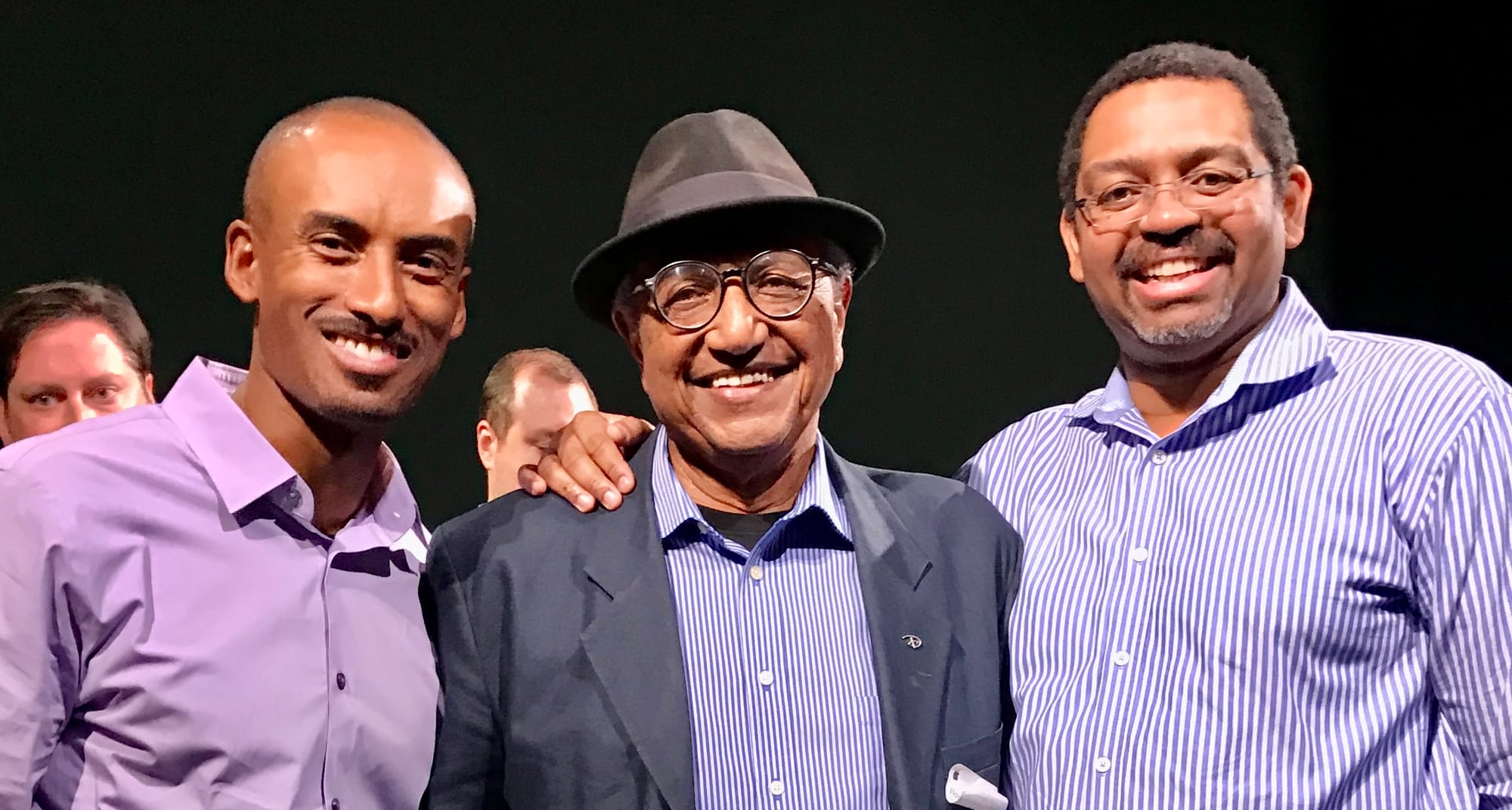
Apple’s African-American Employee Association (AAEA) held a special screening for the film shortly after its release. I was co-chair of AAEA then (with my good friend Ron Lue-Sang), and we, along with several other members, were fortunate enough to meet Norman and a few folks from the film’s creative team. He was brimming with boyish charm, with a devilish gleam and a delightful impishness. I found myself a giddy kid in his presence.
Floyd Norman (center) with Ron Lue-Sang (left) and yours truly, at a screening of Floyd Norman: An Animated Life.
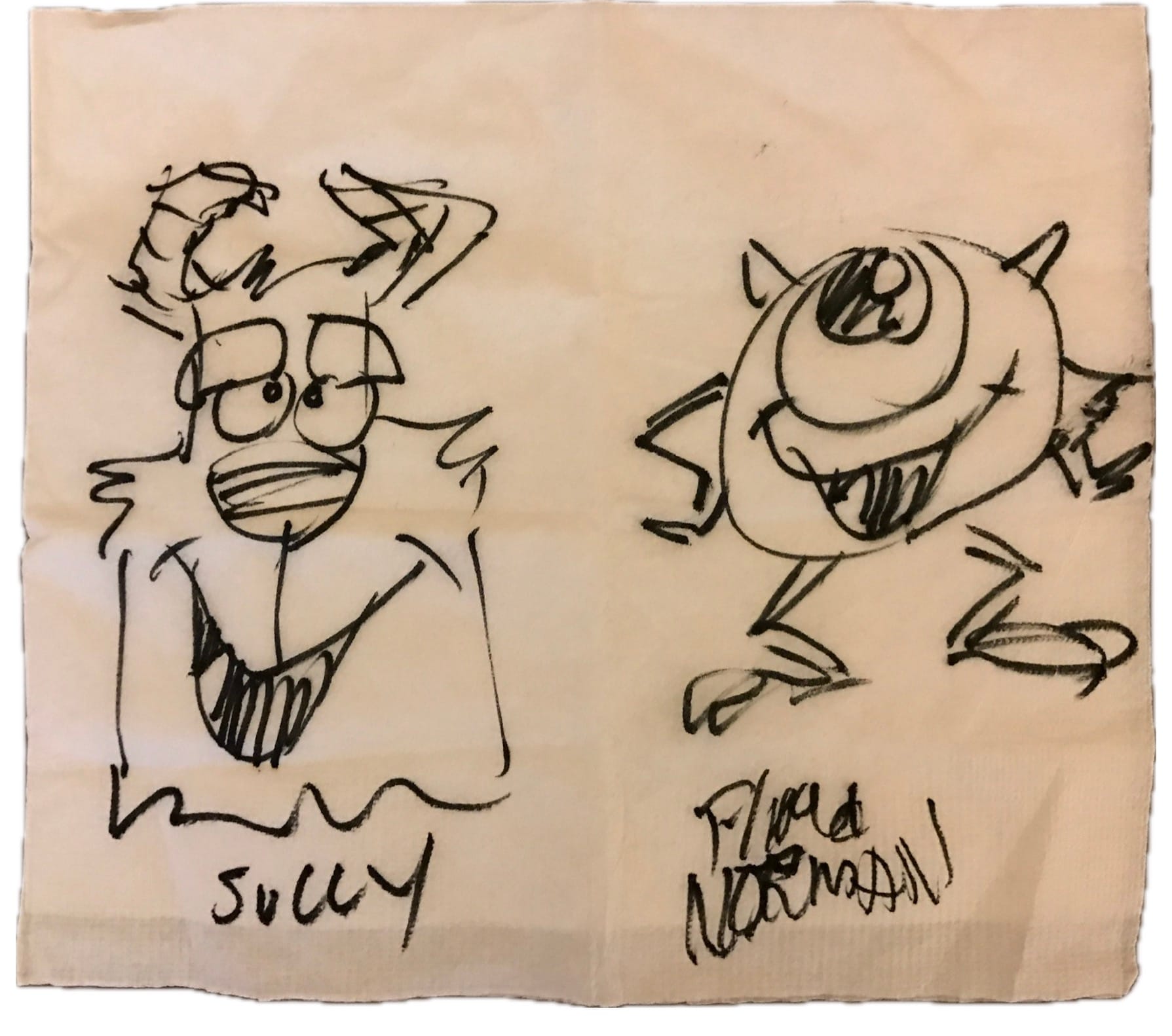
While chatting over dinner with Ron and me, Norman quickly sketched Sully and Mike from Monsters, Inc. on a napkin. I may have squealed. It was clear he still loved his work—both creating the art and seeing the joy it brings. I’m guessing that’s just as true today as it was nearly a decade ago.
Yes, I still have the napkin. It’s a Floyd Norman original!
That screening remains one of my favorite events I was lucky enough to host at Apple, and the film remains one of my favorite documentaries. You will be captivated by Norman’s enthusiasm and verve.
Apple today announced John Giannandrea, Apple’s senior vice president for Machine Learning and AI Strategy, is stepping down from his position and will serve as an advisor to the company before retiring in the spring of 2026. Apple also announced that renowned AI researcher Amar Subramanya has joined Apple as vice president of AI, reporting to Craig Federighi. Subramanya will be leading critical areas, including Apple Foundation Models, ML research, and AI Safety and Evaluation. The balance of Giannandrea’s organization will shift to Sabih Khan and Eddy Cue to align closer with similar organizations.
JG was seemingly too focused on research and development and not enough on shipping products (in Apple terms, he was perhaps good at his “Category 1”—AI research—and not so great at his “Category 3”—making that work available for others to successfully perform their Category 1).
Breaking up JG’s organization makes sense, then. (My understanding is it was a mess—apparently the admin he brought over with him from Google was running the team.) Subramanya keeps JG’s research and foundational AI portfolio (under Federighi’s SWE—Software Engineering), while I’ll guess that AI infrastructure, which wouldn’t fit well under SWE, shifts to Khan (Apple’s COO), and front-end and related services lands with Cue, who owns Services (like the App Store and App Store Connect). Fortunately, Cue’s and Federighi’s teams have a lot of experience working together to deliver products (Xcode Cloud or In App Purchase are but two examples), so I’m confident this bodes well for the future of Apple Intelligence.
I don’t know Subramanya (I suppose he’s “renowned” among AI researchers?). He left Microsoft after only five months to join Apple, after spending 16 years at Google (twice that of Giannandrea). Is another long-time Google executive the right move here? If he’s willing to leave Microsoft after just five months, what happens when Meta or OpenAI come calling with a yet-better offer? On the other hand, if Apple does partner with Google to use Gemini, having someone with deep familiarity of that team could prove valuable. I’m cautiously optimistic here.
(Amusingly, Subramanya’s LinkedIn still shows his last post, where he is “super excited” to start at Microsoft and was “feeling deeply energized” a week in, describing Microsoft’s culture as “refreshingly low ego yet bursting with ambition.” Either something changed or Apple made a really great offer.)
The partnership would see Intel shipping its lowest-end M processor to Apple as early as second or third quarter 2027.
And:
Shares in Intel rose 10% on Friday after TF International Securities analyst Ming-Chi Kuo posted on X that he expected Intel to begin shipping its lowest-end M processor to Apple as early as second or third quarter 2027.
I can’t tell if Nicol-Schwarz’s use of “its” following “Intel” is hasty and unclear writing, or a misunderstanding of who “owns” the M-series processors.
Here’s the first line of Kuo’s X/Twitter post:
Intel expected to begin shipping Apple’s lowest-end M processor as early as 2027.
Later, Kuo writes:
Apple’s plan is for Intel to begin shipping its lowest-end M processor […]
My guess is this is where Nicol-Schwarz got things wrong, misinterpreting “its” here to refer to Intel rather than to Apple, despite the clear (to me) antecedent.
These are Apple’s M-class processors, not Intel’s. The M-series (M1 through M5) is created by Apple. They design them in-house, then have a chip manufacturer (currently TSMC) build (fabricate, or “fab”) them to Apple’s specifications. The supposed deal would have a small portion of those chips fabbed by Intel instead of TSMC.
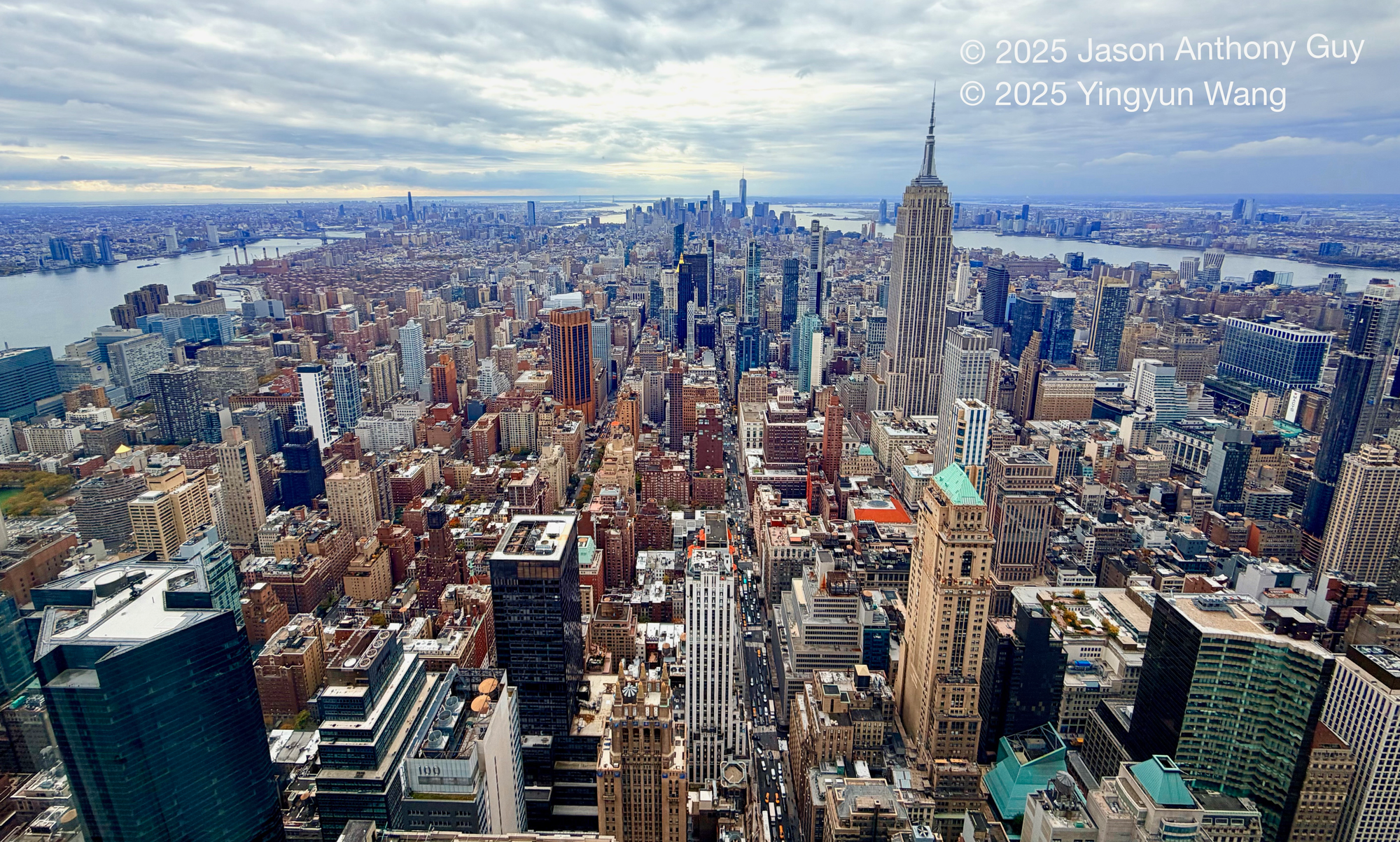
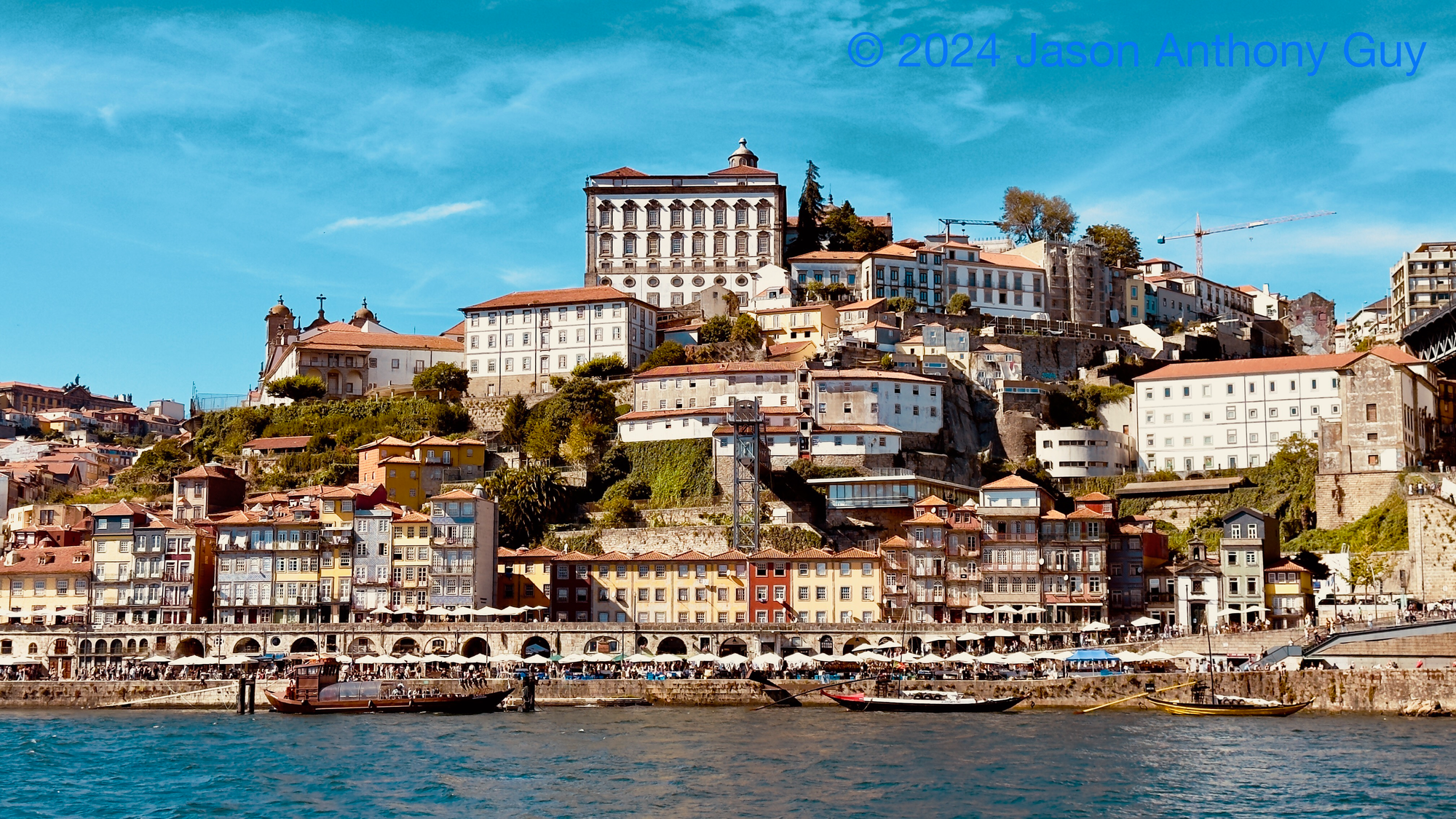
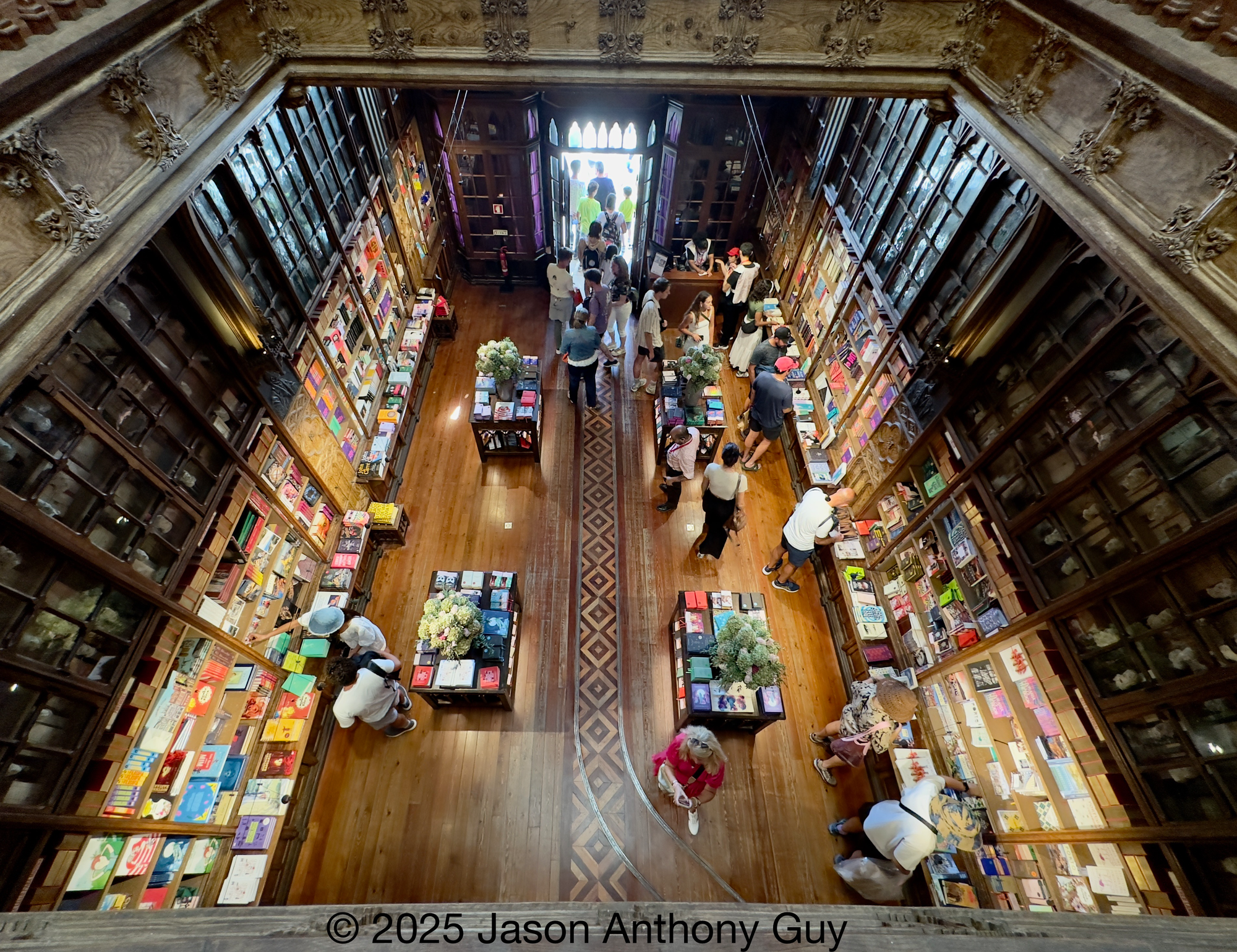
Golden Gate Bridge from Crissy Field, San Francisco.Stairs at Fort Tyron Park, New York.Inside the Met Cloisters, New York.New York City, looking south.Porto, from Vila Nova de Gaia.Porto Barrels of Ferreira, Portugal.Livraria Lello, Porto. “The most beautiful bookstore in the world.”Shave Ice, Ululani’s, Maui.Full Arc Rainbow over Ko Olina, Oahu.
Bruce Weber, with unhappy news in The New York Times (gift link):
Tom Stoppard, the Czech-born English playwright who entwined erudition with imagination, verbal pyrotechnics with arch cleverness, and philosophical probing with heartache and lust in stage works that won accolades and awards on both sides of Atlantic, earning critical comparisons to Shakespeare and Shaw, has died at his home in Dorset, England. He was 88. […]
Few writers for the stage — or the page, for that matter — have exhibited the rhetorical dazzle of Mr. Stoppard, or been as dauntless in plumbing the depths of intellect for conflict and drama. Beginning in 1966 with his witty twist on “Hamlet” — “Rosencrantz and Guildenstern Are Dead” — he soon earned a reputation as the most cerebral of contemporary English-language playwrights, venturing into vast fields of scholarly inquiry — theology, political theory, the relationship of mind and body, the nature of creativity, the purpose of art — and spreading his work across the centuries and continents.
Tom Stoppard has been an essential part of my theatrical and movie-going upbringing for nigh on forty years. I first encountered his work in the late 1980s, shortly after I joined the New York Parks’ Shakespeare Company to study acting. We were learning Hamlet and our directors shared Rosencrantz and Guildenstern Are Dead as a way of fleshing out our understanding of the story, an alternate view into the play that highlighted the absurdities of Shakespeare’s tragedy.
I loved it. It tickled my brain in exactly the right way.
Unsurprisingly, I was equally smitten by Shakespeare in Love, the screenplay for which Stoppard won an Oscar and Golden Globe. It remains one of my favorite movies (and only in small part due to Gwyneth Paltrow).
I first saw Arcadia in 2004, and again in 2013. In between, I saw The Real Thing, Travesties, Rock ’n’ Roll, and Indian Ink: Stoppard was in regular rotation at San Francisco’s A.C.T., for which I’m terribly grateful.
Until today, I wasn’t aware that he was an often-uncredited script doctor, punching up movies, from Indiana Jones and the Last Crusade to Star Wars: Episode III – Revenge of the Sith. I shouldn’t be surprised: Last Crusade is my favorite of that trilogy, and RotS is considered the best of the Star Wars prequel entries.
I loved Stoppard’s faculty with language, his playfulness, his ability to go from farcical to philosophical in a single phrase. His “exit is an entrance somewhere else.” Like other timeless, surname-is-sufficient writers—Shakespeare, Shaw, Beckett—Stoppard leaves us with his breathtakingly exquisite words.
Sam Roberts at The New York Times (gift link), reporting heartbreaking news:
David Lerner, a high school dropout and self-taught computer geek whose funky foothold in New York’s Flatiron district, Tekserve, was for decades a beloved discount mecca for Apple customers desperate to retrieve lost data and repair frozen hard drives, died on Nov. 12 at a hospital in Manhattan. He was 72.
The cause was complications of lung cancer, said his wife, Lorren Erstad, his only immediate survivor.
🙁 always loved Tekserve. Was my go-to store for years.
In the late-’80s and well into the ’90s, I would often visit just to see what new hardware and software had been released and to chat to other Mac users. It didn’t feel like there were a lot of us back then, but the lot of us loved Tekserve. Lerner (and his co-founder Dick Demenus) built a community in the shape of a store.
Thanksgiving leftovers are arguably the best part of the holiday. Make the most of them with our wonderful recipes for the ideal turkey sandwich, potpie, tetrazzini, soups and more.
Brian Phillips, at The Ringer, brings us a story I never expected to be linking to the day after Thanksgiving, but better now than yesterday. It’s salacious and sickening in equal measure. Too juicy to ignore, and yet I wish I’d never learned of it:
There’s no way around it. If you read this article, you are going to have to imagine Robert F. Kennedy Jr., the United States secretary of health and human services, having an absolutely eyeball-melting orgasm. You’re going to have to imagine a sweaty, leathery man in his early 70s, the scion of the celebrated Kennedy political dynasty, bellowing like a Spartan as his body yields to the sweet, sweet release. Knees buckling. Sinews straining. What does it sound like when RFK Jr. bellows? I’ll go out on a limb and say it’s gritty. His normal speaking voice is basically a garbage disposal. When the big one hits, it must be like tossing a fork in.
[…]
But hang on. Do you have any idea what I’m talking about? Have you been following this scandal at all? My sense is that of the people reading this, half will have no idea who Olivia Nuzzi and Ryan Lizza are, while the other half—sickos and journalists, but I repeat myself—have been bingeing the story for months and keep all the details on murderboards in their brains.
If you’re just joining us, welcome. Let’s take a minute to get you up to speed.
I’m aware of this story primarily because Keith Olbermann, who dated Nuzzi when she was 19 and he was 50-something, gleefully shares regular, snarky updates on his Countdown podcast.
In this handcrafted film, a ragtag group of woodland critters discover a lost iPhone 17 Pro and use it to film themselves singing a song of friendship as a gift, before returning it to its rightful owner.
Shot on iPhone 17 Pro, the spot features puppets instead of people and is more whimsical than Apple’s usual tear-jerkers. It’s inspired by the Flight of the Conchords song “Friends,” maintaining much of the original’s quirkiness while avoiding some of the more, uh, colorful lyrics.
Also: The Making Of… video, which is equally delightful.
I very much enjoyed the Minnesota Historical Society’s in-depth panel discussion of the legacy of Peanuts’ Franklin, featuring Robb Armstrong, the creator of the long-running Jump Start comic strip, one of the screenplay writers for the aforelinked Welcome Home, Franklin, and the person whose surname Charles Schulz chose for Franklin. Armstrong’s a great storyteller, and his own history of becoming a cartoonist and his relationship with Schulz is deeply moving.
Happy Thanksgiving! As we Americans celebrate the holiday by devouring turkey and watching A Charlie Brown Thanksgiving (as is tradition), I recommend also watching Welcome Home, Franklin, the in-world backstory of how Franklin Armstrong joined the Peanuts family. Plus, catch the real-life story of how retired teacher Harriet Glickman convinced Peanuts creator Charles Schulz to add his first Black character—Franklin—to his comic strip after the assassination of Martin Luther King, Jr. in 1968.
This is one of those silly yet annoying things that drives me batty.
A few days ago, I tried using Spotlight search on iOS to open the DuckDuckGo web browser. Normally I swipe down on the Home Screen and type “duck,” but instead of showing the app, it returned a link to the website, Siri Knowledge about the DuckDuckGo company, the Audio Ducking setting, and dozens of photos of ducks I’d forgotten I’d taken.
After several minutes of troubleshooting the issue (including restarting my device), I stumbled across the cause: at some point I’d unknowingly disabled the Settings > Search > Show App in Search option for DuckDuckGo.
I don’t recall doing so. This was a new iPhone, just a few weeks old, set up by transferring all data and settings from my previous iPhone. The old phone had the setting enabled. Upon (re-)enabling it on the newer device, my Spotlight search worked again.
(This is not a setting that gets synced between devices, from what I’ve determined, so either I actually changed it and forgot, or it “got changed” from under me by the system. The former is infinitely more likely, but I’m not completely ruling out the latter.)
Frustratingly, there’s no easy way to check whether any given app has this setting disabled without tapping into each app under Settings > Search, a vexing task for anyone with more than a handful of apps, and an overwhelming chore for someone with let’s see… 692 apps installed.
(I’d appreciate an option to scroll through a list of apps that have this setting disabled, and to reset all apps so they show in search. For my Apple friends: FB21172336, Need easier way to see which apps have “Show App in Search” disabled.)
If you’re using Spotlight search and wondering why an app you know is on your system isn’t showing up, check whether Show App in Search was disabled for it.
Hopefully, this helps someone else who was pulling out their hair.
White House press secretary Karoline Leavitt says “all orders” from President Trump are “lawful orders,” and troops have no right to question him.
“All lawful—all orders—lawful orders are presumed to be legal by our service members. You can’t have a functioning military if there is disorder and chaos within the ranks,” Leavitt told reporters outside the White House on Monday. “And that’s what these Democrat members were encouraging. It’s very clear. And not a single one of them since they’ve been pressed by the media … can point to a single illegal order that this administration has given down because it does not exist.
“You can’t have a soldier out on the battlefield or conducting a classified order questioning whether that order is lawful or whether they should follow through,” Leavitt argued earlier, in a twisted reading of the Uniform Code of Military Justice.
If those members of Congress had said “you can refuse to eat poisoned food,” Leavitt would insist “all food from this White House is presumed to be safe and no one can point to a single poisoned meal from this administration.”
Setting aside the reality that military members are legally and morally obligated to refuse illegal orders, this regime is telling on itself by taking a factual statement about defying illegal orders and insisting it’s about defying legal orders. To declare that these congresspeople said the opposite of what they did—and to further assert that every order from the president is legal—is disturbingly Orwellian, even for a regime that revels in doublethink. There’s clear consciousness of guilt in their over-the-top protestations.
Yesterday, Trump seemed to lose the last bit of his grip on his emotions as he fired off a fusillade of Truth Social posts. (“Trump must not have slept well Wednesday night,” Bill Kristol and Andrew Egger of The Bulwarkobserved today.) “This is really bad,” the president wrote, “and Dangerous to our Country. Their words cannot be allowed to stand. SEDITIOUS BEHAVIOR FROM TRAITORS!!! LOCK THEM UP???”
[…]
[Press Secretary Karoline] Leavitt then tried to turn the entire ghastly business on its head. “Many in this room want to talk about the president’s response, but not what brought the president to responding in this way,” she said—as though members of Congress publicly speaking their minds somehow justified the death threats.
Jimmy Cliff, the Jamaican reggae singer who helped popularize the genre around the world with songs like “You Can Get It If You Really Want” and “The Harder They Come,” has died. He was 81.
Mr. Cliff’s wife, Latifa Chambers, announced his death in a post online early Monday. She said the cause was a seizure followed by pneumonia.
I suspect Jimmy Cliff is relatively unknown to American audiences (compared to, say, Bob Marley, who Cliff essentially discovered), but he’s legendary among West Indians, especially those growing up in the ’70s and ’80s. Without Cliff, it’s unlikely reggae would have achieved its level of popularity and influence.
RIP to a musical legend.
See Also: Ben Sisario’s Times companion piece, “Jimmy Cliff: 8 Essential Songs”. I consider Cliff’s version of “I Can See Clearly Now” to be the definitive cut. Not on the list, but also worthy: Brown Eyes, a lovely ditty that’s a quintessentially mid-’80s mashup of reggae, electropop, and rap, co-written by, of all people, La Toya Jackson.
Mark Gurman, in his Power On newsletter at Bloomberg (paywalled; archive), unambiguously refutes the recent Financial Times report that Tim Cook will step down as CEO “as soon as next year”:
Based on everything I’ve learned in recent weeks, I don’t believe a departure by the middle of next year is likely. In fact, I would be shocked if Cook steps down in the time frame outlined by the FT. Some people have speculated that the story was a “test balloon” orchestrated by Apple or someone close to Cook to prepare Wall Street for a change, but that isn’t the case either. I believe the story was simply false.
In linking to the FT report, I suggested it “could be a scoop, a PR plant, or the entire piece could be based on a few people setting up a WebEx call and ordering pizza.” I didn’t consider “simply false” as an option. That’s pretty unequivocal.
Gurman also calls the FT report “premature,” with “few signs internally that he’s about to hand off the baton.”
Tara Copp and Michelle Boorstein, in a Washington Post “exclusive” on Thursday (semi-gift link; Apple News+):
The U.S. Coast Guard will no longer classify the swastika — an emblem of fascism and white supremacy inextricably linked to the murder of millions of Jews and the deaths of more than 400,000 U.S. troops who died fighting in World War II — as a hate symbol, according to a new policy that takes effect next month.
Instead, the Coast Guard will classify the Nazi-era insignia as “potentially divisive” under its new guidelines. The policy, set to take effect Dec. 15, similarly downgrades the classification of nooses and the Confederate flag, though display of the latter remains banned, according to documents reviewed by The Washington Post.
This caused an uproar, as anyone with any sensibility would expect. The only ones who believed explicitly reclassifying Nazi symbols and nooses as merely “potentially divisive” was a good idea were Nazis and racists.
By late Thursday, the Coast Guard, in what The Washington Post called “a stunning and hasty reversal,” had changed their mind and their policy. Copp and Boorstein, joined by Hari Raj and Victoria Bisset, reported the change (semi-gift link; Apple News+):
The abrupt policy change occurred hours after The Washington Post first reported that the service was about to enact new harassment guidelines that downgraded the meaning of such symbols of fascism and racism, labeling them instead “potentially divisive.” That shift had been set to take effect Dec. 15.
In a memo to Coast Guard personnel, the service’s acting commandant, Adm. Kevin Lunday, said the policy document issued late Thursday night supersedes all previous guidance on the issue.
“Divisive or hate symbols and flags are prohibited,” Lunday wrote in his memo. “These symbols and flags include, but are not limited to, the following: a noose, a swastika, and any symbols or flags co-opted or adopted by hate-based groups as representations of supremacy, racial or religious intolerance, anti-semitism, or any other improper bias.”
Public outrage works.
With this regime, it’s all-too-easy to believe the worst: that the first revision of the policy was specifically meant to soften the Coast Guard’s stance on these symbols, with the goal of allowing them when they weren’t previously allowed. I don’t believe that’s the case, here. Rather, the update reads like a typical HR bureaucratese rewrite aimed at providing as much latitude as possible when interpreting the guidelines to prevent unintended consequences and bad-faith (or weaponized) abuse.
A symbol or flag is divisive if its public display adversely affects good order and discipline, unit cohesion, command climate, morale, or mission effectiveness.
So an item’s “divisiveness” already depends on the effect it has.
Meanwhile, 11.B.1 notes that “a noose, a swastika,” etc. are “[p]otentially divisive symbols and flags,” and 11.C.2 notes:
Displays that exist for an unquestionably legitimate purpose should not be subject to removal. Examples include state-sanctioned items or when the symbol or flag is only an incidental or minor component, such as in works of art, or in educational or historical displays […]
My read: because swastikas and nooses may appear “in works of art, or in educational or historical displays,” they couldn’t always be classified as “divisive,” as their divisiveness depends on the context. Thus “potentially.”
The updated memorandum (correctly) redefines nooses and swastikas as “divisive or hate symbols” that are “prohibited and shall be removed.” It also eliminates the “works of art, or in educational or historical displays” carve-out (leaving it only for the Confederate battle flag). While this is much clearer, I’m confident that some historical and educational artifact will soon get flagged as a “divisive or hate symbol” and removed—and we’ll see an uproar over that.
On a starry January evening in 2018, Chadwick Boseman stepped out of a black car and onto the royal purple carpet outside the Dolby Theatre for the world premiere of his newest film, “Black Panther.” […]
“This is an epic experience,” Boseman told reporters, grinning widely as he looked out at Hollywood Blvd., blocked off for an assembly of A-listers dressed in their finest African garb. […]
Now, more than seven years later, on Nov. 20, a red carpet will be rolled out on that famed stretch of sidewalk once again as Boseman gets immortalized with a star on the Hollywood Walk of Fame. Upon learning Boseman’s terrazzo and brass monument will be located near the same venue, his “Black Panther” co-star Lupita Nyong’o says reverently: “It means it won’t be missed. A place of prominence for a king.”
Five years after the Black Panther star died at age 43 following a battle with colon cancer, he was posthumously awarded a star on the Hollywood Walk of Fame and his wife Simone Ledward-Boseman honored the late actor by bringing a piece of him to the unveiling ceremony.
During the Nov. 20 event, Simone placed a pair of Chadwick’s shoes on his newly-minted star so that he could “step” on the memorial alongside her and his brothers Derrick Boseman and Kevin Boseman.
I watched a bit of the live-streamed ceremony and it was very moving. It’s hard to believe it’s been five years. I still recall my anguish when I learned of his death. (Coincidentally, it’s the last thing I wrote about in my now-defunct personal blog.)
I always thought of Boseman as supremely talented. I remember being blown away by him as James Brown in Get on Up—he was absolutely sensational. In Marshall, he was quietly brilliant. I rewatched a 2011 episode of Castle, and he was captivating in his five minutes of screen time. Black Panther, of course, was a cultural phenomenon, but it was Boseman as T’Challa that gave that movie its heart. (Watch how fans react to him when he surprises them on The Tonight Show to understand his impact.)
He seemed like a genuinely nice, thoughtful guy. I’m heartbroken he’s not alive to accept the honor himself.
Amazon said Tuesday that it will lay off about 14,000 corporate employees, marking the latest cuts in the company’s multiyear effort to rein in costs.
In a blog post, the company wrote that the layoffs are being carried out to help make the company leaner and less bureaucratic, while it looks to invest in “our biggest bets” including generative artificial intelligence.
Documents filed in New York, California, New Jersey and Amazon’s home state of Washington showed that nearly 40% of the more than 4,700 job cuts in those states were engineering roles.
Amazon CEO Andy Jassy has been on a multiyear mission to transform the company’s corporate culture into one that operates like what he calls “the world’s largest startup.” He’s looked to make Amazon leaner and less bureaucratic by urging staffers to do more with less and cutting organizational bloat.
Related: There are ongoing calls to boycott Amazon (and Target and Home Depot) from November 27 (Thanksgiving) through December 1 (Cyber Monday) for “enabling” the Trump regime. From “We Ain’t Buying It”:
This action is taking direct aim at Target, for caving to this administration’s biased attacks on DEI; Home Depot, for allowing and colluding with ICE to kidnap our neighbors on their properties; and Amazon, for funding this administration to secure their own corporate tax cuts.
They’re encouraging a “full black out” on spending at those three companies during that long weekend, and urging consumers to redirect their spending to shop “small, local, or with businesses affirming our humanity.”
Currently $99 direct from Apple. Shared by a friend inside Apple who notes the 34% discount is significantly better than Apple’s employee pricing. The single pack is 38% off ($18), but the four-pack is a better deal.
My friend also pointed out the A16 iPad 11” is $279 $274 at Amazon (20% 21% off, better than Apple’s “friends and family” discount), but crucially, it’s the “not ready for Apple Intelligence” model released in March, currently $349 direct from Apple, which I’ve gone on record as saying “I could not in good conscience suggest” buying “except in some very limited instances.” I stand by that.
Paris Marx is joined by Nathan Grayson to discuss how Saudi Arabia is buying its way into the sports, comedy, and video game industries in order to broaden its investment portfolio and launder its international reputation.
Grayson is a cofounder of Aftermath, “a worker-owned news site covering video games, the internet, and the cultures that surround them.”
I found this conversation valuable as an explainer for the “why” behind Saudi Arabia’s ongoing games- and sportswashing that was briefly mentioned in the aforelinked Karen Attiah “Saudification” post.
In addition to laundering its image (and its oil money), the other beneift Saudi Arabia’s may see to its gaming takeover is that control over video games means control over young, impressionable men. Think Madden Football, UFC, Battlefield, or Mass Effect. The ability to control (or at least influence) the content and imagery in these games can have a huge long-term effect—I imagine, for example, we’d see less of the “Middle East as the enemy” trope in first-person shooter games, and perhaps more examples of the “advantages” of an absolute, totalitarian, patriarchal monarchy.
This week, seven years almost to the day since the CIA announced the crown prince’s responsibility in the murder [of Jamal Khashoggi], Mohammed bin Salman returns to Washington, invited for an offical visit by America’s Temu pharaoh, Donald Trump. The reconciliation between Trump and MBS was perhaps inevitable, given that even before the first Trump presidency, Trump spoke often of his love for the Saudis and their wealth. (“I get along great with all of them; they buy apartments from me. They spend $40m, $50m,” he quipped in 2015. “Am I supposed to dislike them? I like them very much!”)
Attiah, who was until recently the editor of the Washington Post’s global opinion section, hired Khashoggi in 2017.
A year later, Saudi Arabia had Jamal killed. In the aftermath of Jamal’s murder, Trump administration officials worked overtime to launder Saudi Arabia’s blood-stained image. Jared Kushner was advising Prince Mohammed on how to “weather the storm”. Last year, Kushner’s equity firm received $2bn from Saudi Arabia’s private equity firm.
There’s much to say about the Saudification of western cultural spaces through the sheer sums of money the kingdom is so obviously throwing into what it sees as soft power. Writers and observers have commented for years about Saudi Arabia’s “sportswashing”, like the kingdom’s sponsorship of LIV golf tournament and the purchase of the Newcastle United soccer team.
Attiah again, this time on her personal site, The Golden Hour:
Yesterday, ABC news reporter Nancy Bruce asked the question of MBS. “Your royal highness, the U.S. concluded that you orchestrated the brutal murder of a journalist. 9/11 families are furious that you are in the Oval Office. Why should Americans trust you?”
At first, the crown prince smirked at the camera during the mention of 9/11 families. Then, seconds after that question about Khashoggi’s murder, the millennial crown prince looked down, fidgeting with his hands like a nervous schoolchild called into the principal’s office. And he let Trump do the dirty work -to attack ABC as fake news before launching into more vile commentary and smearing Jamal’s name:
“You’re mentioning someone [Khashoggi] who was extremely controversial; a lot of people didn’t like that gentleman that you’re talking about. Whether you like him or didn’t like him, things happen,” Trump said.
The written word doesn’t do the quote justice. The malice oozing from Trump as he spews out “a lot of people didn’t like that gentleman” needs to be seen and heard to fully comprehend its odiousness.
That’s in addition to Trump’s vile and appalling implication that murder—dismemberment—is, perhaps, somehow, acceptable if you’re “controversial” or disliked, a perfectly reasonable consequence in Trump’s twisted, mob-boss mind.
Catherine Lucey, who covers the White House for Bloomberg News, was doing what reporters are supposed to do: asking germane questions.
Her query to Donald Trump a few days ago during a “gaggle” aboard Air Force One was reasonable as it had to do with the release of the Epstein files, certainly a subject of great public interest. Why had Trump been stonewalling, she asked, “if there’s nothing incriminating in the files”.
His response, though, was anything but reasonable.
It was demeaning, insulting and misogynistic.
He pointed straight at Lucey and told her to stop doing her job.
“Quiet. Quiet, piggy,” said the president of the United States.
Donald Trump has never been a nice man, but he’s generally managed to maintain an in-public grip on his vituperativeness, especially in front of the cameras.
That grip is slipping.
Like Sullivan and others, I’m shocked-not-shocked by Trump’s explosion of anger toward a female reporter, but I’m genuinely dismayed that the other reporters around him didn’t bat an eye. The male reporter to his left displays no reaction whatsoever and the female reporter whose question Lucey was supposedly interrupting just… asks it. No hesitation, no surprise. Seemingly just another outburst the press has come to expect—and ignore.
What I find deeply disturbing—and why I say he’s losing some of his self-control—is the suddenness of his outburst and the equal speed with which he regains his composure. Note how calmly he answers a question before his eruption, and how calmly he answers after.
His first “quiet” to Lucey is angry, as he raises his finger in admonishment. It’s the level of anger from someone who’s pissed off at being interrupted.
His second “quiet” is menacing, an escalation as he lunges toward Lucey and thrusts his finger right in her face, an attempt to intimidate, dominate. This is the moment he lost self-control. You can imagine Trump shoving her, or slapping her, to shut her up.
Calling her “piggy”—an epithet seemingly expressing his deep personal disdain for the reporter—feels almost tacked on. He knows he can’t physically strike Lucey, but he needs to strike out at her. He needs to insult her, put her down. This is the moment Trump’s survival instincts kick in, but he’s not yet fully back in control. He can’t help himself, and out slips “piggy,” one of his favorite misogynistic yet comparatively “polite” insults.
But I’ll bet you that wasn’t the word he was thinking.
If you enjoy this curated collection of eclectic ephemera,
subscribe by email or follow in RSS to get new posts automatically.