
This irrationally optimistic petition, created by Jade Pearce of PNP Games, calls on Sony to “save physical games.” It’s garnered over 314,000 signatures on Change.org since it launched two weeks ago. I’ve signed it, naturally. I appreciate a quixotic campaign.
Sony Killing PlayStation Game Discs ⚙︎
Sony has announced physical disc production ends in January 2028 for new games releasing on PlayStation consoles. […]
This new policy will cover all games released on PlayStation consoles from all publishers after this cut-off date […]
Even if you want to own your gaming media, very soon you’ll be unable to. Sony’s Sid Shuman ascribes the decision to “shifting trends in consumer preference.” I ascribe it to Sony’s desire to improve its bottom line. You can pre-order Marvel’s Wolverine as a digital download or physical disc. Either will cost $70, but the download requires zero inventory, and incremental costs per sale amount to bandwidth usage. There are no factories or paper or ink. Shipping logistics are eliminated.
Another reason to prefer physical discs over digital downloads is the resale market. Many players recoup their costs by selling their played games through GameStop or any number of other services. One physical copy of a game could flow through the consoles of half a dozen players, and Sony sees that revenue just once. Digital sales eliminate that. Even one more player buying a copy of the game doubles Sony’s revenue.
Apple realized the value of digital distribution in 2003 with the iTunes Music Store, embraced it in 2008 with the App Store, and solidified it in 2011 when it discontinued boxed software for Mac apps. Apple hasn’t sold physical software in fifteen years. Sony has plenty of “trends in consumer preference” to point to and incremental revenue to book. I’m only surprised they’ve waited this long.
IBM Shares Plummet 25% on Weak Preliminary Q2 Results, Wiping out $67 Billion in Market Cap ⚙︎
IBM’s stock plummeted on Tuesday in its largest single-day loss in its 115-year history, after CEO Arvind Krishna warned investors the computing firm’s latest quarter was “worse than our expectations” while failing to adapt to rising chip costs.
I’m not a stock analyst, but this might be what some folks call “a buying opportunity.”
Krishna’s full statement manages to be both stultifyingly opaque and refreshingly transparent:
When we discussed our expectations with you in April, we noted that we would be wrapping on the launch of z17 in the second quarter. Given this was the strongest start to a mainframe program in our history, we expected Infrastructure revenue to decline low-single digits for the year, beginning this quarter.
What played out was worse than our expectations, driven by a shortfall in our Z performance and the associated software stack, primarily in Transaction Processing. In the last few weeks of June, we saw clients shift their quarterly capex spend toward servers, storage, and memory purchases to secure supply-constrained infrastructure ahead of expected price increases. This dynamic impacted client buying patterns. While we anticipated some supply chain-related impact in our expectations, we did not anticipate the magnitude of the capex reprioritization. In addition, clients were distracted with rapidly-evolving, industry-wide cybersecurity concerns in the quarter.
These conditions require our teams to execute perfectly, and this quarter we faltered. We did not adapt and move quickly enough, and numerous large deals failed to close on the timelines we expected, driving the majority of our shortfall.
Translation: “Our customers are buying stuff we aren’t selling.”
See Also: Techmeme’s coverage.
Apple Park: ‘Built to Converge / Designed to Isolate’ ⚙︎
Malcolm Crawford (a long-time Apple colleague, recently retired), with a terrific piece on the structural design failure of Apple Park:
Apple Park’s primary design goal was to foster collaboration and serendipitous interaction — almost the exact words Apple’s own head of industrial design used to describe the building years after it opened, and consistent with what Jobs pitched to Cupertino’s city council in 2011: a ring shape chosen specifically to eliminate hierarchical corners in favour of more egalitarian, encounter-friendly circulation. By most accounts from the people who actually work there, it’s failed at exactly that.
The open-plan floors make it hard to concentrate. The building is so large that getting from one meeting to the next eats real time out of the day. It’s common for people to run meetings with colleagues over Webex — colleagues on the same campus, sometimes no more than two hundred yards away.
Ironically, Apple Park replaced a campus that did far better on the same measure without ever trying to. Infinite Loop produced far more of the accidental, cross-team contact Apple Park was explicitly built to create. Working out why starts with what Infinite Loop got right by accident. It continues with what the research on office proximity says about why that kind of thing happens at all. And it ends with what Apple Park could become instead — including a version of the fix Apple already trusts enough to run for a hundred people a year.
Apple Park is a beautiful structure, but is not terribly conducive to focused or collaborative work. Even as an occasional visitor I found it overwhelming. Employees sit shoulder to shoulder, voices bounce off and bleed through glass walls, and privacy is a virtual impossibility. My friends and colleagues who worked there regularly found it difficult to be productive.
I worked in Infinite Loop (Building 3, 2nd floor) for thirteen years (right below Developer Publications, where Malcolm spent a good portion of his Apple career). I loved IL because its design made serendipitous encounters easy. Whether it was sitting outside Caffè Macs or in the IL 1 Atrium, I would inevitably bump into someone and have a conversation that furthered an in-flight project, sparked something new, or simply reinforced the social ties that bind colleagues.
It helped that at that time, Apple had perhaps 10,000 employees, most of whom were in or near IL. After iPhone came about and IL started getting locked down, much of the natural collaboration dissipated, disappearing behind badged doors and disclosures. By the time Apple Park came along, “chance encounters” had already become less frequent, and when they happened, those conversations were necessarily constrained by NDAs. Apple Park was a vision for an Apple that, ten years after iPhone, no longer really existed.
Malcolm’s essay captures the collaborative beauty of IL and the challenges of Apple Park, and offers a solution that I find remarkably appealing.
If you’ve been part of the Apple (or NeXT) developer ecosystem for a while, you may remember Malcolm—mmalc—as a long-time technical writer on Apple’s Developer Publications team. He’s now writing publicly at mmalc X Machina on topics that stem “from a lifelong interest in technology and the environment.” So far he’s covered everything from EV charger infrastructure to crop yield to a conceptual introduction to git. He notes that he’s “not inviting anyone to sign up or become a ‘member’” but I signed up anyway. Or follow him on Mastodon.
On ‘Buying’ Digital Media
After my recent comment that “I’m a big believer in owning physical copies of media I love,” an old friend asked me on Facebook:
Do you ever buy streaming rights for life as opposed to a 1-3 day rental? You can download movies to your device if you have spotty internet.
I very rarely “buy” streaming movies or TV shows, and I definitely don’t consider those “purchases” to be “for life.” I’m using scare quotes liberally here because you and I don’t own that content. It’s merely licensed to us and that license can be revoked by the rights holder at any time. It isn’t ours. Unlike a hardcover book or a DVD boxed set, we can’t loan it to a friend or hand it down to our movie-obsessed niece or cousin.
Buying a streamed movie is not logistically much different from paying to rent a movie, except that when you pay Apple $5.99 to rent Project Hail Mary, you know you’ll lose access to it 48 hours after you start watching, but when you “buy,” that end date is unknown. Like death, we know it’s coming, we just don’t know when. If we’re very lucky, it’s a very long time from now, but there’s no escaping it—we will eventually lose access to our “purchased” streaming videos. At the very latest, it’ll happen when we die—there’s no right of survivorship for digital media.
(This is true even for the digital code that comes with many Blu-ray and DVD discs.)
I experienced rights revocation first-hand. In 2009, Amazon secretly yanked copies of 1984 from customers’ Kindle libraries, including my own. Yes, really. Yes, 1984. The absurdity wasn’t lost on anyone.
Which is not to say I never “buy” digital media. Recently, for example, I “bought” the two-season boxed set of Sports Night, Aaron Sorkin’s cancelled-too-soon comedy, for $10. Apple normally (and currently) sells that boxed set for $15 per season. But! I had already bought the DVDs 20 (!) years ago and digitally ripped them. Now, I have a higher-quality version that’s more easily streamable. At $10, I was willing to take a flyer that Apple might pull an Amazon—and I recognize that the digital purchase dies with me. But the DVDs can be passed to my heirs. (You’re welcome, heirs.)
So no, I almost never “buy” just “streaming rights.” I buy physical copies of media I truly care about “owning.” I may also buy a digital copy to ease my near-term consumption if the price is right, with the clear understanding that those digital copies can poof, disappear.
⚙︎Lindsey Graham, Trump Sycophant Extraordinaire, Dies at 71 ⚙︎
The Office of U.S. Senator Lindsey Graham, on X/Twitter (XCancel link):
On the evening of Saturday, July 11, U.S. Senator Lindsey Graham passed away from a brief and sudden illness. Senator Graham’s family appreciates prayers at this time and asks for privacy during this incredibly difficult period.
The New York Times (gift link):
Mr. Graham was one of many powerful Republicans who changed their public position on Mr. Trump. As Mr. Trump was rising in his first presidential campaign, Mr. Graham lambasted him as a “demagogue” and a “race-baiting, xenophobic, religious bigot.”
“You know how you make America great again?” Mr. Graham said in a CNN interview in 2015. “Tell Donald Trump to go to hell.”
He later said that he had voted in the 2016 election for Evan McMullin, an independent candidate, rather than for Mr. Trump or Hillary Clinton, the Democrat.
A decade later, though, he was regularly and effusively lauding Mr. Trump. In a speech celebrating his South Carolina primary victory last month, Mr. Graham joked, “Mr. President, you’re not far behind God.”
I learned that “If you have nothing nice to say, say nothing.”
(Another Set Of) Unofficial WWDC26 Pin Set on Kickstarter ⚙︎
Straton Roberts, introducing his sixth (!) Kickstarter campaign for WWDC-inspired pins:
As a UX designer, I’m passionate about the beauty and usability of great design. Naturally, this makes me an Apple fanboy. I’m also a nerdy pin collector and creator. […]
This set of five (5) unofficial enamel pins pays commemorates Apple’s WWDC 2026 conference.
It’s $40, and while I wouldn’t call myself a nerdy pin collector (I’m at best a nerdy pin appreciator), I of course backed it immediately.
The five designs are adorable: Lil Guy (based on Apple’s viral sensation), Lil Tim (Tim Cook in his hands-clasped “good morning!” pose), Orb (based on Siri AI’s new animation), Golden Gate (the bridge and the OS), and my favorite, Crack Marketing Team Microbus. (That’s the one that sold me.)
The campaign has already smashed its $1,000 goal and crushed its $5,000 stretch goal (magnetic clutch backs instead of rubber). With $7,201 pledged by 118 backers as of this writing, it’s still a little shy of its $10,000 stretch goal (vinyl stickers), with four days left.
(Roberts runs Glitchbits, which sells dozens of other beautifully designed pins.)
Strong Song’s ‘Total Eclipse of the Heart’ Episode ⚙︎
If you want to go deep into Bonnie Tyler’s “Total Eclipse of the Heart,” Kirk Hamilton dissected it in a May 2025 episode of his terrific Strong Songs podcast. Hamilton, as usual, does a fantastic job exploring the song’s musicality, backstory, and Tyler’s performance, and gives equal due to Tyler’s co-performer, Rory Dodd. (Overcast, Apple Podcasts.)
(Also be sure to watch the Literal Version of the “Total Eclipse” music video that Hamilton mentions. It had me in stitches.)
Bonnie Tyler Dies At 75 ⚙︎
Alex Williams, The New York Times (gift link):
Bonnie Tyler, the Welsh singer who, with a frosted, teased-up coiffure and a voice both weathered and operatic, soared to No. 1 with “Total Eclipse of the Heart,” one of the titanic pop anthems of the 1980s, died on Wednesday at a hospital in Portugal. She was 75.
“Total Eclipse of the Heart” is a truly epic song, a favorite of my youth. But don’t sleep on “Sometimes When We Touch,” “Holding Out for a Hero,” “It’s a Heartache,” “Making Love (Out of Nothing at All),” “Have You Ever Seen the Rain,” which were staples of my college and post-college parties—especially among my more melodramatic theatre friends.
Every now and then I fall apart.
’12 Angry Men’ and ‘The Complete Kubrick’ Coming Soon from The Criterion Collection ⚙︎
Two additional items worth calling out from The Criterion Collection that aren’t (directly) part of the aforelinked Amazon sale:
- 12 Angry Men has a new 4K digital restoration coming in September. You can pre-order on Amazon for $50, but The Criterion Collection website lists it for $40. It’s available now on Blu-ray for $20, but I’m holding out for the 4K remaster. I adore this movie. The first time I watched it was perhaps just ten or twelve years back, as part of an Apple University course. It sparked a passionate conversation. I wish I could find my notes.
- The Complete Kubrick is coming in October: thirteen features and three shorts—including Dr. Strangelove, 2001: A Space Odyssey, and The Shining—all in 4K. It’s available for pre-order on Amazon for $600, or for $480 directly from Criterion. I’m not a huge Kubrick fan, but I recognize his remarkable technical and creative talent, and a thirty-disc collector’s edition with 4K restorations of his work might push me over the edge, purely as a cinephile.
I assume Amazon will eventually price-match both items (and I’d definitely hold out for a sale on the Kubrick collection), but if you want the best price today, it may be worth ordering from Criterion directly.
Dozens of Criterion Collection Movies On Sale at Amazon ⚙︎
Amazon is running a “limited time deal” on dozens of movies from The Criterion Collection. Many are listed as “50% off,” though that’s off MSRP; actual discounts seem to run about $10–$15 off Amazon’s everyday prices.
I’m a big believer in owning physical copies of media I love. All (but one two) are in 4K. Here are a few classics that caught my eye. (No, I’m not buying them all, as tempting as that is.)
- The Princess Bride, $25. I already own the 20th Anniversary Edition, yet my finger hovered over the “Add to cart” button longer than was strictly necessary. Why won’t my arm move?
- Network, $25. Could it be possible this is even more relevant today than it was in 1976?
- Pee-wee’s Big Adventure, $25. Surreal, immature humor? Yes, please.
- Monty Python’s Life of Brian, $25. “Anybody else feel like a little giggle when I mention my fwiend Biggus… Dickus?”
- Godzilla: The Showa-Era Films, 1954–1975, $113. This one is for my friends. You know who you are.
- The Wes Anderson Archive: Ten Films, Twenty-Five Years, $249. 4K restorations, over twenty-five hours of special features, and ten illustrated books. I considered it, and I’m not even a Wes Anderson fan.
- Citizen Kane, $30. It’s… fine. “Greatest film ever made”? Eh. Still, it deserves to be in every cinephile’s collection.
- Serenity (2005), $20. Loved this movie, but I’m still pissed about Wash’s “leaf on the wind.” I really hope the Firefly “animated reboot” comes through.
- Thelma & Louise, $25. Millennials might say these two yeeted themselves off a cliff. Millennials.
- The Fisher King, $25. Perhaps my third-favorite Robin Williams movie (behind Dead Poets Society and Hook).
- The Silence of the Lambs, $20. He didn’t say “Hello, Clarice” until Hannibal.
- Do the Right Thing, $20. Fight the power. Not in 4K, alas. I’d prefer a higher quality archive source, but beggars, etc.
- Being John Malkovich, $20. “It’s my head, Schwartz! It’s my head!” Also not in 4K.
I have no idea how long this “limited” sale runs, so if you’re also into owning the media you love, check out the collection.
💰
Amazon affiliate links: Any purchase made after clicking an Amazon link makes me fabulously wealthy, but costs you nothing extra.
Apple Scores Record 89 Emmy Award Nominations ⚙︎
Apple scores a historic 89 nominations across 15 programs for the 78th Primetime Emmy Awards, and leads as the network with the most nominations in the Outstanding Drama and Outstanding Comedy series categories, respectively, earning top program nominations for comedies Widow’s Bay, Shrinking, and Margo’s Got Money Troubles, alongside dramas Pluribus, Slow Horses, and Your Friends & Neighbors. Apple’s breakout comedy sensation Widow’s Bay leads as one of this year’s most-nominated programs with 19 nominations in total, and Pluribus lands 18 nominations following its global hit freshman season, while celebrated Apple Original Shrinking lands 10 nominations, Slow Horses is recognized with nine, and Margo’s Got Money Troubles scores eight in total.
I should really watch more Apple TV.
Worth clarifying that Apple’s “record,” “historic” 89 Emmy nods are a record and historic only for Apple: HBO Max earned 122 overall nominations, while Netflix racked up 111.
To Apple’s credit, I’ve at least heard of most of its shows, and their batting average is impressive: 15 of the 31 programs submitted for voter consideration—“less than half of what its competitors submitted”—received nominations. Apple may not have a lot of shows, but the shows they have are chock full of quality.
See Also: The Emmys website has a complete list of nominees.
C.B. Bucknor and Six Other Umpires to Retire at the End of This Season, Accepting MLB Buyout Offer ⚙︎
Bob Nightengale, USA Today’s Major League Baseball columnist, in a one-paragraph aside at the end of a long, unrelated column about pitcher Jacob Misiorowski:
Players and fans can soon stop complaining about veteran umpire CB Bucknor. He is one of seven umpires who have informed MLB that he will retire at the season’s conclusion, accepting their buyout offer. The other six umpires: Laz Diaz, Brian O’Nora, Lance Barksdale, Marvin Hudson, Tony Randazzo and Andy Fletcher. The wave of retirements could open the door for Jen Pawol becoming the first full-time female umpire in 2027.
(It was later expanded into a full report.)
Yours truly, in April of this year, reflecting on Bucknor’s early struggles with MLB’s new Automated Ball-Strike Challenge System (ABS):
No doubt many umpires will be frustrated (and embarrassed) seeing their calls overturned—especially close ones that are mere tenths of inches off the strike zone. Good umpires will adapt. Bad umpires will hasten their retirement. I’ll wager Bucknor will be gone by the All-Star Break.
The All-Star break starts Monday and I’m claiming my “I was right” point for a retirement notice ahead of the break, even though Bucknor is still expected to call games post-break.
(Or perhaps not; Bucknor has been out almost the entire season after being hit by a foul tip on a 100 mph pitch from Jacob Misiorowski—the subject of Nightengale’s story, ironically. Bucknor’s called all of two games this year. There’s the possibility he simply won’t return.)
There’s no indication that these retirements have anything to do with ABS, of course (although Bucknor especially had to be feeling the heat after he had seven of nine calls overturned by ABS in his two early-season games behind the plate; his first game was particularly brutal). All seven umpires are between 59 and 63 years old and have been calling games for twenty-five to thirty-five years. A juicy buyout was probably too tantalizing to pass up.
Regardless of the reasons, these retirements open up seven slots for new umpires, which is great news for Jen Pawol, who umped her first regular season games last season and is a substitute umpire this year. I’ll love to see her become MLB’s first full-time female umpire.
Turn an iPhone Into the Perfect Kids’ Dumb Phone ⚙︎
Wired’s Jeremy White needed a “first phone” for his son (Internet Archive link if you hit a paywall):
Come September, he will have to walk across town to school on his own. But if he’s going to be walking around out in the world without me, then a tracking tag won’t cut it. He is far too young to have unfettered access to the internet and social media platforms, but what if he gets lost? A classic Nokia, supplying just texts and calls, won’t come to his aid. Maps and satnav require a web connection.
In short, he needs a smartphone that’s not a smartphone.
A “dumb smartphone,” as it were. White considered and dismissed third-party apps (“they charge you for the privilege of removing access to applications”) and discovered a built-in solution:
It’s called Assistive Access. Introduced with iOS 17, Apple designed it for those with cognitive disabilities. If you’ve never encountered or stumbled across it, it’s a distinctive iOS experience: fewer options, more focused features, easier to navigate. The aesthetic is ideal for kids: large, friendly tiles for the apps replace the smaller icons of the “normal” Apple interface.
White details the process of setting it up and various configuration options. In the end:
My chosen setup? My son only gets Calls, Messages, Maps, Camera (so we can video call, but I’ve ruthlessly turned off selfies), Photos, and Music. Nothing else. I’ve turned an old, unused iPhone 13 languishing in a drawer into the best six-app dumb phone money hasn’t bought.
It’s a great feature. Why Apple hides this useful functionality under the Accessibility banner is beyond me. (I think it’s Apple’s way of adding features it isn’t sure are broadly useful, or thinks aren’t polished enough for wide adoption. See the “Side Button”, “Face ID & Attention,” and “Sound & Name Recognition” settings, to name but three examples.)
This story caught my attention because over the weekend, a good friend’s 11-year-old son got lost in a mall. The family spent a frantic hour searching for him (his instinct was to continue wandering around looking for them instead of waiting in one spot). He’s still too young to have a phone, but this solution, with location tracking and text messaging enabled, could have quickly resolved an enormously stressful situation.
Supreme Court Allows Texas to Enforce App Store Age Verification Law ⚙︎
Jordan Rubin, reporting for MS Now:
The Supreme Court sided with Texas on Monday in emergency litigation over a law that its opponents said marked the first time a state has ever required its citizens “to prove their age before reading a newspaper, entering a bookstore, or even accessing the internet.”
Student and trade groups brought emergency applications to the high court against the law, called the App Store Accountability Act. The law is intended to help parents direct and supervise children’s downloads of apps and in-app purchases by requiring age verification, parental consent and age rating and content display. […]
A federal judge halted the law, finding that it was likely unconstitutional due to its restrictions on speech. Then a federal appellate panel granted the state’s request to lift the judge’s order, leading the groups to seek urgent relief from the high court.
The federal judge who initially blocked the law was Judge Robert Pitman in the Western District of Texas. Ann E. Marimow, reporting for The New York Times:
He compared it to a proposal that bookstores be required to verify the age of customers and obtain parental consent before minors enter or buy a book.
“It restricts access to a vast universe of speech by requiring Texans to prove their age before downloading a mobile app or accessing paid content within those apps and requires minors to obtain parental consent,” he wrote.
A three-judge panel of the U.S. Court of Appeals for the Fifth Circuit then paused that ruling and said it would allow the law to take effect, writing that the “need to protect children is intensified in the digital world.”
I continue to contend that age verification laws are mass surveillance under the guise of child safety—an attack on privacy that does little to protect children. No one needs to prove their age to read the print edition of The New York Times, but would need to do so to download and use the app (and eventually, the website, you can be sure).
Apple and Google already comply with the Texas law (and with similar requirements in Utah, Louisiana, Brazil, Australia, and Singapore) via their Declared Age and Play Age Signals APIs, respectively.
Apple’s lengthy Trust and Safety segment at WWDC26 that introduced new “child safety features” was no doubt a preemptive attempt to dissuade further demands to collect and share its customers’ personal data.
Developers have also started to comply. I saw my first age range request dialog a few days ago, from Anthropic’s Claude (separate from the more-intrusive identity verification they’re rolling out).
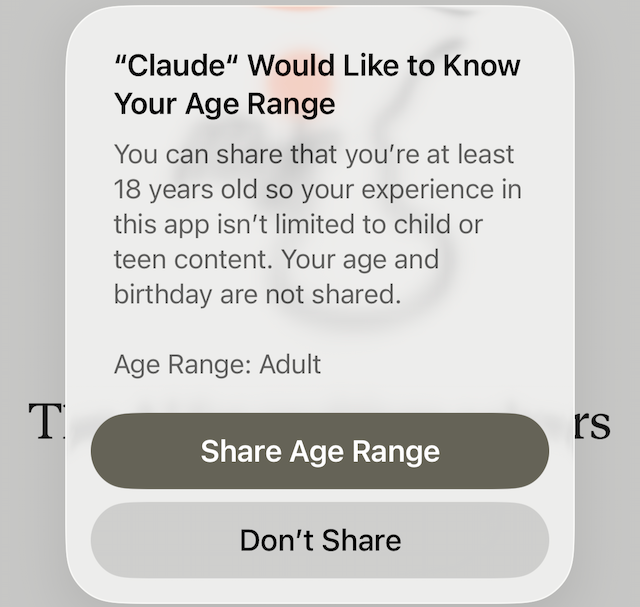
With laws requiring app stores and developers to verify and confirm your age to download apps, we’re not terribly far from laws that require your identity to do the same. I would wager a hotel-priced beverage that Texas, Utah, and elsewhere are salivating at the prospect of knowing who is downloading which apps and visiting which sites.
M.G. Siegler Banned From Using WhatsApp ⚙︎
Meta banned M.G. Siegler’s WhatsApp account, with no warning and no explanation, after twice banning his Instagram account:
Yes, that’s right, for a third time in as many years, I’ve been banned by Meta. What for? Do you really have to ask? Nobody knows. My suspicion is that it’s directly tied to the claiming of usernames on WhatsApp, which Meta opened up yesterday. After I claimed mine, it seemingly logged me out of my other active instances. And when I went to log back in… boom. Banned.
Siegler lives in Europe, where WhatsApp is the de facto messaging app. Not having a WhatsApp account is like not having a cellphone.
Making matters worse, people can still message Siegler on WhatsApp, but aren’t told he’s not receiving those messages.
Let me just point out that I run a lot of my household through WhatsApp – including childcare. Imagine if there was an issue with a child and someone was frantically trying to get ahold of me and couldn’t because I’ve been banned? Honestly, should that even be legal?
It should not.
When a platform becomes so ubiquitous that it’s effectively become infrastructure that others rely on, it should not be able to ban you or lock you out of your account without clear warnings and a human-led review and appeals process. Even if fraud (or worse) is suspected. It should take significant effort to shut down an account and the burden should be on the provider to prove why it’s necessary, not on the user to argue why it’s not. I would even suggest that cutting access to critical accounts and services should require the corporate equivalent of a court order. Your Apple or Google account, cellphone number, and, yes, your WhatsApp account, have become as essential as a driver’s license or passport and should be equally difficult to suspend, not simply subject to the (likely AI-powered) whims of the account provider.
(Via John Gruber at Daring Fireball, who writes:
I have never seen the appeal of WhatsApp, and would rank iMessage’s dominance here in the U.S. as one of the many reasons I’m so glad to live here.
Like Gruber, I don’t see the appeal of WhatsApp—my most recent message on there is from 2017. I initially refused to use it out of security concerns—it wasn’t end-to-end encrypted—and now I simply refuse to use it on principle: I detest everything associated with Meta and Mark Zuckerberg. Fortunately for me, anyone I communicate with regularly uses an iPhone and Messages. So in addition to Gruber’s appreciation for iMessage’s U.S. dominance, I’m also grateful my friends and family have great taste in phones.)
Frederick Douglass’ ‘What to the Slave Is Your 4th of July?’ Read by James Earl Jones ⚙︎
It’s late in the day, but I’m continuing my annual tradition of sharing Frederick Douglass’ powerful and insightful speech “The Meaning of July Fourth for the Negro” (best known by its most famous sentence, “What, to the American slave, is your 4th of July?”) as read by the late James Earl Jones. It continues to move me despite a dozen or more viewings. It’s also worth reading the speech in its entirety (archived for posterity). As I noted last year, it’s “both eye-opening and depressing,” with “countless passages uncomfortably analogous to our current moment.” Do yourself a favor and read it in a comfy chair. It’s meaty, and deserves a careful and considered review.
Will Bunch on Donald Trump: ‘An International Jewel Thief Needs to Create a Distraction’ ⚙︎
Will Bunch, The Philadelphia Inquirer (gift link if needed):
I’d joked with my editors earlier in the week that I might lose my columnist license (not an actual thing, although maybe it should be) if my piece that runs on the weekend of the United States Semiquincentennial wasn’t a Big Think essay on what the American Experiment all means — to the extent that anyone can actually think through the fireworks, traffic jams, and 100-degree temperatures.
That’s when it hit me. That was exactly the column Donald Trump was counting on from me and every other opinion writer in America ahead of Independence Day. The 47th president needed a week when the pundits put on their wide-angle lenses and put away the magnifying glasses, while his “forgotten Americans” headed off to the beach or the fireworks show, or gorged themselves on six hours of World Cup soccer every day, and stopped watching the news.
An international jewel thief needs to create a distraction. Because if you’d been paying attention during the nation’s summer vacation week, you’d have seen that Trump is robbing us blind.
The amount by which Trump is robbing us blind is detailed in a “federally mandated financial disclosure form” released ahead of the Fourth of July weekend, showing that Trump “earned” $2.2 billion in 2025, an astounding amount for anyone, but for a sitting president is criminal—quite literally, I’m certain. It’s shocking but not surprising that Trump has corruptly leveraged the presidency to enrich himself, his family, and his cronies—and is doing so blatantly and in the open. Bunch details the jaw-dropping scope of Trump’s grift, before pivoting to memories of America’s 200th celebration and “a new hopeful yearning.” He ends by asking:
How do we celebrate a 250-year slow-bending of the arc of the moral universe without losing our focus on the ongoing crime scene at 1600 Pennsylvania Avenue? […]
Don’t let the president hijack the Fourth of July to rob the focus from what matters most, the things we need to write and discuss and march against every week: his unprecedented criminality.
Trump Phone Ships and Unsurprisingly is Trash ⚙︎
Yours truly last June, on the then-recently announced Trump phone:
I fully expect this phone will never ship.
Dominic Preston at The Verge, today:
12 months, 16 days, 21 hours, and 54 minutes after I first heard about Trump Mobile’s T1 Phone 8002 (gold version), I’m finally holding one in my own hands.
Journalists started receiving Trump phones in early June. Some early pre-orders also started shipping around that time, and regular orders, like Preston’s, are starting to arrive.
Well, color me embarrassed.
I suppose an apology is in order for doubting the Trump Organization’s ability to ship this phone (and only nine months late).
It’s not exactly a state-of-the-art phone. iFixit revealed it’s a gold-painted HTC U24 Pro—a two-year-old device “designed in China, made in China, with the vast majority of parts sourced from China.” So much for “Made in America.”
YouTuber Quinn Nelson (Snazzy Labs) also bought the device. In his unboxing and review video, he outlines the overall cheap feel of the product and packaging (his phone shipped with a broken fingerprint sensor, the “Quick Start” guide was printed on what seems to be a home printer with low toner, and his SIM card arrived separately in a hand-addressed envelope, for example).
I’m sure the suckers—I’m sorry, loyal Americans—who buy this phone will be thrilled once it finally arrives at their doorstep.
‘I Am a Centrist Democrat and I Am Terrified of Success’ ⚙︎
Rex Huppke, in an opinion piece for USA Today:
Like my good friends in the Republican Party, I fear any kind of democratic socialist as well as any progressives who are actually progressive. They all seem far too fixated on helping “the people.” Blech.
Via Heidi Li Feldman, who calls it satire, though I wouldn’t bet against it being a transcript.
‘The US Constitution Is for Simple Folk Still Burdened by the Belief That Words Have Meaning’ ⚙︎
Jack Loftus, McSweeney’s:
Originalism has never meant being chained to the original words. That is a childish misunderstanding promoted by people who think “shall” means “shall” and “all” means “all.” Real originalism means asking what the Founders would have wanted if they had lived long enough to become furious about anchor babies.
A Supreme Court Majority ‘Fluent in Anti-Trans Rhetoric’ ⚙︎
Jay Willis at Balls and Strikes, regarding the Supreme Court’s recent 6-3 ruling that allows states to exclude transgender athletes from women’s sports:
Generally speaking, when the fifth paragraph of a Supreme Court opinion contains the phrase “biological males who identify as females,” it is safe to assume that the author is not working toward a ruling that respects the dignity or existence of trans people.
The Brett Kavanaugh-penned majority opinion is riddled with “anti-trans rhetoric,” plus, from Clarence Thomas, “an opportunity to be cruel to trans people in public”:
Perhaps the most revealing opinion in B.P.J. comes from Justice Clarence Thomas, whose concurrence includes what are (at least for now) the most gleefully transphobic lines committed to the pages of the United States Reports. “A man does not have a legal right to compete against women just because he believes that he is a woman,” Thomas wrote. “Men and boys with gender dysphoria are not women or girls, even if they believe that they are.” He closed with language that tracks the vile transphobic talking point that transgender people do not exist: To use language that obscures the “reality” of “biological” sex, Thomas wrote, “is to lie to the public.”
Hila Keren, also at Balls and Strikes, on the stunning “stereotype-laden” opinion that’s “laced with condescension for women athletes”:
The Court’s opinion does not just convey the conservatives’ disrespect for trans athletes, though. At times, its portrayals of cis girls in sports almost read as a younger version of the tradwives idealized by the religious right. Kavanaugh’s opinion amplified not only girls’ “inherent” physical inferiority in terms of “height, weight, strength, speed, endurance, and jumping ability,” but also their supposed inability to handle fairness, safety, and competitive issues, and a general struggle to cope with “debilitating disadvantage.”
The ruling itself is awful, and the language used to justify it is especially appalling.
Elie Mystal: Birthright Citizenship Lives to Die Another Day ⚙︎
Elie Mystal at The Nation (email-gated; Apple News+ link), regarding Tuesday’s Supreme Court birthright citizenship ruling:
The ruling is a victory, to the extent that upholding a bedrock principle hard-coded into the Constitution for more than 150 years is what passes for a “win” these days. But the ruling was far closer than it should have been. There were a number of dissents, and when you read those dissents, the ruling looks less like the final word and more like the prologue to what will be a long and ugly attempt to write xenophobia and bigotry back into the Constitution.
Birthright citizenship is a law whose meaning and history is so clear and obvious that opposition to it divulges more about the opposers. See also voting rights and slavery.
This 6–3 ruling comes with strong dissents (including from Brett Kavanaugh, part of the purported majority), which lay out “the road map for how Trump or future bigots might get around the Citizenship Clause.” Mystal dismantles each of the dissenters’ points (from an absurd redefinition of “domiciled” to an incredibly xenophobic reinterpretation of the history of American immigration), but notes that we’re a long way from this being settled law:
From where I sit, birthright citizenship is now poised to replace abortion as the litmus test for future Republican judicial appointments, with Barbara replacing Roe as the case Republicans insist must be overturned.
Logic and the Constitution won this round, but the fight has only just begun.
Elizabeth Tai on Malaysian Chinese ‘Bananas’ ⚙︎
Elizabeth Tai counts herself a member of a “dying” cultural cohort, the “English-educated Chinese in Malaysia”:
I am what many Malaysians would call a banana: Chinese, but more proficient in English.
To others, I’m not “banana” enough, because by some freak of geography and luck, I can converse badly in Mandarin and in a rare form of Hokkien, the northern version spoken in Penang. But that doesn’t mean I’m Chinese enough for the Chinese-educated, who still firmly consider me a banana because I can’t read well, nor have I read the Chinese classics. So I exist in a weird in-between place.
Tai’s story is about her hope of seeing “the next generation of Chinese in Malaysia” adopting more Chinese language and culture while maintaining their western influences, thus eliminating the weird middle ground where she finds herself.
While Tai’s experience and perspective is specific to her cultural background, I found myself nodding along in recognition. I, being West Indian-born and American-raised, resonated with her sense of feeling both culturally part and apart. In middle- and high school, I was never “American” enough, while on summer trips back home I’d become “too American.” In my adulthood, I was both “too Black” and “not Black enough.” To some, I was merely Black on the outside, white on the inside—an Oreo, to use a term that, unlike Tai’s Asian “banana,” no Black person has ever called themselves.
I imagineed that our youth of today are more culturally cross-pollinated than ever in our history. I regularly witness my group of friends navigate these cultural intersections: the daughter of a half-West Indian, half-Chinese dad and Vietnamese mom embracing every aspect of her several cultures; the two kids of a Chinese-Malaysian mom and French-Canadian dad enrolled in a Chinese immersion school; or the daughter of a Jewish mom and Catholic dad choosing to celebrate her bat mitzvah. Our young people will be more culturally attuned than any previous generation. The kids, as they say, are alright.
Pete Buttigieg Shares His Harrowing Tale of Being ‘Swatted’ by Child Protective Services ⚙︎
Pete Buttigieg (regrettably on Substack):
You’ve probably heard of “swatting.” It’s a cruel and dangerous kind of hoax that has started happening more frequently in recent years. Someone anonymously calls 911 with a false report of imminent danger, such as a hostage situation, at the home of a public figure. Law enforcement swarms the house, guns drawn, terrifying the unsuspecting homeowner and family and sometimes even leading to deaths or injuries in the confusion. It’s happened to dozens of lawmakers, judges, celebrities, and others. (When I was in the Cabinet, someone attempted to do this to our home, but fortunately the hoax was quickly detected.) It’s become enough of a problem that the FBI now has a dedicated database to track such incidents.
Now imagine the same concept, but with Child Protective Services instead of a SWAT team. Hadn’t thought of that? Me neither, until a few days ago when a police officer and a CPS worker showed up at our home and politely asked to speak with me.
An anonymous caller accused Buttigieg of committing “unspeakable violent crimes” that purportedly put his twin four-year-olds in danger. The children were separated from their parents for a day and subjected to a “forensic interview” with CPS workers.
Calling the cops as an intimidation tactic is a clear abuse of law enforcement, whether against a public figure or a private citizen, and the perpetrators are unrepentantly evil. That it’s often effective is a scathing indictment of our state of policing.
Buttigieg’s anger comes through, but he’s remarkably restrained in his retelling of this violation against him and his family. I would not have managed such self-control. I’d be seething and prepared to go scorched earth on the person making such a reckless and baseless accusation. I would get medieval on their ass.
Apple’s macOS California Naming Adventure ⚙︎
Since the debut of OS X 10.9 Mavericks in 2013, Apple has released 14 versions of macOS bearing the names of beaches, mountain ranges, islands, valleys, and landmarks from across the Golden State.
But what exactly is a Mavericks? Where is Sonoma? And how many Mac users could point to where Ventura or Tahoe on a map?
Curious myself, I decided to trace the history and real-world locations behind every California-inspired macOS release and the wallpapers used to market the them to the world. Enjoy.
I recall these OS naming announcements fondly. It was always a hoot to hear the tales of the “crack marketing team,” especially as I knew several of them. Those of us not disclosed on the new names would place bets on the new name ahead of release and be sorely disappointed when it wasn’t Oxnard, Fresno, or Chico. (Though I think macOS Napa or Pismo are still future options.)
Come for the history, stay for the photos of a very young Craig Federighi.
‘Uncle Sam Charged With Masturbating At Trump Fair’ ⚙︎
Sometimes the headline is enough.
Gerrymandle, a Daily Gerrymandering Challenge ⚙︎
Gerrymandle is a daily challenge game, à la Wordle:
You are in charge of drawing the district lines for the elections.
Your goal: gerrymander the map to ensure one color wins. It’s surprisingly harder than I expected and it took a few games to recognize the “cracking” and “packing” patterns needed to create an optimal map. I bet our politicians are infuriatingly good at this game.
‘AI Economics for Dummies’ ⚙︎
Andrew Singleton at McSweeney’s explains the “inner workings” of AI companies, with “examples to help the average layperson understand the business side of AI.” Example 3:
Jenny owns a crematorium. John’s propane company gives her a $20 billion investment in return for 5 percent of her operation. Jenny throws $10 billion into the incinerator, then pays John $10 billion to buy propane to burn that money to ashes. John reports that his AI investments have generated $10 billion in revenue this quarter and that he owns 5 percent of a $100 billion business.
Cancer Sucks. Help Shol Fight It.
A heartfelt request to support my friend Sabrina Shukri’s brother, Shol:
My brother, Syamsul Kamal (“Shol”), is once again fighting bowel cancer. After surgery and chemotherapy gave us hope, the cancer has returned aggressively. I am raising funds on his behalf to help cover the cost of his ongoing treatment and care. […]
Cancer has already taken too much from our family. After losing our beloved sister to breast cancer, we were blindsided when Shol was diagnosed with bowel cancer in 2025. Surgery and chemotherapy seemed to work. For a moment, we thought we had caught a break.
We were wrong.
You may remember Sabrina from her son Remy’s fundraiser for his autism school. With your help, that campaign raised over $5,600 for Giant Steps Melbourne. I’m confident we can make a difference here, too.
Sabrina writes of her brother:
What makes this especially hard is who Shol is. He is a father of two and has spent almost 30 years as a Malaysia Airlines crew member. If you know him, you know he is the type of person who will go out of his way to help someone, often before helping himself. He has spent a lifetime looking after others, always with a smile.
It hurts to watch cancer take pieces of him away.
I am angry that after everything our family has already been through, we are here again. Angry that someone so kind has to endure this. Angry that hope can be so cruel.
But more than anything, I want to help my brother keep fighting.
I’ve said many times, and with tremendous enthusiasm, Fuck Cancer, but this time I say it with extra vigor.
Sabrina’s goal is RM100,000—about USD $24,000 or AUD $35,000—and she’s raised a bit over AUD $8,000, or about a quarter of that. As I did for Sabrina’s son, I’m offering to match your donation. Share a receipt for your donation to Shol’s campaign (in any amount), and I’ll match it, dollar-for-dollar, up to USD $500.
Consider this the antidote to yesterday’s consumeristic post.
Sabrina gets the final word:
Every donation, no matter the size, will help. And if you cannot donate, sharing this page would mean the world to us.⚙︎
Thank you for standing with Shol and our family during the fight of his life.
Rampant Consumerism Days
Amazon Prime Days are upon us (June 23–26). If you have a Prime membership, there are some solid discounts available for things you may have been looking to buy, or items you didn’t know you wanted but are a good deal right now. Here are a few of my favorites.
Apple Gear
If a Mac, iPhone, or iPad is on your wish list and you’re (rightfully!) spooked by the “unavoidable” ramageddon-fueled price increases, now might be a good time to buy. My top recommendations:
- MacBook Air 13-inch 24GB/1TB ($1387, 7% off). I usually recommend the base model (16GB memory, 256GB storage for $949, 14% off) as the price and performance sweet spot, but this year I suggest buying the most memory and storage your budget allows, as these prices are likely to be the lowest they’ll be for a while. (You can get up to 32GB memory and 4TB storage directly from Apple for an eye-watering $2,699. In six months we might look at that price fondly.)
- If you prefer the 15-inch model, the recommendation holds, but the discounts are less: the base MacBook Air 15-inch (16GB/256GB) is $1,150 (11% off); the 24GB/1TB option is $1,550 (9% off).
- The iPad mini remains my most-used iPad. The 128GB Wi-Fi + Cellular option is $549 (15% off). (My 128GB Wi-Fi only model is $400, 20% off, a good, if not spectacular, deal.)
- Apple Watch SE 3 (40mm) is $199 (20% off), the Series 11 (46mm) is $309 (28% off), and the Ultra 2 is $499 (38% off).
- AirPods Pro 3 are not a Prime Day sale, but $179 (28% off) is a good deal for Apple’s latest headphones. I picked up a pair to replace my aging pair of AirPods Pro 2.
- Check the other Apple deals on Amazon.
Other Tech Gear
- The KeySmart SmartCard Lite Wallet Tracker Card works on the Apple Find My network and slips into your wallet like a credit card. If you walk away without it, Find My notifies you. A one-pack is $16 (20% off), a three-pack is $38 (7% off), and a five-pack is $59 (15% off). We have them in all of our wallets and passports.
- KeySmart SmartLock Tracking Luggage Lock also works on the Find My network and is TSA compatible. It’s perfect for securing a backpack you need to temporarily stash away. A one-pack is $25 (15% off), a three-pack is $68 (18% off), or grab the five-pack for $102 (15% off).
Tech Go-Bag (and Travel)
This has been an unusually busy travel year. I keep a tech go-bag fully stocked with everything I need for a trip (there’s a post I need to write!) and regularly revisit its contents. This year I made a handful of updates. Here are a few:
- Twelve South AirFly SE ($28, 19% off). While I usually bring an iPad for airplane entertainment, sometimes there’s something worthwhile to watch on the in-flight system. The AirFly lets me connect my Bluetooth headphones to the plane’s 3.5mm audio jack.
- Lisen Qi2.2 25W MagSafe Car Mount Charger ($38, 24% off). Most rental cars support CarPlay but don’t have a convenient place to hold my iPhone. My previous solution (an Apple exclusive from Mophie) relies on well positioned air vents, but a lot of cars seem to have done away with such niceties. This suction cup alternative mounted to the dashboard or the edge of the infotainment screen works great.
- If you still want an air vent option, the Anker Prime MagSafe Car Mount ($63, 30% off) looks like a solid alternative (though I haven’t tried it).
- Speaking of Anker, my favorite travel battery, the 5,000mAh Nano MagSafe is $43 (22% off). It’s slim and fits nicely on the back of my iPhone.
- I add a larger battery, the 10,000mAh Anker MagGo Power Bank ($61, 24% off) for when I expect long days out at, say, a Disney park.
- Still in evaluation mode is the UEQ Foldable 3 in 1 Charging Station ($29, 29% off). It takes up more space in my go-bag than my beloved Anker MagGo 3-in-1 but has the advantage of packing flat and supporting Apple standby mode.
- My main travel charger is now the Anker Prime 160W 3-Port USB-C ($99, 33% off). It easily powers the 3-in-1 charger plus all my devices.
- For charging at the airport, on a plane, and as a secondary charger at my destination, I use the Anker 67W 3-port ($33, 34% off). It’s lightweight, compact, and helps keep my iPhone, iPad, and AirPods powered through a long flight.
- Not every hotel room has conveniently located outlets. An extension cord solves that. I bought a 6-foot 2 Prong to 3 Prong Extension Cord from Trond for $17, but there are hundreds of options here.
- More travel-related than go-bag: the Nomatic Navigator Collapsible Sling Crossbody Bag (6L)($68, 20% off). I own three other Nomatic bags in various sizes, but this one is a perfect option for wandering around a city or theme park. It has a comfortable molded back panel, a water bottle pocket, holds a ton, and collapses into itself when not in use.
Movies
I remain a big believer in owning physical media and lots of 4K and Blu-ray movies are discounted for Prime Day. I picked up Interstellar in 4K UHD for $15. A previous purchase, Goodfellas, is $13 (one of several movies I grabbed during Amazon’s 3 for $33 movie sale back in April). Jordan Peele’s 3-movie collection (Get Out, Nope, Us) is $13 on Blu-ray. I also snarfed Babylon 5: The Complete Series on Blu-ray so I can finally watch it.
Home
- Aqara UWB Smart Lock U400. I upgraded from a Yale lock and it’s been a game changer. Just walk up to your door and it unlocks—no keys, no pulling out your phone, no twisting your wrist awkwardly to use your Apple Watch. Just walk up, beep, and open the door. It’s magical.
Other Stuff
- I’ve been shifting some of my writing to my iPad mini as an excuse to get outside (coffee shops and beach benches for the win!). Key to that is a full-sized keyboard (I just can’t type on anything smaller). The Samsers Foldable Bluetooth Keyboard with Touchpad is one of my go-to options. I own it in Young Blue ($41, 29% off). Refined Black is $38 (32% off). (I alternate between it and the Samsers keyboard without a touchpad. It’s $29. I can’t decide which keyboard feel I like better, but both are really good.)
- Add a folding stand like this one from JSAUX, and it makes for a compact and portable “writing deck.”
- I keep that writing deck in an Orbitkey Travel Sling (3L). It’s $90 (not on sale, alas). It’s spacious enough for the iPad mini, keyboard, stand, charger, cable, Field Notes notebook, pen, and more.
- My wife has gotten into travel notebooking. This Canon Ivy 2 Mini Photo Printer ($90, 25% off) was a birthday present. Now she can take a picture, print it out, and stick it in her notebook as a memento. I picked up some extra Zink Photo Sticker Paper ($49 for 100 2“ × 3” sheets) while I was at it.
- For taking photos (or videos), a tiny tripod or stand is clutch. I’ve become a big fan of Ulanzi gear (solidly made and well-priced). The MA38 Magnetic Phone Tripod ($20, 20% off) is versatile, transforming from handheld to tripod to “mantis” mode in seconds. (And, if you pair it with a 1/4-inch-threaded clamp, like this SmallRig Articulating Magic Arm ($17, 39% off), you can get the shot from practically any angle.)
Disclaimer: These are, naturally, Amazon affiliate links. If you click on a link and buy something from Amazon, it costs you nothing extra and I get a tiny kickback. If enough of you click a link and buy something, you can make me filthy rich. (Last year, I made $7.82!)
Also, yes, I’m aware some of you hate rampant consumerism broadly, Amazon specifically, and Jeff Bezos in particular. I get it. If you don’t want to give billionaires your hard-earned money, cool. Instead, shop your local retailers, buy something at Bookshop.org (affiliate link), and consider supporting this site with a paid subscription. Thanks for reading!
⚙︎Meta’s Initiative to Train AI Models by Surveilling Employees Is Going Swimmingly ⚙︎
Paresh Dave and Lauren Goode reporting for Wired (Apple News+):
Meta left potentially sensitive information collected from employee laptops accessible to anyone inside the company, according to an internal security notice seen by WIRED and three current employees familiar with the issue.
The data, which was collected as part of a divisive initiative to train artificial intelligence models, is believed to include keystrokes, mouseclicks, and content displayed on the computer screens of Meta's US employees.
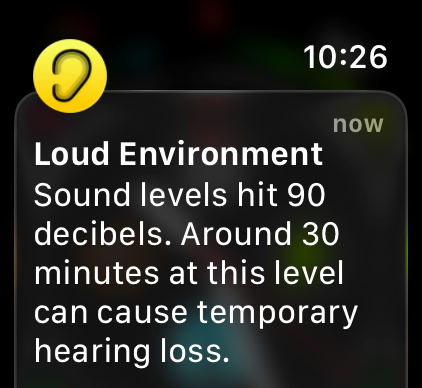
As I’ve previously snarked, “I never thought leopards would surveil me,” sobs woman working for the Leopards Surveilling People Company. (A confession: When I read this story, I laughed so hard my Apple Watch gave me a “Loud Environment” warning.)
The leaked employee data, stored in “45,000 hive tables,” exposes—
[…] employee activity such as “full prompts and transcriptions, private conversations, people and performance data,” according to documents viewed by WIRED.
Dave and Goode continue:
In an internal post responding to employees’ questions on Monday seen by WIRED, Andrew Bosworth, Meta’s chief technology officer, said that the tracking program’s implementation had fallen short of the standards outlined in its privacy review and that findings from the incident would be shared. “Here we had misconfigured ACLs [access control lists] and we need to understand how that happened, track down every data access and understand it,” Bosworth wrote.
A couple of months ago, Bosworth told employees concerned about potential data leaks that the tracking program is “tightly controlled” and uses the same protection standards, storage systems, and access controls as other sensitive datasets, according to internal posts seen by WIRED.
It’s comforting knowing that the vast trove of sensitive data collected by Meta across Facebook, Instagram, Threads, WhatsApp, and Messenger is as tightly controlled as employee keystrokes.
Trump DOJ Launches Bogus Investigation Into SF Giants Pride Night ‘Protest’ Warning ⚙︎
Jeff Carillo, for SFGate, on Friday:
On Thursday, Department of Justice assistant attorney general Harmeet K. Dhillon announced that the department’s Equal Employment Opportunity Commission (EEOC) will be investigating MLB after the league issued warnings to the three players who wrote Bible verses on their Pride Night caps, citing possible religious discrimination.
You may recall my commentary on this brouhaha last week. It’s now national news, because the Trump regime wants to curdle this country into an anti-LGBT Christofascist state (more than it already was), and any signs of opposition, no matter how tepid, must be crushed.
“The three players expressed their opposition to MLB’s pro-Pride orthodoxy by inscribing Bible verses on their rainbow-colored hats,” Dhillon wrote in a letter to MLB commissioner Rob Manfred. “The Civil Rights Act prohibits MLB and its franchises from unreasonably burdening the rights of players with religious objections to serving as the League’s vehicle for pro-Pride messages.” […]
Dhillon concluded the letter by saying the department will use "all available means to hold employers accountable for violating the religious rights of their employees.”
Pretty brazen invoking the Civil Rights Act.
Here’s the thing, though: MLB didn’t warn the players for writing bible verses on their caps. The players were warned for writing on their caps, period. Any type of writing on MLB uniforms is prohibited by the Major League Collective Bargaining Agreement. It’s stated plainly. From Attachment 19, Uniform Regulations, section A. Uniform Dress Policy:
[…] No alterations, writing or illustrations, other than as authorized herein, are to be made to any part of the uniform.
And from section H. Adornments and Markings:
[…] A Player may not write, attach, affix, embroider or otherwise display nicknames or messages on apparel or playing equipment […]
MLB was forced to issue a new statement explaining this:
“To be clear, this routine verbal warning not to wear the hat in future games is not disciplinary and had absolutely nothing to do with the content of the message. We respect players’ right to free expression,” an MLB statement said.
MLB said the warning had no direct tie to the players’ actions on Pride Night.
“We have given the same warning numerous times in the past to players for messages such as ‘Dad’, ‘Happy Mother’s Day, I Love Mom’ and names of family members,’” MLB said.
In short, had these intolerant players scrawled their messages of bigotry on their caps the game before or after Pride Night, they would have been subject to the same warning—the same one they would have received had they instead scribbled “I love gay people.”
That these petty pitchers chose Pride Night to violate their MLB agreement is a declaration of their bigotry. I hope they’re drummed out of the game.
Marcin Wichary on Designing ‘Finger-Friendly’ Interactions ⚙︎
Marcin Wichary, at his site Aresluna, writes a terrific essay on the design evolution of “finger-friendly” interactions, copiously and exquisitely illustrated with custom-built interactive “playgrounds.” He uses typewriters and typing as a launchpad to explore the tremendous speed at which our fingers operate, seemingly independent of conscious thought, and the various ways we’ve designed machines and software to appear fast enough to keep up with our digital “time travelers”:
Our hands are amazing, our fingers are amazing, and our brains are amazing, too. Altogether they are capable of feats that not so long ago made absolutely no scientific sense – and sometimes still don’t today.
Artists and performers have known that intuitively for centuries. Today, a lot of creativity and productivity happen onscreen, but our interfaces do not often respect the fingers the same way older instruments did.
I want to tell you more about it, and about your responsibility, as a designer, to make sure they do.
Part of Wichary’s conclusion:
I think often delight is absence of delight. In places and apps that welcome fast fingers, delight can be abstaining from a transition or something cute but deathly. Pushing for delight of the right kind can mean long fights with frameworks to reduce even one-frame delays, tweaking CSS to allow no wasted pixels between icons (so you can click quickly without hesitation), an understanding of accessibility that goes beyond the surface, and testing and fine-tuning so that keyboard focus is continuous: always present in the right field, never delayed, never stolen by random popups.
And I am not sure if we, in the industry, fully internalized this.
His piece is a fantastic history lesson on typewriters (unsurprising considering his pedigree), and a thoughtful review of several clever and time-saving (or at least time-dilating) user interface designs (some of which, like thumb shifting, we’ve regrettably lost). You’ll be unsurprised to discover that many of these clever UI designs originate with (or were popularized by) Apple, even as Apple has regressed over the years with some of its design choices.
The essay is 7,700 words and includes 38 playgrounds. Set aside some time for the piece, and read it on a large screen so you can interact with those truly delightful playgrounds.
Apple Posts ‘Inside Apple Intelligence and Xcode’ Presented Live on Stage ⚙︎
On Wednesday, the week after WWDC26, Apple posted one more thing: a 90-minute “Special Presentation” on Apple Intelligence, recorded live during WWDC Tuesday from the Steve Jobs Theater. It’s an old-school session, harkening back to the days before Covid eliminated in-person, on-stage presentations. It’s wonderful to see Apple engineers walking on to the stage, running demos live, pausing to acknowledge applause, and ad-libbing to fill time. It warmed my heart and reminded me that the best part about WWDC was always the engineer–developer connection.
I doubt Apple will ever go back to a full-on, in-person event—putting on a 5,000-person conference with 100+ overlapping sessions and labs was logistically onerous—but a couple of these special sessions each day would be welcome.
As for the session itself, here’s how Apple describes it:
Step inside Steve Jobs Theater to discover the latest Apple Intelligence and Xcode advancements. Learn how to accelerate your development with new agentic coding workflows in Xcode 27, and discover how App Intents enable Siri to understand context and take action inside your app. Find out how to ship intelligent features using the Foundation Models framework, deploy custom on-device models with Core AI, and scale your machine learning research and training using MLX.
If you’re at all interested in the revamped Apple Intelligence and Siri AI, this is a must-watch session. The Xcode agentic coding demo was especially impressive and left me wondering about the specificity of the prompts and the reproducibility of the results.
Legendary Sitcom Director James Burrows Dies at 85 ⚙︎
Glenn Rifkin, writing for The New York Times (gift link):
James Burrows, the genre-shaping master of the television situation comedy who was a creator of “Cheers” and directed more than 1,000 episodes of that show and other TV classics like “The Mary Tyler Moore Show,” “The Bob Newhart Show,” “Taxi,” “Frasier,” “Friends” and “The Big Bang Theory,” died on Friday. He was 85.
James Burrows essentially directed my youth and young adulthood. I’ve watched (and rewatched) Frasier dozens of times, recently rewatched Cheers for the first time since it originally aired, and fondly remember Will & Grace. Reading through his credits, I was struck by just how many of my favorite sitcoms he directed—even if it was only a handful of episodes, or just the pilot (Roc, anyone?). It’s fair to say I’ve seen “Directed by James Burrows” hundreds, maybe even thousands, of times.
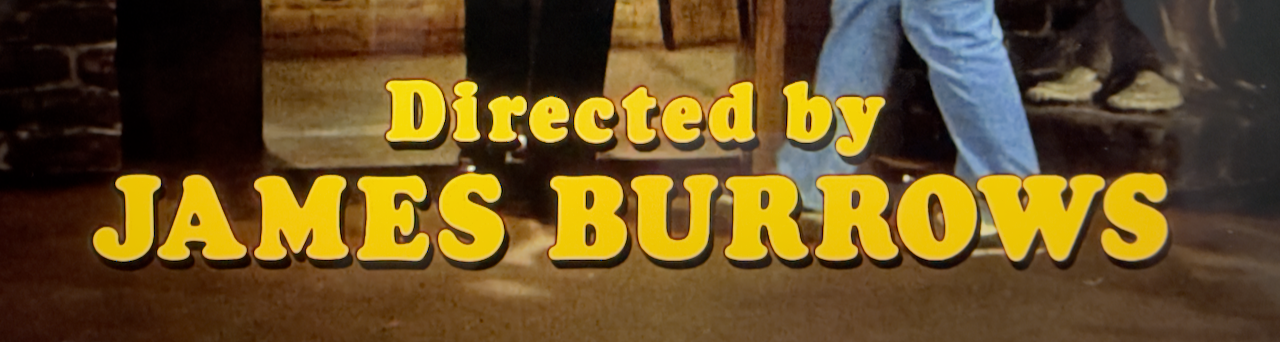
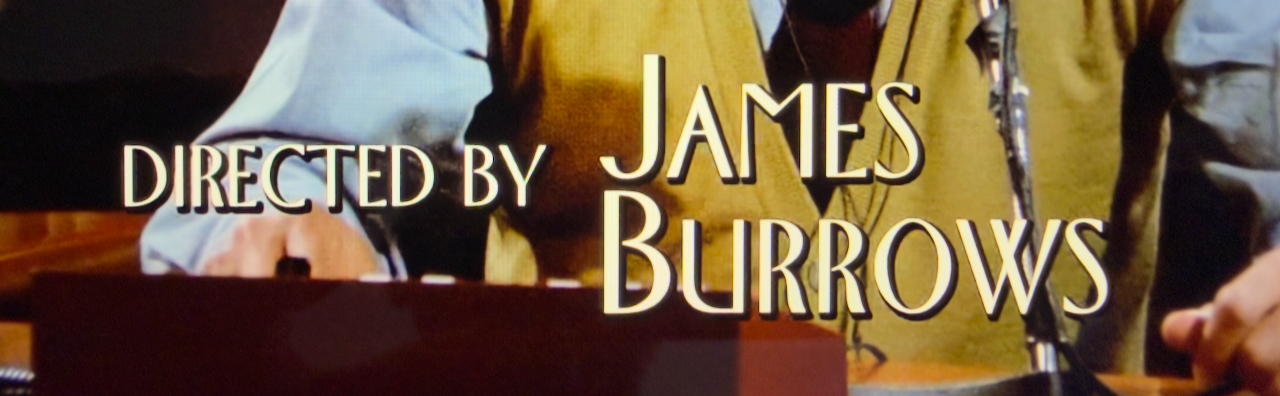
Cheers and Frasier, directed by James Burrows.
His theater background was key, he told IndieWire in 2023. “I’m not a film director. The camera, I leave that to Spielberg and Scorsese,” he explained. “I’m a theatre rat. I stage a play every week, a 20- to 25-minute play and then my camera comes in and covers it. I understand characters, I understand what’s funny, I understand the essence of keeping it moving and keeping the energy going. It’s all theatrical. If it doesn’t happen on that stage, it’s never gonna happen on film. You can cut it nine ways to Sunday, but nothing will work unless it works on that stage.”
RIP to a sitcom legend.
Amazon, Which Spent $75 Million for ‘Melania’ to Curry Favor, Drops Sam Altman Pic ⚙︎
Ellise Shafer and Alex Ritman, writing for Variety (based on a Puck.news scoop):
Luca Guadagnino’s nearly finished Sam Altman movie, “Artificial,” has been dropped by Amazon MGM Studios, Variety has confirmed.
The film, starring Andrew Garfield as the controversial OpenAI CEO, will be shopped to other studios. The move notably comes after Amazon struck a massive partnership with the tech company in February to expand OpenAI’s use of Amazon Web Services and develop custom AI models, which included a $50 billion investment on Amazon’s part.
The film’s focus is Altman’s rapid firing and rehiring in 2023. Reportedly, “the characters of Altman and Musk are the least sympathetic and the ones audiences would ‘like the least.’” Just like in real life.
What are the chances that Bezos killed the movie as a favor to Altman?
It’s known that Altman and Amazon CEO Jeff Bezos have a relationship and Altman even attended Bezos’ wedding in Italy last year.
Right.
Which other billionaire movie studio head will eagerly chase a movie that makes their buddy Altman (and Musk) look bad (or impacts their AI negotiations)? I suspect this flick will be quietly shelved.
Yum! Brands Sells Pizza Hut ⚙︎
Yum! Brands, via press release two days ago:
Yum! Brands, Inc. […] today announced that it has entered into definitive agreements to sell Pizza Hut for $2.7 billion in the aggregate, subject to certain purchase price adjustments.
With this sale, there’s no more meeting at the combination Pizza Hut and Taco Bell. (Which I guess was already true.)
Fortunately, we remain blessed with the combination KFC and Taco Bell—the KenTaco.
Pizza Hut is being purchased by LongRange Capital, which also owns 24 Hour Fitness and sells caskets, “which is either a coincidence or the most complete business plan ever written.”
CBS Pays for Stephen Colbert’s Use of ‘Linus and Lucy’ ⚙︎
Maanvi Singh, The Guardian:
On his last day hosting CBS’s The Late Show, Stephen Colbert played one of the most iconic songs from the Peanuts soundtrack.
“Oh no! I hope this doesn’t cost CBS any money!” he joked, as Louis Cato and the Great Big Joy Machine performed the song, titled Linus and Lucy, on air. It was a final dig at the network, which many fans believe cancelled the show due to Colbert’s criticisms of the Trump administration.
It did, indeed, cost CBS. Lee Mendelson Film Productions, the California company that controls jazz pianist Vince Guaraldi’s famed Peanuts catalog and had become increasingly litigious over unauthorized uses of the music, announced it had reached a licensing agreement with CBS for an undisclosed amount. The production company said it would donate all proceeds to World Central Kitchen, the disaster-relief food non-profit founded by chef José Andrés.
One of my favorite moments during a show filled with great moments. And great outcome, too: everybody wins: Colbert, Mendelson Film, World Central Kitchen. Well, not CBS. CBS didn’t win, but it seems they got off lightly. You could say that they settled for Peanuts.
‘The SpaceX IPO Is A Giant Unworkable Con Orchestrated By An Overt White Supremacist Huckster’ ⚙︎
Karl Bode writes at The Fine Print*, and this headline is only the opening salvo in another banger, in case his last one wasn’t provocative enough:
Elon Musk is a hateful white supremacist cosplaying as a supergenius engineer.
I’m tempted to leave it there.
The SpaceX prospectus filed with the government is a colossal work of fiction, promising a utopian future that will never arrive and technology that will never exist, delivered by a man incapable of delivering it. The proposal utterly fabricates paths to profitability, and lies endlessly about foundational reality.
SpaceX itself, it should be clear, lost $5 billion last year. And while Musk’s actual engineers may have done some useful things for space innovation, the entire project is a financial dog; it’s a heavily-subsidized money pit propped up by utterly unworkable plans for Mars colonization and a cumbersome Starship rocket that routinely explodes, often due to Musk’s failure to understand engineering basics.
Bode then unloads on the “U.S. corporate press” which “lacks the integrity to tell the truth” and instead is focused on “propping up extraction class narratives surrounding unchecked wealth accumulation.”
Simply savage evisceration.
‘Starlink Cronyism’ is But One Piece of the SpaceX IPO Con ⚙︎
Karl Bode, writing for Techdirt:
Last week Elon Musk successfully conned America and U.S. regulators into signing off on his preposterous SpaceX IPO, which immediately generated Musk $75 billion by comically over-stating the value of SpaceX, xAI, and Starlink. Then bone-grafting the entire pile of bullshit to the U.S. economy and your retirement account under the pretense that space data centers and Mars colonization are just around the corner.
A handful of remaining useful journalists have repeatedly explained how xAI and Musk’s racist 5th place chatbot — which comprises the lion’s share of the ridiculous IPO valuation — is a gargantuan loser. Both SpaceX and xAI aren’t profitable and may never be, and the claims of Mars colonization and space data centers are unworkable bullshit designed to distract people with toddler-level critical thinking skills.
Anyway I’m sure it will go fine.
Bode focuses on the Starlink grift in this piece, noting the service is too expensive, difficult to scale, and capacity constrained—a niche option at best. None of which likely matters to Musk and other supporters who, Bode suggests, merely “hope it will prove to be a semi-useful backbone for a major pump and dump scheme.”
Elon Musk’s SpaceX To Buy AI Coding Agent Cursor ⚙︎
Aditya Soni, reporting for Reuters (possibly paywalled; try Reader mode):
Elon Musk’s SpaceX (SPCX.O) is buying the startup behind the popular AI coding agent Cursor, Anysphere, for $60 billion in an all-stock deal to boost its presence in the lucrative enterprise AI tools market. […]
Cursor is one of several Silicon Valley startups that have drawn waves of developers by using AI to automate coding, making it a key rival to market leaders Anthropic and OpenAI. But a lack of access to computing power has hampered Cursor’s growth. […]
In its IPO filing, the company had said Cursor’s access to developers’ data, including coding requests and design decisions, could help improve its AI models such as Grok.
If you use Cursor, it’s time to find an alternative.
Giants Pitchers Deface Rainbow Caps on Pride Night ⚙︎
Harrison Rich, San Francisco Chronicle, on Friday:
On Pride Night at Oracle Park, with the San Francisco Giants wearing special edition hats to represent the LGBTQ+ community, multiple players wrote Bible verses next to the team’s rainbow logo, while one chose to forgo wearing the cap entirely.
Starting pitcher Landen Roupp and reliever JT Brubaker wrote the Bible verse Genesis 9:12-16 on the caps they wore Friday night, the same passage that has been displayed by other players on their Pride Night hats during games.
Despicable anywhere, but especially in San Francisco, home to a massive LGBTQ+ community with enormous history throughout the city.
The Cron’s sports columnist Ann Killion, under the headline “Giants pitchers didn’t just deface Pride uniforms. They alienated their fans and city,” expands:
Like so much about hard right Christianity, the Bible verse that the players scrawled on their hats, to “reclaim” the rainbow, is being usurped in troubling ways. The Genesis verse reads:
“And God said, ‘This is the sign of the covenant I am making between me and you and every living creature with you, a covenant for all generations to come: I have set my rainbow in the clouds, and it will be the sign of the covenant between me and the earth. Whenever I bring clouds over the earth and the rainbow appears in the clouds, I will remember my covenant between me and you and all living creatures of every kind.”
Plenty of people who truly believe in a loving God would focus on the part about all living creatures of every kind.
All living creatures would include everybody, including LGBTQ people, a group of people who have been excluded and persecuted, who have been murdered — including in San Francisco — for simply existing, have found a measure of welcome and inclusion in small efforts like Pride Nights.
Killion rightfully asks:
Was manager Tony Vitello complicit in the protest? His starter, Roupp, wore a defaced cap. And then, in the bullpen parade of another disastrous game, every pitcher he turned to save one (Erik Miller) was also part of the Pride Night protest. Seems like a weird coincidence.
What about the owners? Cyd Zeigler at OutSports notes that the largest stake in the Giants is held by owner Charles B. Johnson, who’s donated millions of dollars to Republicans, “including anti-gay politicians like Sen. Steve Daines (R-MT), Sen. Marsha Blackburn (R-TN), Ted Cruz (R-TX), Paul LePage (R-ME) and many others.”
The team issued a mealy-mouthed statement about supporting the LGBTQ+ community, and the players were issued warnings by Major League Baseball, yet no one will face punishment.
The players should at least be benched for several games. Vitello, too. First, for allowing them to violate the team’s uniform and standards; and second, for playing them that night knowing they were planning to protest. If I were the owner, I’d look into releasing them. If they can’t handle wearing a rainbow baseball cap for a few hours, don’t play the game.
Private Signal Chat of Billionaires Against California’s Wealth Tax is Leaked ⚙︎
You may recall that California is trying to institute a one-time 5% tax on billionaires. Some of those absurdly wealthy folks started a Signal chat to kvetch and brainstorm opposition, which was then leaked to Emily Shugerman, The San Francisco Standard’s “Wealth & Power Reporter”:
At some point, a chat participant proposed an action more audacious than lobbying Gov. Gavin Newsom or funding an anti-tax measure: What if the group simply bought the signature-collecting company the union was using, then prohibited it from collecting more signatures?
“Of course, that’s what they would think,” said the person who had seen the messages. “That’s what you would do in business: If there’s an impediment, just buy it.”
The proposal was emblematic of the strategies the billionaire class has tested over the last eight months: unorthodox, expensive, and increasingly desperate. Since the union’s Billionaire Tax Act campaign was launched last fall, the tech elites have organized in secret, scheduling and aborting Zoom meetings, starting and deleting and uninviting members from group chats, and casually throwing tens of millions of dollars at whatever idea seems poised to defeat the initiative and scare the union into submission.
The billionaire argument against the wealth tax is that it will “[drive] out high net worth individuals, jobs, investment, and revenue” and “destroy innovation in California.” Yet I’m not seeing the value these billionaires supposedly bring to our state. The wealth they’ve accumulated isn’t being productively used—say, on housing, healthcare, or education—it’s just sitting there, growing, benefiting no one but themselves. They borrow against it, tax-free, to fund their lifestyles (and destroy media companies). If they gain economic value from the wealth, they should pay taxes on it.
Fox to Acquire Roku in $22 Billion Deal ⚙︎
Benjamin Mullin, writing for The New York Times (gift link):
Fox Corp., the parent company of Fox News and the Fox broadcast network, is buying the streaming company Roku for $22 billion, a major deal that would make the Murdoch media empire a formidable contender in the streaming wars. […]
It would give Fox Corp. a foothold in more than 100 million households that stream content using devices powered by Roku, whose distinctive black-and-purple remotes are common in living rooms around the world.
In 2024, Roku aggressively pushed a Terms of Service update that locked customers out of their devices until they agreed to the change, tested full-screen start-up ads in 2025, and a recently filed class-action lawsuit accuses the company of intentionally bricking its TVs via software updates. My (thankfully limited) experience with Roku was marred by crummy software and sluggish hardware.
It’s the perfect vessel for the sludge Fox “News” peddles.
Mr. Murdoch and Anthony Wood, Roku’s chief executive, explained the deal during a question-and-answer session with analysts on Monday, but investors didn’t seem immediately convinced. Fox’s stock fell 14 percent in morning trading.
Nobody buys a Roku device because they’re good. They buy them because they’re cheap and lack taste. Ditto this acquisition.
‘The Night the Knicks Finally Exhaled’ ⚙︎
Howard Beck at The Ringer on the Knicks championship, and Finals MVP Jalen Brunson:
How do you calculate the weight of a 53-year championship drought? Or the hopes and dreams of 8 million New Yorkers? Or the burden of becoming their basketball savior? If you could measure it all, what would it look like? Feel like? Would it be too much? Would it be unbearable? […]
A franchise placed its trust in Brunson, Brunson placed his trust in his work, and now the Knicks—the New York freaking Knicks!—after decades of ridicule, scorn, and general dysfunction, are NBA champions once more, having vanquished Victor Wembanyama and a precocious Spurs cast that was just as relentless and feisty as the Knicks themselves. […]
“No pressure,” Brunson said late Saturday night, after he had scored every critical basket, granted every Knicks fan’s fondest wish, and seized the championship that had eluded them for more than a half century. “No pressure whatsoever.” He was talking broadly about becoming the Knicks’ franchise star. He might as well have been explaining how he’d rallied them once again, for what felt like the thousandth time in two months, to turn a potential loss into the most consequential Knicks victory in modern times.
A terrific profile of the Knicks, and of Brunson, a once-in-a-generation franchise player.
Congratulations to the World Champion New York Knicks ⚙︎
C.J. Holmes, New York Daily News:
For 53 years, the Knicks had history.
On Saturday night, Jalen Brunson gave them the present.
The wait ended at Frost Bank Center, where the Knicks beat the San Antonio Spurs, 94–90, in Game 5 of the NBA Finals and won their first championship since 1973. It ended with Brunson at the center of everything, with Knicks fans roaring in San Antonio and with a franchise once buried under old punchlines leaving Texas with the trophy every generation before this one had chased.
Finally, the Knicks are champions again.
I grew up watching Knicks basketball during the Patrick Ewing era of the ’80s and ’90s, but haven’t followed the team since I fled the city in 1998, the year before they last made the NBA Finals. I’ve never known a Knicks championship. It’s a surreal experience to feel joy for a franchise you once loved passionately but haven’t thought about in almost three decades.
Congratulations to the Knicks and to New Yorkers (and former New Yorkers) everywhere. You deserve this.
(I checked and yes, this is the first time I’ve ever linked to the NY Daily News. It won’t become a habit.)
Celebrate The Kennedy Center Win ⚙︎
Chris Geidner at Law Dork, following the removal of Trump’s name from The Kennedy Center:
Everything about the six-month naming fight, though, is a perfect illustration of what the Trump administration does, what fighting back looks like, and how we win.
After a retrospective of the “lawless act” of adding Trump’s name to the building, Geidner offers seven “lessons to take from the Kennedy Center debacle […] essential to understanding how we get out of this moment and, in particular, how we move forward while Trump remains in power.” Three stood out:
- First: Stand up, speak out, and challenge them. [Rep. Joyce] Beatty’s lawsuit, like so many over the past 17 months, was the result of a person who thought the Trump administration did wrong and lawyers willing to back that person up in that fight.
- Sixth: Celebrate the wins. They purported to change the name, it was despised and also illegal, Beatty sued, the lawyers did their job, the judges did as well, and — after an absurd 48 hours — they took down his name. Take the W.
- Seventh: Get up the next day, and start it all over again.
The system, as slow and broken and corrupt as it is, can still work.
Trump’s Name Removed from The Kennedy Center ⚙︎
Fatima Al-Kassab and Frank Langfitt, reporting for NPR:
Workers have taken down President Donald Trump’s name from the Kennedy Center, hours after a court-ordered Friday deadline to remove it from the building, and less than six months after it was first affixed to the iconic performing arts venue. The removal of the more than a dozen bronze letters followed a judge’s ruling that the Center could not be renamed without Congressional approval. […]
Workers erected scaffolding on Friday around the section of the building where Trump’s name had been added in December 2025. Then, in a pre-dawn operation, the laborers draped the scaffolding in tarpaulin, before removing the giant metallic letters. […]
Hundreds of people braved the rain and thunderstorms overnight to document the take-down. Some heckled those involved for hiding the removal using tarpaulin – with shouts of “Cover up!” and “Cowards!”
A tarp was also used during installation, yet it somehow perfectly exemplifies the Trump regime’s need to obfuscate and avoid scrutiny.
Also, it must absolutely chap Donnie’s hide to watch people celebrating the removal of his name from a building. I hope he remains lucid long enough to see his entire eponymous empire crumble before him.
Paige the Elephant Takes a Piss During Texas GOP Convention ⚙︎
Moments after Governor Greg Abbott finished speaking in Houston on June 12, Paige—an African elephant, the world’s largest land mammal—was led into the convention hall draped in campaign messaging. While passing delegates and the media, the fully grown, 9-foot-tall elephant abruptly stopped and relieved herself, as seen in videos posted on social media.
OK, universe, we get it.