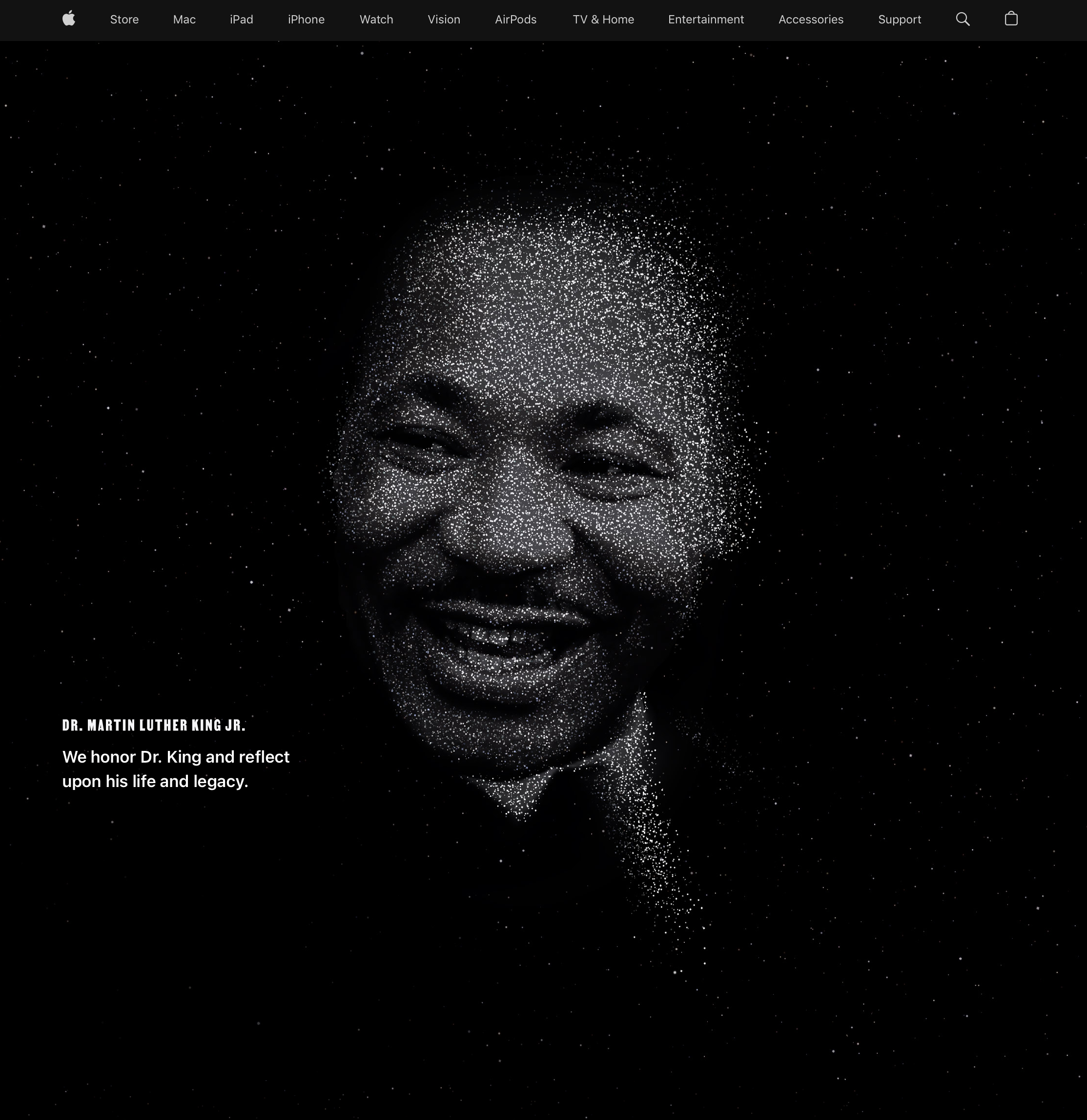

Dick Cheney, who served four Republican presidents and whose role as an architect of the post-9/11 war on terror made him one of the most powerful—and controversial—U.S. vice presidents in history, died. He was 84.
If you’d prefer something that offers a less rose-colored perspective of Cheney’s impact, I suggest Spencer Ackerman’s contemptuous piece for The Nation, the headline for which is “His Works Completed, Dick Cheney, Mass Murderer of Iraqis and American Democracy, Dies”:
Cheney, 84, picked an appropriate time to die. His decades-long struggle to consolidate the unparalleled might of US warmaking within the White House has succeeded. “In Cheney’s view,” wrote his biographer Barton Gellman, “the president’s authority was close to absolute within his rightful sphere.” Cheney defined that sphere expansively and fought for his definitions aggressively.
On Cheney’s unrelenting pursuit to create “an architecture of repression”:
Cheney did all of this because his deepest conviction was that the presidency was an elected monarchy. Misconstruing an argument of Alexander Hamilton’s from Federalist No. 70, Cheney pursued what became known as the unitary executive theory. It was predicated on the idea of an unencumbered presidency empowered to control every aspect of the executive branch, regardless of any affected office or agency’s intended independence from political decisions. Cheney had understood the post-Watergate reforms from Nixon’s criminal presidency as a congressional usurpation, and he intended to roll them all back.
Cheney got us into a war that convinced a generation of Americans that Muslims and the Middle East were America’s enemies.
We have a weak and ineffectual Congress today because Cheney sidelined it two decades ago.
There is a direct line between Dick Cheney’s unwavering belief in the plenary power of the president, and Donald Trump’s seemingly unchecked attempts to wield that power today.
But sadly, just like in the App Store app, Apple prevents you from selecting any of the text. I don’t understand why Apple insists on making its stores user-hostile in this way. However, unlike in the App Store app, you can find within the page using the browser’s built-in search feature. You can also fix text selection using StopTheMadness Pro’s “Protect text selection” feature.
“User-hostile” is exactly the right phrase—the same I used to describe this scourge in 2024 after I was prevented from copying text from the USPS Postal Store. I shared then a method for restoring the ability to copy text for Safari users, which I’ll share again: a custom style sheet to override the user-select CSS property many sites use to prevent content selection:
* {
user-select: auto !important;
-webkit-user-select: auto !important;
}
To use this override, save the above text to a file (I named mine nof—you.css—uncensored, of course), go to Safari > Settings, select the Advanced tab, click the Style Sheet popup menu, select Other…, and choose the file you saved. Safari will now use this css on any website you load, re-enabling content selection on any sites using user-select. Et voilà, you can copy again.
Patrick George, writing for The Atlantic under the very pessimistic headline “Enjoy CarPlay While You Still Can,” explains why GM and other short-sighted carmakers are ditching CarPlay, despite its popularity among car buyers (Apple News+ link):
Because GM’s software isn’t tied to a phone like CarPlay is, access to the full suite of software requires its own data plan—through GM, of course. (The cheapest plan costs $10 a month.) Get used to these kinds of subscriptions, regardless of what kind of car you drive. In recent years, automakers have realized how much money they can make from in-car technology: Maybe they charge a subscription fee for hands-free highway cruise control (GM has already had considerable success with that). Maybe they charge for apps that let you control aspects of the car from your phone. Or maybe they sell data that your navigation system collects about where you go and what you do.
Whatever the case, car companies are moving beyond making money only when they sell you a car. For GM, eliminating Apple as a middleman provides more opportunities to charge for things.
Just like I’ll never buy a car without CarPlay, subscriptions for driving my car are a non-starter—the idea of buying something and then paying more to use it is probably anathema to most car buyers. Imagine being unable to open your car door, start your car, or use the radio because your credit card payment lapsed.
I’m not nearly as pessimistic as George when it comes to CarPlay, though: I think we’ll see consumers voting with their wallets, and I’m willing to bet GM and other manufacturers will quietly start supporting CarPlay again.
The Dodgers are MLB’s first repeat champs since the 1998–2000 Yankees, and the four-hour, seven-minute, extra-innings affair it took to decide that was a fitting end to a true Fall Classic in which these two clubs exhausted each other – not just in the 18-inning epic at Dodger Stadium in Game 3 but throughout a Series in which they both had to empty the tank.
This might be the best World Series—and Game 7—in recent memory, arguably ever. It may also be the most heartbreaking loss in World Series history: the Blue Jays had several chances to win it—including a bottom-of-the-ninth play at the plate and a game-saving outfield catch for the ages, both of which were an inch or two from giving the Jays their first franchise championship title.
Congratulations to both teams for an amazing Series—but damn, Dodgers fans are going to be even more insufferable than usual.
Match Game was one of my favorite game shows growing up in the 80s, and remains so even today. A recent conversation with a friend who worked with its creator, Mark Goodson, reminded me to link up this 2006 Game Show Network documentary, The Real Match Game Story: Behind the Blank. It’s a little lacking in depth, and focuses on Gene Rayburn more than I expected, but it was fun and enlightening. For example, I learned that Richard Dawson’s popularity with contestants during the head-to-head portion led to several rules changes—and eventually his departure from the show. I also enjoyed hearing from several of my favorite celebrities, like Brett Somers, Betty White, and Charles Nelson Reilly, and the hijinks they got into on and off the set. A fun diversion for fans of Match Game.
When Affinity joined the Canva family last year, we made a promise to preserve its power while expanding what’s possible. Today, that vision comes to life with the all-new Affinity: a studio-grade creative app that brings vector, photo, and layout tools together in one high-performance platform. Fully featured. Lightning-fast. And completely free.
Affinity previously sold three separate apps: Designer (vector design), Photo (photo editing), and Publisher (page layout), all available on Mac, iPad, and PC. The new, combined app offers the full functionality of all three apps, for free:
Affinity is now completely free, forever. The full, professional-grade Affinity experience, available to everyone.
There’s no catch, no stripped-back version, and no gotchas. The same precise, high-performance tools that professionals rely on every day are now open to all, because creative freedom shouldn’t come with a cost.
Yes, Affinity really is free. That doesn’t mean you’re getting a watered-down version of the app though. You can use every tool in the Pixel, Vector, and Layout studios, plus all of the customization and export features, as much as you want, with no restrictions or payment needed. The app will also receive free updates with new features and improvements added.
The only thing that seems to require a (paid) Canva account is (optional) AI functionality:
For everyone with a Canva premium account, Canva AI’s tools are now included directly inside Affinity through the new Canva AI Studio. This includes familiar favorites like Generative Fill, Expand & Edit, and Remove Background – powerful features that speed up repetitive steps while keeping designers in full control of every detail.
When I paid $115 for an Affinity universal license in 2024, I thought it was a screaming good deal: three terrific apps, three platforms, and no subscriptions. I balked slightly at the Canva acquisition because these kinds of deals often go south, either via price increases or crappier apps.
Instead, we get what looks like a massively improved app for Mac and PC (an iPad version is “coming soon,” with a beta expected “next year,” promises CEO Ash Hewson). Making it free was a truly unexpected bonus—I was fully anticipating the apps would be locked behind a $120-a-year Canva Pro account. I couldn’t be happier my concerns were misplaced.
I hope Adobe is quaking in its overpriced subscription boots.
The Company posted quarterly revenue of $102.5 billion, up 8 percent year over year.
“Today, Apple is very proud to report a September quarter revenue record of $102.5 billion, including a September quarter revenue record for iPhone and an all-time revenue record for Services,” said Tim Cook, Apple’s CEO.
And:
“Our September quarter results capped off a record fiscal year, with revenue reaching $416 billion, as well as double-digit EPS growth,” said Kevan Parekh, Apple’s CFO.
The market loved the results, briefly pushing Apple’s after-hours stock price over $284 (from a $271.40 close), before settling in just under $278.
There were two notable and related “forward-looking statements” in the earnings call. First, from Tim Cook:
We expect the December quarter to be the best ever for the company, and the best ever for iPhone.
Then, from Kevan Parekh, Apple’s CFO:
We expect our December quarter total company revenue to grow by 10 to 12 percent year over year, which would be our best quarter ever. We expect iPhone revenue to grow double digits year-over-year, which would be our best iPhone quarter ever.
If these “statements” prove accurate, that would translate to:
$136.73 to $139.216 billion in total revenue (December 2024 revenue: $124.3 billion)
Bank of America analyst Wamsi Mohan raised the bank’s price target on Apple to $320 from $270 in a note on Wednesday, reiterating a Buy rating on the stock.
The move comes after BofA provided a new five-year outlook for the company that projects sustained growth across products and services, underpinned by the ecosystem, brand, and installed base.
And:
The bank now forecasts fiscal 2025 revenue and earnings per share of $418 billion and $7.41, respectively.
This comes out a day ahead of Apple’s earnings announcement.
A $320 price would value Apple at about $4.5 trillion, which is still well below Nvidia, which reached the $5 trillion mark on Wednesday.)
It’s been a week since Nvidia topped, then closed above the $4 trillion market cap mark, and I’m still having a hard time wrapping my mind around “a graphics card company” becoming the first to achieve this milestone. Some analysts are already anticipating a $5 trillion market cap. […]
No doubt I’ll be writing a “$5 trillion valuation” piece within the year.
Well, here we are: those analysts were right. I suppose “three months later” is indeed “within the year.”
Now the question becomes: Does Nvidia hit $6 trillion before Microsoft or Apple reach $5 trillion?
A short video demonstrating consistent typing errors when using the iOS keyboard is making the rounds in the Apple tech community. A lot of YouTube and social media comments are of the “OMG, so validating!” nature—a lot of people are reporting similar issues. I’ve certainly noticed an increase in typos over the years (which, for whatever reason, I attribute to Apple’s introduction of “differential privacy” in iOS 10). Alas (or perhaps, fortunately), while others can reproduce the specific issue shown the video, where typing “thumbs up” gives (for example) “thjmbs up,” I cannot.
Jill Tucker, San Francisco Chronicle (syndicated via Yahoo News):
Burning firewood does not produce oxygen.
That is an incontrovertible scientific fact, one of several a Fremont family spent six months fighting for, a battle they never thought they’d have to wage against their own school district.
The dispute stems from half-a-dozen test answers a teacher at Mission San Jose High School in Fremont, CA marked as wrong:
One, which asked about the products and type of reaction related to firewood combustion, immediately stood out:
30. Which of the following statements is correct?
a. The cellulose and oxygen products indicate that this combustion reaction is endothermic.
b. The heat and light products indicate that this combustion reaction is exothermic.
c. The cellulose and oxygen products indicate that this combustion reaction is exothermic.
d. The heat and light products indicate that this combustion reaction is endothermic.
The teacher identified statement C as the correct answer, which would likely surprise anyone who has ever blown into a campfire to stoke the flames. Viswanathan’s son chose statement B. (Endothermic indicates a process that absorbs heat from its surroundings while exothermic is one that releases heat. However, that was not part of the dispute.)
The teacher argued in an email to the parents shared with the Chronicle that light is not always a product of the combustion process. While true, oxygen and cellulose never are. And notably, statement B does not state that light is always present.
The principal defended the teacher:
Principal Amy Perez stepped into the fray on Aug. 13, backing the teacher.
“After reviewing the matter, I can confirm that (the teacher’s) test questions and answer key align with the CA State Standards and the curriculum used in her classroom,” she wrote in a note to the parents.
As did the district:
“In regards to the exam question, the students observed a demonstration lab during class, accompanied by a lecture that clearly explained that combustion does not always produce light,” [district spokesman Barth] Paine said in an email to the Chronicle. “Our staff affirm that combustion does not always produce light.”
The district failed to acknowledge that the teacher’s answer violated scientific fact as well as the publisher’s answer key, which confirmed the correct answer was heat and light, since “combustion is a chemical reaction that typically releases energy in the form of heat and light, which makes it an exothermic process.”
You can’t even argue that “there’s not always light” makes the correct answer appear ambiguous, because it’s the only answer that could be right: the process is exothermic, releases heat, could produce light, and consumes oxygen and cellulose.
That the answer key has the correct answer, but the teacher, principal, and school district ignored it—and science—makes this even more outrageous.
Principal Perez again:
“While alternative perspectives (that) may be found online are respected, our grading reflects the instructional materials, standards, and assessment criteria provided to all students in (the teacher’s) class.”
“Alternative perspectives” on science is right up there on the Orwellian scale with “alternative facts.”
Via a friend whose daughter attends the school and knows this teacher. The daughter’s reaction to the teacher’s incompetence?
With his every word and deed, Trump has given Americans reason to believe that he will seek a third term, in defiance of the Constitution. It seems abundantly clear that he will hold on to the office at any cost, including America’s ruin.
The Founders of our nation foresaw a figure like Trump, a demagogue who would ascend to the presidency and refuse to relinquish power to a successor chosen by the American people in a free and fair election. Writing to James Madison from Paris in 1787, Thomas Jefferson warned that such an incumbent, if narrowly defeated, would “pretend false votes, foul play, hold possession of the reins of government.” Were that moment ever to come, the Founders believed, it would mark the demise of the nation that they had conceived, bringing to a calamitous end the greatest experiment in self-government ever attempted by man.
The Founders anticipated the problem but failed to provide a solution: there’s no way, short of force, to remove a sitting president who refuses to leave and who exercises personal control over a military force—such as ICE—and has the support of nearly 50% of the voting population.
It was strange to wake up to multiple news stories about Trump’s outrageous and unceasing ploy to subvert the Constitution and remain in office after 2028. For example, from Bernd Debusmann in the BBC:
US President Donald Trump has not ruled out the possibility of seeking a third term for the White House, saying he would “love to do it”.
But Trump rejected the possibility of running for vice-president in 2028 - an idea floated by some supporters as a way for him to circumvent the US constitution that bars the president from running for a third term.
Speaking to reporters during his trip to Asia, Trump described the idea as “too cute” and said it “wouldn’t be right”.
That same piece also noted the likely genesis of this latest round of nonsense:
Last week, former Trump adviser Steve Bannon - who remains a vocal supporter - claimed there was a “plan” to secure a third term for Trump.
“Trump is going to be president in ’28, and people ought to just get accommodated with that,” Bannon told The Economist. “At the appropriate time, we’ll lay out what the plan is.”
(Worth noting: Yes, Trump will still be in office in 2028; his term ends at Noon on January 20, 2029. This is, of course, not what Bannon meant, and I’m sure that ambiguity is by design.)
Then there was Speaker Mike Johnson, who, when asked about this ludicrous idea, tried to soft-pedal, if barely:
“I don’t see a way to amend the Constitution because it takes about 10 years to do that,” Johnson, a constitutional lawyer, said. “As you all know, to allow all the states to ratify what two-thirds of the House and three-fourths of the states would approve. So I don’t, I don’t see the path for that, but I can tell you that we are not going to take our foot off the gas pedal.”
Johnson didn’t say “Trump can’t run,” or that he won’t try to stay beyond his term via force or coercion, only a very legalese statement on the constitutionality of the issue.
This constant drip-drip-drip of “third Trump term” stories is a clear effort to burrow the purported inevitability of such an outcome deep into the American consciousness. It’s the same propaganda technique on display in Trump’s feces-dumping video, where he openly winked at “bombing Americans.”
It’s clear that Trump will try to stay in office beyond 2029, constitutionality be damned.
The East Wing, the entrance to the White House for millions of Americans on official tours, the site of offices for every first lady for nearly a half century and the home of calligraphers who prepared thousands of invitations for White House state dinners, disappeared into a pile of rubble on Thursday. It had stood for 123 years.
I, like many Americans, was dumbstruck by the unexpected destruction of the White House East Wing. It felt like a ham-fisted, punch-in-the-mouth metaphor for Donald Trump’s dismantling of America’s democracy—another jackhammering from an aging “master builder” toying with his tools, violently ramming them into places without permission—a B-plot pitched by a first-year television writer, only to be gently chided for its artlessness by the more experienced staff.
The surprise and shock that so many people have registered at the photographs of Donald Trump’s destruction of the East Wing of the White House—soon to be replaced by his own ostentatious and overscaled ballroom—is itself, in a way, surprising and shocking. On the long list of Trumpian depredations, the rushed demolition might seem a relatively minor offense. After months marked by corruption, violence, and the open perversion of law, to gasp in outrage at the loss of a few tons of masonry and mortar might seem oddly misjudged.
And yet it isn’t. […]
The act of destruction is precisely the point: a kind of performance piece meant to display Trump’s arbitrary power over the Presidency, including its physical seat. He asks permission of no one, destroys what he wants, when he wants.
Trump unceremoniously tore down this historic building—no review, approvals, or consideration for its history, all in service to his inflated ego. The sheer audacity, the unmitigated gall, the utter move-fast-and-break-things of it is an affront to every American.
In July, when plans for the proposed ballroom were first announced, Zolan Kanno-Youngs at The New York Times quoted White House press secretary Karoline Leavitt as saying:
[…] the ballroom would be built where the “East Wing currently sits.” When asked whether the project required tearing down that section of the White House for the new ballroom, she said the East Wing would be “modernized.”
Donald Trump himself said “It won’t interfere with the current building. It’ll be near it but not touching it.” (Video, starting at 21:47.)
That promise didn’t last long.
Kanno-Youngs also reported that the proposed ballroom appears “to resemble one of the rooms in Mar-a-Lago, […] lined with golden chandeliers and golden chairs surrounding dozens of tables.” Trump is certainly consistent in his (lack of) taste.
That Times piece also quotes presidential historian Douglas Brinkley on Trump’s supposed motivation for building the ballroom:
He’s been wanting to be seen as the builder president so that whoever in the future goes to the White House, they’ll be in the Trump auditorium.
Which, as suppositions go, is quite plausible: with or without his name emblazoned on it, Trump knows it will always be associated with him, even derisively. Whether it’s “Trump’s Ballroom” or “Trump’s Folly,” he won’t care as long as his name is mentioned. A narcissistic monument to a monumental narcissist.
I appreciate and respect the history of the East Wing as the public entrance to the White House and the traditional headquarters of the First Lady—the heart of the nation—but I don’t have any particular affinity for the building itself. The loss I feel over its destruction is less about the structure and more about the history, the process, what it’s being replaced with, and what that represents.
Is a grand national ballroom needed to entertain visiting dignitaries during state dinners? I don’t know. Maybe? Would a permanent space be better than temporary tents? Perhaps. Previous presidents didn’t seem to consider it a pressing need, and I don’t recall any discussions about it until Trump announced his intent to build one—though apparently he’s been clamoring for one for years.
The New Yorker’s Gopnik again, on previous White House construction:
Earlier alterations were made incrementally, and only after much deliberation. When Harry Truman added a not very grand balcony to the Executive Residence, the move was controversial, but the construction was overseen by a bipartisan commission. By contrast, the new project—bankrolled by Big Tech firms and crypto moguls—is one of excess and self-advertisement. The difference between the Truman balcony and the Trump ballroom is all the difference in the world. It is a difference of process and procedure—two words so essential to the rule of law and equality, yet doomed always to seem feeble beside the orgiastic showcase of power.
That is the rhetorical fragility of liberal democracy: its reliance on rules rather than on rage. If the White House must be remade, let there be a plan; let it be debated; let the financing be transparent and free of kickbacks and corruption. It isn’t complicated, and it’s the very principle at the heart of the American Revolution: following rules is not weakness. It is the breaking of them that is the indulgence of insecure tyrants, who feel most alive in acts of real and symbolic violence.
Had a plan for a stately and decorous ballroom been proposed, studied, and approved—even one that necessitated the eventual teardown of the East Wing—I might be more sympathetic to even fatuous arguments in its favor, and my objections less strident.
Even then, a ballroom of this size seems overly grandiose, and gives me pause. President Reagan held 59 state dinners during his two terms, the most of any president. President Obama held 13. Trump has held two. Why is such a large, opulent space needed for so few events? It’s also at odds with the relative modesty of “The People’s House.” It’s certainly way out of scale. The now-destroyed East Wing was 12,000 square feet. Its replacement is a planned 90,000 square feet, 7.5 times larger, and nearly double the 55,000 square feet of the White House itself. Why does an ancillary space, used maybe four to six times a year, need to be so massive and ostentatious?
The Washington Postperformed “an analysis of architectural renderings, photos and satellite imagery” from which they “reconstructed an estimate of the overall footprint of the new East Wing.” Those renderings make tangible just how absurdly outsized the East Wing and ballroom would be.
Those renderings reminded me of the palaces of Putin, Hussein, Erdoğan, and the very monarchies we shrugged off 250 years ago.
I’m left with the uneasy sense that that’s the point—or at least a point—of this entire endeavor: for the building—both the act and the result—to embody the aesthetics, trappings, and power of dictators and autocrats. Trump demolished the East Wing to build a massive monument to himself: a self-important, would-be king and dictator. The grotesque scale of the building suggests that it’s more than just a presidential ballroom.
The renderings also brought to mind—quite uncomfortably—another set of buildings: the mausoleums of China, in particular that of Chairman Mao Zedong, who is embalmed and entombed within, for visitors to pay their eternal respects.
It’s a disturbing yet conceivable possibility that what Trump may be building is not just a grand ballroom but also a future pilgrimage site for his MAGA faithful—his own sepulcher.
Amid the accelerating automation of our computers—and the proliferation of assistants and companions and agents designed to execute tasks for us—I’ve been thinking more about the desktop that’s hidden in the background of the laptop I use every day. Mine is strewn with screenshots and Word documents and e-books. What I’ve accrued the most of by far, though, are TextEdit files, from the bare-bones Mac app that just lets you type stuff into a blank window. Apple computers have come with text-editing software since the original Mac was released, in 1984; the current iteration of the program launched in the mid-nineties and has survived relatively unchanged. Over the past few years, I’ve found myself relying on TextEdit more as every other app has grown more complicated, adding cloud uploads, collaborative editing, and now generative A.I. TextEdit is not connected to the internet, like Google Docs. It is not part of a larger suite of workplace software, like Microsoft Word. You can write in TextEdit, and you can format your writing with a bare minimum of fonts and styling. Those files are stored as RTFs (short for rich-text format), one step up from the most basic TXT file. TextEdit now functions as my to-do-list app, my e-mail drafting window, my personal calendar, and my stash of notes to self, which act like digital Post-its.
I trust in TextEdit. It doesn’t redesign its interface without warning, the way Spotify does; it doesn’t hawk new features, and it doesn’t demand I update the app every other week, as Google Chrome does. I’ve tried out other software for keeping track of my random thoughts and ideas in progress—the personal note-storage app Evernote; the task-management board Trello; the collaborative digital workspace Notion, which can store and share company information. Each encourages you to adapt to a certain philosophy of organization, with its own formats and filing systems. But nothing has served me better than the brute simplicity of TextEdit, which doesn’t try to help you at all with the process of thinking. Using the app is the closest you can get to writing longhand on a screen. I could make lists on actual paper, of course, but I’ve also found that my brain has been so irredeemably warped by keyboards that I can only really get my thoughts down by typing. (Apparently my internal monologue takes place in Arial typeface, fourteen-point font.)
Other than that final font faux pas—TextEdit’s default font is Helvetica—it’s a wonderful ode to an underappreciated app and a beautiful bit of writing.
When I saw Chinese Trump impersonator Ryan Chen (Chinese: Chen Rui) on TikTok, I thought it was dubbed—the speech patterns, the mannerisms, the occasional malapropisms were just that good. He has hundreds of videos. In addition to that first link, here are a few favorites:
Via a write-up about Chen by Andrew Higgins in The New York Times (gift link), who notes:
Ryan Chen has never set foot in the United States. He learned English at high school in the western Chinese city of Chongqing and from watching pirated versions of “Friends,” “Two and a Half Men” and other sitcoms in college.
AI progress isn’t only about advancing intelligence—it’s about unlocking it through interfaces that understand context, adapt to your intent, and work seamlessly. That’s why we’re excited to share that OpenAI has acquired Software Applications Incorporated, makers of Sky. […]
We will bring Sky’s deep macOS integration and product craft into ChatGPT, and all members of the team will join OpenAI.
I hope the product is called OpenSky.
This also means OpenAI now owns the wonderful—and wonderfully named—“software.inc” domain.
Software Applications Incorporated was founded by three former Apple alums— Ari Weinstein, Conrad Kramer, and Kim Beverett. Weinstein and Kramer were the team behind Workflow, which Apple acquired and turned into Shortcuts. When Sky was announced back in May, I wondered why Weinstein and team couldn’t build it while at Apple, and suggested it was pitched and received a cool reception—leading to their departure. I speculated:
Regardless, I’m guessing some executive inside Apple is kicking themself now—and possibly plotting how to acquire Weinstein and team, for the second time.
(They may have competition: The app relies on OpenAI’s ChatGPT, and OpenAI’s Sam Altman is an investor in Weinstein’s company.)
Ben Sandofsky is a cofounder of Lux, maker of Halide and other fine iOS camera apps. He is technically savvy and, I think it’s fair to say, quite attuned to Apple. Earlier this week he posted on Mastodon:
Out of nowhere, I got a full screen ad for Apple Arcade on my Home Screen. My jaw dropped.
Apple pushing a full screen ad to the Home Screen? I was likewise astonished. His post garnered 31 comments, 109 boosts, and 170 favorites—most of them negative.
Update: this is not a pushed ad. It looks like a phantom tap on my Home Screen for some reason* went to Balatro on screen 2, which triggers the ad since my subscription lapsed.
*iOS 26
This important update received 2 comments, 6 boosts, and 20 favorites.
An hour later came a third follow-up, with a video reproducing the issue:
This took me more than a few tries, but there appears to be a short window after you tap an Apple Arcade game where you can still swipe springboard, before it shows the modal asking you to subscribe.
So one possibility is that I was quickly swiping screens, one tap landed as an “Open Balatro,” but I landed on a different screen before it showed up.
This post got just 4 comments, 5 boosts, and 1 favorite.
Two things struck me:
One: Eight times more people reacted to Sandofsky’s initial post about this “pushed” ad than saw his correction: 310 “engagements” for the initial post vs. 38 for the two follow-ups combined. Most of the responses were from people dunkingonApple for having the temerity to push a full screen ad to the Home Screen, even though—it turns out—Apple had done nothing of the sort. A lie can travel halfway around the world before the truth can get its boots on.
In quoting that oft-misattributed saying, I’m not calling Sandofsky a liar, to be clear—merely recognizing that a (mistaken) first impression often carries greater weight than any corrections. In fact, I applaud Sandofsky for following up to correct the record, going so far as to reproduce the issue to understand what may have happened (though I wish he would update his first post). Nor am I criticizing those who responded as they did—their reactions comported with their preconceptions of Apple.
Which brings me to my second point. Pushing an ad to your Home Screen would be a clear abuse of Apple’s privilege, yet people were not the least bit incredulous that it happened. The immediate reaction to Sandofsky’s post wasn’t Apple did what?! That’s not like them. It was Of course they did.
After all, it’s the same company that recently violated its own guidelines to push a movie promo to Apple Wallet, and which currently displays ads for AppleCare One in my Settings app and for Apple Card in my Wallet app. It wasn’t that great a leap to believe that Apple had again violated its customers’ trust—and the sanctity of their Home Screens—with an ad for one of its lesser-known services.
Ads for Apple products inside Apple’s products.
Apple’s philosophy has always been that you pay your money and you get a product that does what it says on the tin—or aluminum, I suppose. No upsell, no “Intel Inside” stickers, no ads in the menu bar. “We build products that we want for ourselves, too, and we just don’t want ads,” said Steve Jobs in 2011. “Our business model is very straightforward: We sell great products,” wrote Tim Cook in 2014.
Those quotes are from a different era of Apple and with different contexts (mail, privacy), but they feel instructive—Apple was the one company we could confidently say would always do right by its customers.
No more. Apple has so annihilated its brand goodwill, and abandoned its “beyond reproach” marketing high ground, that we Apple faithful are losing our faith. No longer do we presume the company stands with us to fight enshittification. Instead, we’ve become convinced that Apple would do anything in the pursuit of revenue, even push a full screen ad to our Home Screens.
GM plans to drop support for phone projection on all new vehicles in the near future, and not just its electric car lineup, according to GM CEO Mary Barra.
In a Decoderinterview with The Verge’s Nilay Patel, published Wednesday, Barra confirmed GM will eventually end support of Apple CarPlay and Android Auto on both gas-powered and electric cars. The timing is unclear, but Barra pointed to a major rollout of what the company is calling a new centralized computing platform, set to launch in 2028, that will involve eventually transitioning its entire lineup to a unified in-car experience.
My life is on my iPhone, and I’ll switch cars before I leave that ecosystem. There’s no easier way for a car company to lose my business than not supporting CarPlay. (OK, there is another.)
If I were a competing CEO that supported CarPlay (and Android Auto) I’d be ecstatically flinging up billboards.
In place of phone projection, GM is working to update its current Android-powered infotainment implementation with a Google Gemini-powered assistant and an assortment of other custom apps, built both in-house and with partners.
No car “infotainment” system will ever be as good as my iPhone when it comes to the apps I care about. My preferred podcast player, Overcast, will never be on GM’s system, nor will that system ever read me my Messages. My driving life is simply better when I can use the apps I want. For a car CEO to believe otherwise is outrageous.
Some smart bed users were quite literally losing sleep over the massive AWS outage on Monday. Eight Sleep’s elevating, temperature-controlling mattress systems were temporarily knocked out of service by Amazon’s server issues, with users on Reddit and X reporting their smart beds were stuck at sweltering temperatures and uncomfortable incline positions.
Don’t connect your bed to the internet.
The company’s “Pod” mattress toppers — which start at $2,000 depending on the model and size, alongside a monthly Autopilot subscription (starting at $17) to use the features — rely on cloud connectivity. An active internet connection is required to control temperature and elevation settings via the Eight Sleep app, and it previously didn’t provide a way to adjust features offline.
Don’t buy “smart” beds that cost $2,000 and require a monthly subscription.
[CEO Matteo] Franceschetti said that all Eight Sleep devices are “currently working” again as of Tuesday, and said, “We will work the whole night+24/7 to build an outage mode so the problem will be fixed extremely quickly.”
Don’t buy beds that need an “outage mode.”
“During an outage, you’ll still be able to open the app, turn the Pod on/off, change temperature levels, and flatten the base,” [co-founder Alexandra] Zatarain said.
Putting aside the questionable need for such features, why wasn’t this bed designed to work offline from the start? It’s a bed.
I’ve been using the iOS 26 betas since June, and I always try to live with the system defaults—there’s usually a good reason for that designation, and in my previous life, using the system the way most of Apple’s customers did was valuable. I usually adapt quickly to most design changes, but this year, one default was a deal breaker.
It’s the first setting I changed during the beta cycle—and again after my new iPhone arrived[1]: Safari Tabs, under Settings > Apps > Safari.
The default “Compact” option places the URL bar at the bottom for easy thumbing, but hides many of my oft-used selections behind an extra tap—especially the Share and New Tab buttons, which I use a hundred times a day to save links and open or switch tabs.
Safari Tabs: Compact (Default)
The “Bottom” option restores those buttons to a single tap at the expense of a double-height bar, and for my needs, is the clear winner.
Safari Tabs: Bottom
If the double-height bar is not to your liking, the “Top” option splits the toolbar from the URL bar, keeping the former at the bottom, and moving the latter to the top of the screen.
Safari Tabs: Top
I actually rather like this option for its minimal use of space at the bottom, but I’ve now gotten used to having the URL bar down there.
That ubiquitous “Beat LA!” so many of us baseball fans enthusiastically chant against the detestable Dodgers didn’t originate with that team. Not even with that sport. Its origins didn’t even directly involve an LA team at all. Kyle Ramos had the story for NBA.com, back in 2015:
Instead, it began in 1982 when Boston was facing elimination against the Philadelphia 76ers in Game 7 of the Eastern Conference Finals. With the Sixers comfortably ahead and the end of the Celtics season in sight, the Boston fans opted not to wallow in their somber defeat, but to offer some simple instruction and encouragement to the soon-to-be-victorious Philadelphia team, chanting, “Beat LA! Beat LA! Beat LA!”
The best thing to come out of Boston since Paul Revere, New Edition, and Dunkin Donuts’ bacon and egg on a croissant.
The 2025 World Series matchup is official—and unprecedented. For the first time, the Dodgers and Blue Jays will meet in the Fall Classic, with Game 1 set for Friday, October 24 at Rogers Centre.
Well, this is a first for me, too: I’ll be cheering for an American League team based outside the United States in the World Series.
Anyone over the LA Dodgers—them’s the rules: I don’t make ’em.
OK, I totally do. I’ve mentioned them before, but here they are again:
Mets and Giants over anyone
Eastern/Western Divisions over Central
National League over American League
Anyone over Yankees/Dodgers
Yes, that sometimes meant rooting for a Central Division or American League team if they were up against the Yankees or Dodgers, but it was always worth it. Nothing was more important than those two teams losing.
In an AI-generated video Trump shared on his Truth Social platform Saturday evening, the U.S. president is depicted as a king in a fighter jet dropping what appears to be a large amount of fecal matter on protesters below. In the 19-second video, the president is in a fighter jet marked “King Trump,” and he is shown wearing a crown sitting in the cockpit. (The oxygen mask that “King Trump” wears does not fully cover his nose and mouth.)
Jenny Gross at The New York Timeschose to describe it as “dropping a brown liquid resembling feces onto the heads of protesters,” adding that “Mr. Trump regularly reposts A.I.-generated or mocked-up imagery on his Truth Social account,” as though this is a perfectly reasonable thing for a President of the United States to do. No critique or condemnation, just continued sane washing.
The world watched a so-called leader—Donald Trump—post an AI video of himself in a fighter jet… dumping shit on his own citizens. It wasn’t satire. It was a mirror.
King Trump taking a shit on America is certainly a message.
Many of the retorts focused on the shit dumping. What really struck me wasn’t the “brown liquid,” the crown, or even the flight mask not covering Trump’s nose (lol). No, my takeaway was the bombing imagery itself. I wrote on Mastodon in response to the video:
This is a bombing fantasy: he’s acclimating us to the idea of dropping bombs on US citizens by making a “funny” shareable meme. Millions will see it and laugh or be outraged, but are one beat closer to accepting the idea of an air strike in American cities. I’m confident a version with real bombs was considered and dismissed as “too soon.”
Trump has used war imagery before, and he and his team are escalating their use of “king” motifs. Trump’s team may not have created this video, but by sharing it, they are continuing their attempts to inculcate us. They desperately want us to accept two decidedly un-American ideas: Trump as “king,” and military-style attacks on Americans.
Hopkins also wrote that this video “normalizes violence as entertainment”:
Using artificial imagery to depict harm against citizens desensitizes followers. It trains the public to see aggression as humor… rebellion… or strength rather than as moral collapse.
Every repetition moves the boundary of what’s “acceptable” political expression.
This is how authoritarian propaganda evolves…from outrageous joke to operational doctrine.
This is the nature of propaganda: to repeatedly introduce abhorrent ideas in an effort to make them seem normal—expanding the Overton window so that what was once “unthinkable” is perceived as merely “radical,” and eventually, even “acceptable.” With enough exposure, we become accustomed to the absurdities.
It’s imperative that we recognize these photos and videos for what they are. We must not dismiss them as mere “memes” or “masterful trolling.” The Trump regime is telling us who they are: autocratic wannabe dictators and military strongmen hell-bent on attacking their country’s citizens.
Robbers wielding power tools broke into the Louvre on Sunday and made off with priceless jewels from the world-renowned museum, taking just seven minutes for the broad-daylight heist, sources and officials said.
“We saw some footage: they don’t target people, they enter calmly in four minutes, smash display cases, take their loot, and leave. No violence, very professional,” she said on TF1.
A lift — which officials say the thieves brought and which was later removed — stood against the Seine-facing façade, their entry route and, observers said, a revealing weakness: that such machinery could be brought to a palace-museum unchecked. […]
Interior Minister Laurent Nunez said the crew entered from outside using a basket lift via the riverfront facade to reach the hall with the 23-item royal collection.
There they smashed two cases, sounding more alarms, and snatched eight precious objects, including a royal sapphire necklace, a royal emerald necklace and its matching earrings, and a diadem worn by Empress Eugénie, the wife of Napoleon III, France’s 19th-century ruler.
Ariel Weil, mayor of central Paris (home of the Louvre):
Not only did it take place in broad daylight, while the museum was open, Mr. Weil pointed out, but the thieves walked off with some of the nation’s crown jewels.
“Those are the most valuable thing — not just from a material point of view, but from a symbolic one,” he said in an interview.
Liberating high value, symbolically important items? Check.
I wondered why thieves would bother to steal such well-known artifacts; surely there’s no one foolish enough to buy them—except, perhaps, a centibillionaire collector with an underground museum. But, notes French paper Le Parisien (machine-translated):
One of the questions that arises at the moment is whether the jewels have already been melted to resell the gold, as was most certainly the case a month ago with the gold nuggets stolen from the Natural History Museum. “The risk is that some diamonds can be sold at retail, which would make the reconstitution of jewelry very difficult,” explains a source close to the investigation.
Ugh. I admit, it never occurred to me that the jewelry would be decomposed and sold as “scrap.” I presumed they were stolen because they were renowned artifacts, desirable for their history and beauty, and would be secretly admired in the private collection of that hypothetical billionaire—not because they’re made of diamonds and gold.
Research from Erica Chenoweth and Maria J. Stephan found that large-scale, non-violent political movements have always succeeded if they reach 3.5% of the population. Many succeeded at just 1.8% of the population.
The first No Kings rallies in June brought out an estimated 5 million people angry about Trump’s authoritarian regime, about 1.45% of the population. Early estimates put today’s No Kings rallies at 7 million people, or 2% of the country.
As I noted in June when I first wrote about the 3.5% rule:
The people of America are fired up. There’s still a long way to go, but change feels possible.
Crossing the 1.8% threshold feels both momentous and insufficient. Getting to 3.5% (over 12 million people) may seem daunting, yet it’s eminently achievable, perhaps even inevitable. Change is frustratingly slow, but a change is gonna come.
Trump Republicans are railing against today’s protests, and calling it a “hate America rally,” a sign of immense fear among those in Trump’s orbit—downright laughable, even. Illustrating just how absurd it is, and how widespread the anti-Trump, pro-democracy sentiment is, my 79-year-old mother called this morning to ask if it’s OK (as in “safe and appropriate”) to attend a North Carolina No Kings protest with the other seniors from her building. When septuagenarians in walkers and wheelchairs are lining the streets to protest you, you’ve already lost. It’s just a matter of when the regime realizes it.
To me — as someone who cares deeply about the future of American democracy — the rallies stand as an important expression of love for the United States and the idea and dream that the US has represented for 250 years.
1. People — There are more of us than there are of them.
It’s easy to lose sight of how weak this administration’s popular support actually is. Two-thirds of Americans are not Trump voters — and even many who did support him are beginning to question or turn against what it’s like to live in Donald Trump’s America.
2. History — America’s progress has always been imperfect.
Ironically, the second pillar of hope I have is that the history of the United States is filled with dark chapters — sometimes, even long dark chapters.
We are a country founded on a deeply imperfect premise, “all men are created equal,” that at that time excluded enslaved Blacks, women, indigenous people, and even white men who didn’t own property. America has many stories and the one that I choose to believe is the one where we are a country that strives, generation by generation, decade by decade, to be better. That viewed across 250 years, America is a country where each generation has strived to hand off a country more just, equal, and prosperous than the one they inherited from their parents and grandparents.
3. Actuarial — Trump won’t last forever, which means “Trumpism” will fall.
Trump may want to be a dictator and emulate Franco and Orban, and — who knows — maybe the ridiculous White House ballroom he’s building is an indication he doesn’t plan to leave peacefully on January 20, 2029, but time tells us that he’s never going to be Franco, the dictator who reigned in Spain from 1939 until 1975. The reality is Donald Trump is 79 and not well — and probably less well than the media is willing to dig into — and his reign as president and America’s would-be king will be measured in years, not decades.
Whenever and however Donald Trump exits the stage, there just isn’t anyone who will step into the MAGA movement’s shoes — there are plenty of people who will try, from JD Vance to Marco Rubio to Ron DeSantis to Don Jr. to Ted Cruz, but the thing we’ve seen over and over across the last decade is that no one is Donald Trump. Vice President JD Vance, an incredibly awkward and unfunny Trump-lite who is widely despised by both sides, is most certainly not Donald Trump.
It’s a welcome piece—long, but detailed. If you’re looking for nuggests of hope, you might find them here.
If you’re attending a No Kings protest on Saturday, stay safe.
Apple and Formula 1® today announced a five-year partnership that will bring all F1 races exclusively to Apple TV in the United States beginning next year. […]
Apple TV will deliver comprehensive coverage of Formula 1, with all practice, qualifying, Sprint sessions, and Grands Prix available to Apple TV subscribers. Select races and all practice sessions will also be available for free in the Apple TV app throughout the course of the season. In addition to broadcasting Formula 1 on Apple TV, Apple will amplify the sport across Apple News, Apple Maps, Apple Music, and Apple Fitness+. Apple Sports — the free app for iPhone — will feature live updates for every qualifying, Sprint, and race for each Grand Prix across the season, with real-time leaderboards, season driver and constructor standings, Live Activities to follow on the Lock Screen, and a designated widget for the iPhone Home Screen.
According to emails sent to current Formula 1 TV subscribers, F1 is keeping its “F1 TV Access” (the lowest-tier option—$3.49 a month or $29.99 a year, which does not include any live video streaming) and is phasing out its “F1 TV Pro” package ($10.99 a month) while shifting its highest “F1 TV Premium” tier ($16.99 a month—the “Ultimate F1 Live Immersion” which includes multiview and 4K streaming) to Apple TV:
From January 2026, our new Formula 1 broadcast partner in the US will be Apple TV. Next season F1® TV Premium will continue to be available in the U.S., included with an Apple TV subscription only.
You will still be able to purchase F1® TV Access, which remains available in the US.
Apple TV customers pay $12.99 a month and will now get that $16.99-a-month “Premium” tier as part of their subscription. That’s a hell of a deal. A lot more people might find themselves watching F1 races out of mere curiosity. I’ve never watched a single F1 race (or Drive to Survive or F1 The Movie), but this new partnership may finally get me to check out the hype, seeing as it’s now effectively free for me to do so.
Meanwhile, “F1 TV Pro” subscribers get full access to everything Apple TV has to offer for an extra $2 a month, while “F1 TV Premium” subscribers save $4 a month.
This seems like a massive win for everyone.
Additional information — including production details, product enhancements, and all the ways fans will be able to enjoy F1 content across Apple products and services — will be announced in the coming months.
I assume this will include an immersive Apple Vision Pro experience. An app called Lapz was briefly available and was considered the best way to watch F1 races. The F1 folks put the kibosh on it last year; perhaps one of them will acquire it.
One sour note, from the aforequoted press release:
Apple will amplify the sport across Apple News, Apple Maps, Apple Music, and Apple Fitness+.
Translation: We need to recoup our money somehow, so prepare to see a lot of unwanted F1 content. I can see it now: Your commute will take 45 minutes, but an F1® car would get you there in just ten. Subscribe to Apple TV to experience the thrill of speed.
[…] bless my soul, as sure as there’s a light over at the Frankenstein place, you can bet I’ll be buying the 50th Anniversary 4K edition when it’s released in October.
It’s released, ordered, and should arrive today. It’ll make a perfect weekend watch. (As always, Amazon links can earn me a couple of pennies. Time is fleeting.)
I thoroughly enjoyed this short story by Jason Self. It’s a pitch-perfect future-tech satire that’s increasingly recognizable in our connected-everything/right-to-repair/DRM-and-subscriptions-everywhere reality:
My OmniHome™ SynapseToaster™, a sleek obsidian slab that cost more than my first car, was perfectly capable of producing golden-brown perfection. That capability was locked behind DRM. A notification would slide gracefully onto my OmniTab™ screen every morning: “Experience the Maillard reaction as our chefs intended. Upgrade to the Artisan Browning™ subscription for just 10 credits a month.”
The United States Mint (Mint) today released the designs for the 2026 American Innovation $1 Coin Program. The 2026 designs honor innovations and/or innovators from Iowa, Wisconsin, California, and Minnesota.
The California design features Steve Jobs:
This design presents a young Steve Jobs sitting in front of a quintessentially northern California landscape of oak-covered rolling hills. His posture and expression, as he is captured in a moment of reflection, show how this environment inspired his vision to transform complex technology into something as intuitive and organic as nature itself. Inscriptions are “UNITED STATES OF AMERICA” and “CALIFORNIA.” Additional inscriptions are “STEVE JOBS” and “MAKE SOMETHING WONDERFUL.”
(This is not the design the Citizens Coinage Advisory Committee preferred, which featured Steve as older and wearing glasses and a turtleneck. That design, while certainly a more familiar image, placed even greater emphasis on the man. This design at least alludes to California as a source of inspiration.)
In a series of press releases, and as teased by Joz yesterday, Apple announced a faster M5 chip and three updated products to leverage its power. Apple Newsroom links:
These are welcome spec bumps, but nothing truly earth-shattering here—simply faster, more capable hardware year over year. If you have an M4-based device, you’re unlikely to be tempted unless seconds lost equals money lost. For earlier hardware, especially M1- and Intel-based devices, these represent significant upgrades.
M5
The new M5 chip is built on “third-generation 3-nanometer technology,” and improves unified memory bandwidth to 153GB/s (“a nearly 30 percent increase over M4 and more than 2x over M1”). It’s notably faster than the M4 and earlier M-series chips, with Apple touting its improved performance for AI, gaming, and 3D applications. It’s a beast—and probably overkill for most people.
Apple Vision Pro
The updated Apple Vision Pro with M5 offers “improved display rendering, faster AI-powered workflows, and extended battery life.” It now comes with a redesigned “Dual Knit Band” that is remarkably similar in concept to the 3D-printed solution I and many other Vision Pro users have been sporting. Also included in the box is Apple’s new, descriptively named 40W Dynamic Power Adapter with 60W Max. Apple Vision Pro (M5) maintains its $3,499 starting price. Preorders start today and will be available in store on October 22.
One meaningful improvement the M5 brings:
With M5, Apple Vision Pro renders 10 percent more pixels on the custom micro-OLED displays compared to the previous generation, resulting in a sharper image with crisper text and more detailed visuals. Vision Pro can also increase the refresh rate up to 120Hz for reduced motion blur when users look at their physical surroundings, and an even smoother experience when using Mac Virtual Display.
Sharper images and reduced motion blur are reasons enough for many current Vision Pro customers to consider upgrading—yours truly included—but Apple does not offer any trade-in options for Apple Vision Pro, making it a nonstarter for most of us.
(I was unrealistically hoping for a trade-in program that would take back my original Vision Pro for something close to full credit, as a thank-you for effectively acting as a beta tester. Preposterous, I know, but no trade-in options seems like a missed opportunity to recapture early adopters.)
The M5 also brings small improvements to battery life (“up to two and a half hours of general use, and up to three hours of video playback”) and performance (“up to 2x faster for third-party apps”).
Apple claims “over 1 million apps” are available for Apple Vision Pro, with “more than 3,000 apps built for visionOS.” I’ll be honest: it doesn’t feel like that many visionOS apps are available.
I also found this plug amusing:
And pro users can assemble and rehearse their presentations while in a seat-for-seat replica of the Steve Jobs Theater at Apple Park using Keynote.
That’ll be the closest most of us will ever get to trodding that stage.
MacBook Pro 14"
Apple is pushing the MacBook Pro 14"—unsurprisingly—as an AI system. I counted 24 mentions of “AI,” “Neural Engine/Accelerator,” or “LLM.”
The new hardware has “2x faster SSD,” “up to 4TB of storage,” “1.6x faster graphics performance,” “up to 20 percent faster multithreaded performance,” and “24 hours of battery life.”
Sadly, no teal—space black and silver only, again. MacBook Pro 14" (M5) can be preordered today at a starting price of $1,599. Available October 22.
iPad Pro
For many people, this new M5-powered iPad Pro, running iPadOS 26 and connected to a 4K display and keyboard, is all the computer they’ll need.
The iPad Pro can now drive external displays at up to 120Hz, with support for Adaptive Sync for “the lowest possible latency.” It now has the Apple-designed C1X modem and N1 networking chip (which combines Wi-Fi 7, Bluetooth 6, and Thread). Storage is twice as fast, and the 256GB and 512GB models come with 12GB of high-bandwidth memory (up from 8GB in the M4), while the 1TB and 2TB still contain 16GB. The new iPad Pro also adds fast charging (up to 50% charge in 35 minutes) with a capable charger. Pricing for the 11" iPad Pro starts at $999 for Wi-Fi and $1,199 for Wi-Fi + Cellular, and the 13" iPad Pro starts at $1,299 (Wi-Fi) and $1,499 (Wi-Fi + Cellular). And yes, preorders start today and will be available in stores on October 22.
Greg Joswiak, Apple’s Senior VP of Marketing, posting to X/Twitter (link is to xcancel.com, so you can safely click without actually visiting the hellsite):
Mmmmm… something powerful is coming.
After years of “we don’t even wink in the direction of new products,” it’s weird to see Apple executives actively teasing new products.
It doesn’t take a marketing genius to figure out five “M”s equals “M5”. The Roman-numeral-V-shaped silhouette of the included video simply rams it home:
An M5 MacBook Pro is virtually verified. Verily. Video courtesy of Apple.
The headphone port on the left aligns with a MacBook Pro (not Air). And this may be just the lighting, but it looks a smidge thinner. Plus—and perhaps this is merely wishful thinking—the overall coloration, and the closing Apple logo, implies the tantalizing possibility of a MacBook Pro in something other than Space Black or Silver.
Teal MacBook Pro, anyone? Image courtesy of Apple.
Drew Struzan, the poster artist behind “Star Wars,” “Blade Runner,” “The Thing,” “Raiders of the Lost Ark,” “Back to the Future” and countless others, died on Tuesday due to complications from Alzheimer’s disease, his family said on a statement. He was 78.
I didn’t know the artist, but I sure as hell knew the art. If you love movies, you most assuredly know Struzan’s work, too. For many of us, his posters are the defining image for that movie. Indiana Jones and the Last Crusade, Return of the Jedi, Back to the Future, Coming to America, and more of Struzan’s iconic posters are all indelibly imprinted on my brain.
I’ve known Kira, the daughter of my good friends Ron and Irene Lue-Sang, since she was a day old. She was diagnosed with Type 1 Diabetes (T1D) nearly a decade ago. Since 2015, the Lue-Sang family have helped raise funds to end T1D by walking in the annual Breakthrough T1D Walk (formerly JDRF).
It’s no longer “nearly,” notes the family:
This is a milestone year. Kira has been living with Type 1 Diabetes for 10 years.
Kira’s off to college next year. I’ve watched her grow from a rambunctious girl into a beautiful, smart, thoughtful, and talented young woman. She hasn’t allowed T1D to slow her down one iota.
As they have every year since Kira’s diagnosis, the Lue-Sangs are again raising funds as part of their “commitment to do whatever we can to help develop new treatments—and ultimately a cure—for this currently incurable disease.” They’ll participate in the Breakthrough T1D (formerly JDRF) Walk on Sunday, October 19, 2025.
They’ve set a public goal of raising $5,000, and they’re about 70 percent of the way. I’d like to see them achieve it, so I’m doing a donation match challenge this year. I’ll match, dollar-for-dollar, any donations you make to the Lue-Sang T1D team between now and October 18, 2025 (the Saturday before the Walk), up to $1,000. You donate $5, I match your $5—doubling our impact. Just point me to your name on the team leaderboard or send me a screenshot showing your donation (redact any sensitive info, please!). Prefer to remain anonymous? Use “Kira’s Match” as the “Recognition Name” when completing the form.
I recommend donating to a specific walker on the team. Once a walker reaches specific fundraising levels, they’re granted “V1P” status, which awards them with a variety of swag and grants them access to a “special V1P lounge for an exclusive celebration experience.”
(Kira has already achieved V1P status, so I’m directing my donations to Kira’s sister, Tyrine, so they can enjoy the V1P experience together.)
Your donations help fund the research and scientific breakthroughs for T1D treatments and bring us closer to a cure. Last year, Ron told me:
One hundred years ago, science had barely discovered insulin. Before that, people with Type 1 Diabetes just wasted away a few months or years after diagnosis.
Ten years ago our standard of care was pricking Kira’s fingers to check blood sugar levels at least four times a day and injecting insulin by hand. We’re grateful for the advances technology has brought, including modern insulin, continuous glucose monitors, and insulin pumps. But we believe—it’s an article of faith—that there are still more advances to come, if only we pursue them.
Contributing to Breakthrough T1D helps them pursue those advances. Any amount helps, whether it’s $5, $10, or $100. And this year, your contribution will have double the impact.
Once again, the Lue-Sang family thanks you, and I thank you.
It’s official. The U.S. Navy, including the Blue Angels, will not participate in San Francisco Fleet Week this year due to the ongoing federal government shutdown.
In a statement late Tuesday night, the San Francisco Fleet Week Association said U.S. Navy ships, Sailors, and Marines would not take part in this year’s events “due to the continuing lapse in federal appropriations.”
In addition to dashing away the innocent joy of watching the Blue Angels fly jet planes in precise, death-defying formation, the Republican shutdown also means furloughing 34,000 IRS employees, the closure of National Parks, an expected explosion of healthcare costs, and less safe airports as TSA agents and air traffic controllers worry about their next paycheck. Oh, and Donald Trump suggests those federal workers don’t deserve back pay.
The Clips app is no longer being updated, and will no longer be available for download for new users as of October 10, 2025. You can continue to use Clips on iOS 26 and iPadOS 26 or earlier.
The app is no longer shown under Apple’s App Store listing , and visiting the link returns an “App Not Available” or “Cannot Connect” error.
Apple introduced Clips in 2017 without much fanfare as a “fun, new way to create expressive videos on iOS,” but it failed to catch on with the Instagram and TikTok crowd. The app received just a handful of updates in subsequent years and had long been presumed dead, baby. Now it’s official: Clips has ceased to be. It is an ex-app.
When linking to sites, I’ve often wished I could link directly to specific text on a page rather than the page itself. Earlier this year, I learned this was possible by using Text fragments. Quoting from that MDN link:
Text fragments link directly to specific text in a web page, without requiring the page author to add an ID. They use a special syntax in the URL fragment. This feature lets you create deep links to content that you don’t control and may not have IDs associated. It also makes sharing links more useful by directly pointing others to specific words.
Text fragments have been a feature of several browsers since 2020 and came to Safari 16.1 in 2022.
A text fragment link contains four parameters, three of them optional:
The only required parameter is textStart; this text will be highlighted on the page. For example, to link to the word “Scarborough” in my Naming My Devices article, you would add #:~:text=scarborough to the end of the URL:
The text must be percent-encoded—meaning spaces and most punctuation must be replaced by their hex values; for example, a space is %20. That’s simple enough for a word or two, but I usually link to a sentence, or sometimes an entire paragraph. Here’s an example that links to the phrase “1) New York Mets vs. Boston Red Sox: 1986 World Series” which percent-encodes the ), :, and each space:
You can see the format is relatively easy to understand, but finicky. Trying to do this by hand would be madness.
So I built a JavaScript bookmarklet to do it.
Bookmarklets
Bookmarklets are like regular web browser bookmarks, but instead of saving a link to a website, they store JavaScript that the browser executes when selected. They can even include CSS and load external resources. Virtually anything you can do with regular JavaScript you can do with a bookmarklet. Yes—including playing Doom.
This bookmarklet started as just a single dialog box that accepted a text entry, which was then percent-encoded and copied to the clipboard. It evolved into a more complex custom overlay that accepts all four components of a text fragment, copies the encoded URL to the clipboard, opens it in a window for verification, and properly handles Escape and Return keys to activate the Cancel and Generate buttons. It’s nicely styled, and it even places keyboard focus in the first field to make basic use as simple as: invoke, type, return.
Try it here: Drag this link to your bookmarks bar, name it, then click the bookmark.
Here’s a Gist for the code. It consists of two parts:
The first line of the Gist is a comment with the minified and percent-encoded JavaScript code that’s copied into the bookmarklet: copy everything starting with javascript: (remove the leading //) and paste it into a bookmark.
The remaining code is the un-minified version, for ease of reading and editing.
Let me be clear about this code: I am very much not a JavaScript programmer. I know my way around the syntax, can edit existing code well enough, and can write basic functionality—but that’s about it. Anything more complex and I rely on the kindness of internet strangers. Or, increasingly, on Anthropic’s Claude, which knows JavaScript much better than I do and can synthesize often contradictory suggestions into a single, comprehensive (though sometimes wrong!) answer. Thanks to Claude, I was able to scrape this bookmarklet together without spending hours banging my head against a wall. Is it the most efficient or the best way to do this? Most assuredly not! But it works great for my needs. Maybe it does for yours, too.
Copy the minified JavaScript (the first line of the Gist, without the //).
Paste the JavaScript as the URL of your bookmark.
Name it appropriately (I call it “TextFragment”) and save.
(If you dragged the test version to your bookmarks bar earlier, edit the existing bookmarklet and paste in the code from the Gist.)
To use the bookmarklet:
Select the bookmark and complete the fields. See Text fragments for an explanation of each field. You must complete at least the textStart field.
Click Generate (or press Return/Enter). The page should load with the text highlighted, and the URL will be copied to the clipboard.
Use the URL as you otherwise would.
Issues
I’ve seen three issues—two related to text fragments themselves, and one related to bookmarklets.
The first issue is that sites can opt out of text fragments (using Document-Policy: force-load-at-top) or remove anchors (anything after the # symbol). The second is that content can change, breaking your link. In each case, the link takes you to the top of the page, which is fine, but frustrating, as it loses the specific context you were trying to highlight, making the act of linking less effective. It’s not a deal breaker, of course—link rot is a reality of the web, alas. But it’s frustrating nonetheless.
The more annoying issue is that some sites really mess with the overlay. Some, like ESPN, didn’t show the bookmarklet at all until I changed the z-index to the maximum (2147483647) so the overlay was above everything else on the site. Worse still, fonts, positioning, and sizing can all change depending on the CSS of the underlying site. While I’ve done what I can to isolate the bookmarklet styling, I still occasionally see changes. Most are minor, but some are pretty damn significant. Here’s what the overlay looks like on Apple’s Developer Documentation site, for example:
Ugh.
(Even more frustratingly, Apple Developer Documentation also strips anchors, so text fragments don’t work at all.)
Postscript, or Learning Something New Every Day
After creating this bookmarklet and using it for a few days, I decided to look for other examples that do the same thing. It turns out there are dozens of examples of bookmarkletsforcreating text fragments.
In a double-turns-out, several web browsers even have a “Copy link with highlight” menu item that takes highlighted text and makes it into a text fragment link. (In Safari, it’s only available in the contextual menu accessed via a right- or control-click.)
I could be disappointed that I spent a few hours figuring out how to build this bookmarklet, but I very much subscribe to the philosophy of “I learn something new every day.”
Had I done my research prior to undertaking this exercise, I would have missed this opportunity to learn a little bit more JavaScript—including using CSS in a bookmarklet!—and I wouldn’t have further exercised Claude’s coding and troubleshooting abilities.
And, of course, I have a bookmarklet that works exactly the way I need it to, and can improve over time.
One “improvement” compared to most other solutions I saw: this version exposes all four text fragment fields, rather than just selecting the text you want to link to. This offers greater precision over what gets highlighted. For example, I can easily target a specific instance of a phrase that appears on a page multiple times, like selecting just the second instance of “Anthropic’s Claude” in my Blackmailing Claude piece, by filling in the -suffix field (“me”):
Wanting that level of control may be the programmer in me, though, so one future improvement would be to use the current text selection to prefill the fields.
I’m off to experiment—before I learn someone already did this. In the meantime, let me know if this bookmarklet is useful for you.
Cards Against Humanity has a new edition of its long-running deck of sometimes bawdy, generally silly, and always funny fill-in-the-blank cards they’re calling Cards Against Humanity Explains the Joke. The website opens thusly:
Trump is Going to Fuck Christmas
Like a teen girl at a beauty pageant, Christmas is in grave danger because of Donald Trump.
Cards Against Humanity, the often-vulgar card game, has launched a limited edition of its namesake product without any instructions and with a detailed explanation of each joke, “why it’s funny, and any relevant social, political, or historical context.”
Why? Because, produced in this form, “Cards Against Humanity Explains the Joke” is not a game at all, which would be subject to tariffs as the cards are produced overseas. Instead, the product is “information material” and thus not sanctionable under the law Trump has been using—and CAH says it has obtained a ruling to this effect from Customs and Border Patrol.
I noted the potential impact of tariffs on tabletop games when they were first announced in April (which feels like a lifetime ago). I love that CAH is trailblazing here, and supporting a good cause while they’re at it.
Preorders for Explains the Joke are $25 and close October 15. Oh, and it’s available only in the United States, because:
This is an American promotion for freedom-loving, tariff-hating Americans.
When I consume art, it evokes a feeling. Good, bad, neutral—whatever.
When I consume AI art, it also evokes a feeling, Good, bad, neutral—whatever.
until I find out that it's Al art.
Then I feel deflated, grossed out, and maybe a little bit bored. […]
Even if you don't work in the arts, you have to admit you feel it too—that disappointment when you find out something is AI-generated.
Absolutely spot on. While I’m often impressed with the results of AI art, knowing that it took no artistic ability often leaves me cold. It has no heart, no emotion.
(Admittedly I often have a similar reaction to some modern art.)
Like Inman, I see some value in AI art (or AI coding or AI proofreading): as tools for eliminating drudge work (what Inman calls “administrative” rather than “creative” work) or for creating “throwaway” work that I wouldn’t otherwise spend time making. I might appreciate it, but I’m rarely inspired by it.
Apple’s favorite fictional team, The Underdogs, is back with an eight-minute ad—I’m sorry, short film—about the widespread, CrowdStrike-inflicted Windows Blue Screen of Death of 2024. Via The Verge, which describes it:
Apple’s ad follows The Underdogs, a fictional company that’s about to attend a trade show, before a PC outage causes chaos and a Blue Screen of Death shuts down machines at the convention. If it wasn’t clear Apple was mocking the infamous CrowdStrike incident, an IT expert appears in the middle of the ad and starts discussing kernel-level functionality, the core part of an operating system that has unrestricted access to system memory and hardware.
CrowdStrike’s Falcon protection software operates at the Kernel level, and a buggy update last year created BSOD issues that took down banks, airlines, TV broadcasters, and much more.
But not, of course, Macs, which were impervious to the assault.
The video was funny in the cringe way most of The Underdogs commercials are (they’re all a bit try-hard and need to improve their work-life integration), but it made the point: Macs are secure by default (and also have a bunch of time-saving features).
A couple of “production” notes:
All five domain names on the business cards are registered (between April 15 and July 21, 2025), but none take you to a working site—not even a redirect.
On the other hand, all the cards have a valid QR code that takes you to Apple at Work. Delightfully, instead of being printed on the cards, the QR codes appear to be physically cut-and-pasted on—exactly what you’d expect from companies unwilling to reprint their business cards.
One domain not shown but can be inferred—that of our hero company, betterbag.com—does redirect to the same Apple at Work site. That domain was registered in September 2011. (Note: It’s not, as I mistakenly typed one time, betterbags.com—plural. That’s a real bag company. I wonder how they feel about the misdirected traffic.)
At least one other fictional company, Origami Boxes, also uses Macs—you can see their hardware, and it’s still running.
The message is clear: Use Macs, avoid BSOD.
The “Credits” at the end describe the various security features (for example, Gatekeeper “Protects users from malicious software” and XProtect “Automatically detects and removes viruses and malware”), Apple hardware (Mac mini, Apple Watch) and software (Shazam, Genmoji, Find My), plus “special guests,” including Microsoft Excel and PowerPoint, JigSpace, Mailchimp, Myngly, Adobe Acrobat, Reddit, and Slack.
Curiously, while Numbers makes an appearance, Pages and Keynote do not, which makes me wonder how they got their presentation up on screen—PowerPoint? Really, Apple?
As long as I’m in the hacker space, I might as well mention the latest Raspberry Pi OS, named Trixie, which dropped last week. Simon Long writes on the Raspberry Pi blog:
We’re past summertime, and it’s an odd-numbered year, which means there is a new major release of Debian Linux, which in turn means there is a new major release of Raspberry Pi OS. This year’s version of Debian is called Trixie — as many of you know, Debian releases are named after characters in Disney’s Toy Story series of films, but all the well-known characters have already been used, so the names are getting increasingly obscure! Trixie is apparently a blue plastic triceratops who appears in Toy Story 3, but I must admit I can’t remember her — then again, I only watched that one once, because it got a bit sad towards the end…
I’m disappointed Long didn’t remember Trixie. She’s adorable, voiced by the very funny Kristen Schaal, and not at all obscure! He’s right about the sad, though.
But I digress.
Right. The release.
The biggest change: the Linux system clock, which was headed to its own Year-2000-style apocalypse in 2038, forestalls the issue by moving from a 32-bit number to a 64-bit number, so come 2038, the world (again) won’t collapse because of a date rollover—we now have until the year 292,277,026,596 to worry about that.
There’s also a new desktop theme (new icons, new font, new desktop backgrounds; still ugly) and an updated “Control Centre” (yes, Raspberry Pi is based in the U.K.).
I haven’t had much need for my Raspberry Pis recently, thanks to Digital Ocean, but perhaps I’ll update them just to see how the new Trixie OS feels. It’s got to be better than macOS Tahoe 26, amirite?
Qualcomm, on its acquisition of maker-focused Arduino for an undisclosed amount (via Emma Roth at The Verge):
Arduino will retain its independent brand, tools, and mission, while continuing to support a wide range of microcontrollers and microprocessors from multiple semiconductor providers as it enters this next chapter within the Qualcomm family. Following this acquisition, the 33M+ active users in the Arduino community will gain access to Qualcomm Technologies’ powerful technology stack and global reach. Entrepreneurs, businesses, tech professionals, students, educators, and hobbyists will be empowered to rapidly prototype and test new solutions, with a clear path to commercialization supported by Qualcomm Technologies’ advanced technologies and extensive partner ecosystem.
“Arduino” is practically synonymous with “DIY hacker projects,” and, I’ll admit, I still think of them as just the tiny microcontroller breadboard used by hobbyists to learn electronics and programming. The company closed a $22 million fundraising round two years ago, valuing them then at $54 million, which would be a rounding error at twice that for the $182 billion Qualcomm.
This seems like an unlikely pairing, making me skeptical this will end well for Arduino, but maybe it’s just an infusion of cash, and a chance for Qualcomm to sell more of its hardware to hobbyists and tinkerers while walking them up the enterprise ladder. Still, enshittification is real, and tiny companies have a way of quietly disappearing once acquired by behemoths. Crossing my fingers for Arduino and a generation of makers.
(Arduino also announced UNO Q, a $44 USD “dual-brain platform” powered by both a Qualcomm Dragonwing processor that runs Debian Linux and a realtime microcontroller, along with the free Arduino App Lab, “a brand-new integrated development environment that unifies the journey across real-time OS, Linux, Python, and AI.” I never got into the Arduino ecosystem—I was always a software guy, so I landed on the Raspberry Pi side of the divide—but this new kit and IDE have definitely caught my eye.)
The Steve Jobs Archive has a wonderful digital exhibit about Steve Jobs’ Stanford address, which closes with the “Stay Hungry, Stay Foolish” quote I referenced in my remembrance:
To celebrate the 20th anniversary of Steve’s commencement address at Stanford, we are sharing a newly enhanced version of the video below and on YouTube. It is one of the most influential commencement addresses in history, watched over 120 million times, and reproduced in media and school curricula around the world.
If you’ve never seen the commencement address, you won’t regret the fifteen minutes. If you’ve seen it before, you already know it’s always worth revisiting. It’s an experience that stays with you.
Be sure to explore the related artifacts at the bottom of the page. They are equally wonderful.
Fourteen years ago today, Steve Jobs died. I wrote at the time:
It’s a sad day for me and for so many others inspired by Steve’s genius for products and marketing. It feels almost like a family member has gone.
That was no exaggeration. Steve had been part of my life in ways small and large since I was thirteen. It’s impossible to overstate the impact he (and the company he created, nurtured, and passionately led) had on me, my career, and my life. The first computer I ever used was an Apple II. My first “professional” job was Mac tech support for publishing houses. I spent twenty-two years inside Apple helping developers build apps for iPhone, Mac, and more. I met my wife and developed life-long friendships through Apple connections.
Without Steve, my life would be infinitely less.
It’s tempting, with Apple always in the news for their perceivedlapsesofleadership, to misuse this occasion to wonder, What would Steve do? That’s a fool’s game, of course: Steve was, to understate things, a complicated man. Sometimes a person’s public persona hides their private self. Sometimes we’re simply blinded by our parasocial relationships and want to believe we know someone because we’ve watched or listened to them for years. Sometimes, people simply change. We simply have no way of knowing who Steve would have become, or what he would have supported. We only know that while he was alive, and even after his death, he inspired millions of us to do things we never thought we could, to follow our heart and intuition, and to stay hungry, stay foolish.
For that, I’m grateful.
My first “encounter” with Steve came about a year after I’d started at Apple. As I steered my brand-new silver Nissan Altima off Highway 280 in Cupertino onto De Anza Blvd, a driver in a brand-new silver Mercedes SL 55 cut me off. I instinctively honked and cursed at him. I noticed then that the vehicle had no license plate—just what appeared to be a bar code where the plate would otherwise be. The driver turned onto Mariani Ave, then onto Infinite Loop, and into the parking lot in front of IL1. That’s when it all clicked: I’d just verbally flipped off my CEO. I desperately hoped he hadn’t seen me or recognized my car as I drove past him. I remained in a panic all day waiting for a call from HR stripping me of my badge for being so brusque. Fortunately, that call never came. I’m relieved Steve had more important things to focus on that day than an aggravated driver.
I did meet Steve, just once. It was as classic a moment as you could ask for. It happened not too long after he returned from his first medical leave of absence in 2009. I was boarding the elevator in Infinite Loop 1, where Steve’s office was, and as I pushed the button for my floor, I spotted him slowly ambling toward me. He appeared gaunt and tired. I briefly considered pretending I hadn’t seen him, but instead I held the elevator door while he made his way over. Smiling at him as he got on, I said, Glad to have you back. He thanked me, then asked the question I’d been both dreading and preparing for my entire Apple career: What do you do here? Fortunately, this was also not long after the introduction of a native SDK for iPhone and the launch of the App Store, so I was able to say proudly, I’m in Developer Relations, and I lead a team of engineers who help our third-party developers build world-class applications for iPhone. He nodded, noted how important that work was, and thanked me for doing it. Then, our ride was over. After he stepped off the elevator and the doors closed, I exhaled deeply. I’d managed to keep my job—but I’d missed my floor.
Kagi, the surveillance-free, paid search company, introduces Kagi News, a free news aggregation service:
Kagi News operates on a simple principle: understanding the world requires hearing from the world. Every day, our system reads thousands of community curated RSS feeds from publications across different viewpoints and perspectives. We then use AI to distill this massive information into one comprehensive daily briefing, while clearly citing sources.
Up to 12 stories in each user-selected category, published once per day at noon UTC.
Naturally, Kagi touts its privacy-focused design:
Your reading habits belong to you. We don’t track, profile, or monetize your attention. You remain the customer and not the product.
Kagi has also open sourced the web app and list of feeds that power the system.
After using it the last few days, I found many of the summaries useful, with helpful additional context, but several had a telltale smell of “AI.” For example, an “Apple” story headlined “MacOS Tahoe adds customization and Live Activities; Homebrew install tips” was an odd amalgam of barely related stories that made little sense together.
I’m not yet sure how Kagi News fits into my news consumption routine. I currently read dozens of RSS feeds every day and I can’t imagine being satisfied reading a handful of summarized stories instead. Beyond that, the selection of stories it features rarely matches my definition of “most important,” though it’s already exposed me to stories I might not have otherwise seen. It’s a promising idea, and I think it’ll be valuable to many people looking to curtail their news consumption, but it’s possible the entire concept of a “healthy news diet” is simply anathema to me.
Apple has taken down an app that uses crowdsourcing to flag sightings of U.S. immigration agents after coming under pressure from the Trump administration.
ICEBlock, a free iPhone-only app that lets users anonymously report and monitor activity by Immigration and Customs Enforcement (ICE) officers, was no longer available on Apple’s App Store as of Friday. The developer had confirmed its removal on Thursday evening.
Google on Friday joined Apple in removing from its online store apps that can be used to anonymously report sightings of U.S. Immigration and Customs Enforcement agents and other law-enforcement authorities.
Google’s statement (“ICEBlock was never available on Google Play, but we removed similar apps for violations of our policies”) is pure pablum, but Apple’s statement is unadulterated horseshit:
“We created the App Store to be a safe and trusted place to discover apps,” the company said in a statement. “Based on information we’ve received from law enforcement about the safety risks associated with ICEBlock, we have removed it and similar apps from the App Store.”
The opening phrase is stock Apple. They use it anytime they pull “undesirable” apps from the store. It’s what they said when they removed HKmap.live—a “crowdsourced reporting and mapping of police checkpoints, protest hotspots, and other information”—from the Hong Kong App Store in 2019, for example.
But the rest of it? I’m deeply skeptical. What information? Which law enforcement? What safety risks?
Is using ICEBlock to report the location of ICE agents any different from using a social media app to report the same information? Does reporting the location of police, FBI, or other law enforcement also pose “safety risks”? Unless Apple (or this regime) presents credible evidence the app led to violence, the reasoning behind pulling the app is bullshit.
(And by “credible,” I don’t mean allegations from Bondi that “ICEBlock is designed to put ICE agents at risk”—it’s not—nor implications that the recent shooter at a Dallas ICE facility used this or other apps to identify his target. Both are speculation without evidence.)
The message the ICEBlock developer received from Apple said the app was removed for “objectionable content.” Apple’s guidelines against “objectionable content” state:
1.1 Objectionable Content
Apps should not include content that is offensive, insensitive, upsetting, intended to disgust, in exceptionally poor taste, or just plain creepy.
What is offensive about identifying the presence of ICE patrols? Is it more disgusting to alert law-abiding Americans to take precautions than it is to watch them get snatched from their homes, work, and places of worship?
This is especially painful for me because I know and have worked closely with the teams and people who make these decisions. I’ve been in the room for debates about taking down apps. I’ve been on the calls when developers are informed of the decision to pull their app. Most takedowns have a reasonable justification.
This one has none.
The Trump regime has targeted ICEBlock since it launched. U.S. Attorney General Pam Bondi said then of the app developer:
He’s giving a message to criminals where our federal officers are. And he cannot do that. And we are looking at it, we are looking at him, and he better watch out, because that’s not a protected speech. That is threatening the lives of our law enforcement officers throughout this country.
We reached out to Apple today demanding they remove the ICEBlock app from their App Store — and Apple did so.
“Demanding.” Not “requested.” Not “provided information about the safety risks.”
Demanding.
A demand from an Attorney General—especially the United States Attorney General—carries with it the weight of law. It implies legal consequences if the demand is not carried out.
What was Apple threatened with? Antitrust lawsuits? Tariffs? No more White House invites? A mean “Truth” Social screed?
Which law was the app violating that justifies the United States Attorney General demanding it be removed from the App Store?
Equally important, why is Apple complying with such a demand?
This isn’t the first time Apple has removed apps at the behest of authoritarian regimes. In addition to HKmap.live, mentioned above, Apple also pulled Russian voting app “Navalny” from the Russian App Store in 2021, and messaging apps like WhatsApp, Signal, and Telegram from the China App Store in 2024.
When Apple pulled those apps from China, it used another of its stock phrases that makes an appearance when it takes actions it deems legally necessary but morally repugnant: Apple is “obligated to follow the laws in the countries where we operate, even when we disagree.”
Apple used a similar phrase when it pulled TikTok from the App Store earlier this year: “Apple is obligated to follow the laws in the jurisdictions where it operates.”
(I’m forced to link to Internet Archive here because Apple has taken down its post, presumably after returning TikTok to the store upon receiving “presidential assurances.”)
Notably, Apple hasn’t used a similar phrase here, implying the decision to pull ICEBlock was based not on any violation of the law, but on a choice. An executive decision.
There’s a phrase that’s been making the rounds the last couple of weeks: Fuck you, make me. John Oliver suggested it in a recent Last Week Tonight episode (and John Gruber at Daring Fireball mentioned it today). It’s a valuable alternative to “don’t comply in advance” (which implies eventual compliance).
Why isn’t Apple standing up and saying Fuck you, make me?
(Or, in Apple-speak: After carefully evaluating the request of Attorney General Bondi, we’ve determined there is currently no legal basis by which we can comply with her suggestion. The app remains available for customers until a legal justification is presented for its removal.)
Instead, the app is removed without any pushback or meaningful explanation.
It’s becoming increasingly difficult to argue that tech leaders like Tim Cook and Sundar Pichai, media moguls like Bob Iger and David Ellison, and the rest of the capitalist capitulators aren’t fully supportive of this fascist regime, and are happily “complying in advance” because it’s exactly what they want to do.
Apple’s apparent surrender, especially, is hard for me to swallow. After two decades on the inside, and two more before that as a fan, I’ve fully embraced Apple’s “dent in the universe” ethos. When Tim talks about Apple’s “North Star” or quotes Martin Luther King, Jr., I’ve always believed, with all my soul, that he meant it. It’s painful to criticize a company I’ve loved for most of my life, and which has benefited me immensely.
Apple has always claimed a higher moral ground. It proudly declares its Commitment to Human Rights, which starts:
We believe in the power of technology to empower and connect people around the world—and that business can and should be a force for good. Achieving that takes innovation, hard work, and a focus on serving others.
It also means leading with our values.
Apparently Apple’s values don’t include protecting people from fascist regimes.
This is not the settlement that we as a union want, or that writers as creative workers deserve. But if writers do nothing, they may receive nothing, or less than they are entitled to. So in this moment, the NWU urges ALL writers to be proactive to see if their work is included and make claims for their full share of the settlement money – and to object if they think the settlement is unfair and should be rejected.
If you do nothing, you might get nothing at all. You might get a payment anyway, if your publisher tells the settlement administrator that you are entitled to a share, and if they can find you. But it could be less than you are entitled to.
There’s little reason for anyone to opt out except in the highly unlikely event that you are planning to bring your own separate lawsuit against Anthropic. (Good luck with that.) If you opt out, you will get no money from the settlement.
There’s a minute chance enough authors (and publishers) will object to the settlement that it doesn't go through. I’ll admit there’s a small part of me that hopes it blows up, mainly because I feel Anthropic is getting away with massive piracy for a pittance. You can be completely in the tank for AI and still want to see Anthropic (and OpenAI and Meta and …) fairly compensate the creators on whose works these AIs are trained. I suspect, though, that most authors will roll their eyes in contempt and begrudgingly accept these token payments rather than risk getting nothing.
51.My work was on The Atlantic’s list of LibGen files. Why is it not on the Works List?
The Works List only includes works that meet the Class definition (as identified in FAQ 5). A work on The Atlantic’s list of LibGen files may not meet the Class definition for many reasons […]
Those reasons will disappoint many authors whose work was pirated, but which didn’t meet the criteria for compensation.
A new (to me) daily logic game where you “figure out who is criminal and who is innocent.” The clues are of the “There are more criminals than innocents to the right of Frank” and “There are exactly 2 innocents in row 3” variety. Each clue leads logically to the next, and there’s no guessing allowed: if the available clues don’t allow for a logical determination of a suspect’s innocence or criminality, you’re prevented from making that call. There is also, naturally, a Wordle-style “social media” component for sharing your results and time. Here are my results from today (I’d be much better at this if I wrote down the identified logic and built truth tables. Instead, I try to keep it all in my head, with the demonstrated slow results):
I solved the daily Clues by Sam (Oct 1st 2025) in less than 33 minutes
🟩🟩🟩🟩
🟩🟩🟩🟩
🟩🟩🟩🟩
🟩🟩🟩🟩
🟩🟨🟩🟨
https://cluesbysam.com
I loved (and was pretty good at) these logic puzzles as a kid, and this one hurts my brain in exactly the right way. I find them much more enjoyable than Sudoku.